Advancements in battery manufacturing are set to enhance the efficiency of energy storage through the innovative process of 3D printing. Researchers have developed a method to create custom batteries tailored for unique shapes, allowing for optimal use of available space. This development is particularly significant for applications where conventional battery shapes—typically cylindrical or rectangular—fail to maximize volume.
Gabe Elias and his team have pioneered a manufacturing technique that prints all essential components of a battery, including anodes, cathodes, separators, and casings, without the need for expensive tooling. This breakthrough was highlighted by Lawrence Ulrich in an article on Spectrum. The ability to 3D print batteries opens doors for designs that perfectly fit into confined spaces, thereby improving energy efficiency in various devices.
Applications in Unmanned Aerial Vehicles and Smart Technology
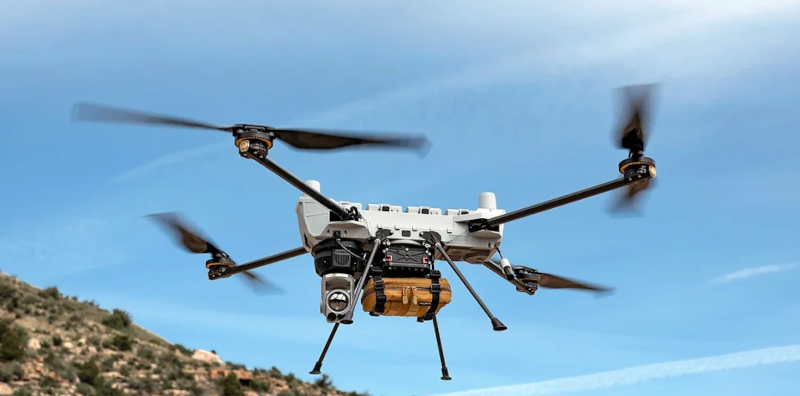
Consider the example of unmanned aerial vehicles (UAVs), which often have limited space due to the inclusion of various electronic components. Conventional batteries may occupy areas that could otherwise house additional technology, thereby limiting the UAV’s capabilities. With the new 3D printing method, a custom battery can entirely fill the available space in a wing, enhancing the aircraft’s performance.
Moreover, this technology could extend to consumer electronics. A prototype demonstrated that 3D printed batteries can utilize up to 35% more of the available volume compared to traditional cylindrical cells, alongside a 50% increase in energy density. This improvement could revolutionize devices such as smart glasses, where the battery’s shape can be adapted to fit seamlessly into the design.
While the prospect of creating such batteries is exciting, the current process is not without its challenges. The manufacturing method involves the use of a liquid electrolyte and the capability to produce thin layers of specialized materials. This complexity means that while individuals may explore 3D battery printing, it may not be a straightforward endeavor.
Future Implications and Customization Potential
The implications of this technology could stretch across various industries, from consumer electronics to aerospace. Custom batteries offer the potential for devices to become lighter and more efficient, addressing both performance concerns and design limitations. As the technology matures, it is expected that we will witness an increase in the availability of uniquely shaped batteries to accommodate diverse applications.
As this field evolves, individuals and companies alike are encouraged to consider what forms of customized batteries could enhance their products. The dream of a uniformly distributed battery for a laptop, eliminating the common issue of uneven weight, could soon be within reach. The ongoing research in 3D printed batteries signifies a promising future where energy storage solutions are as innovative as the devices they power.