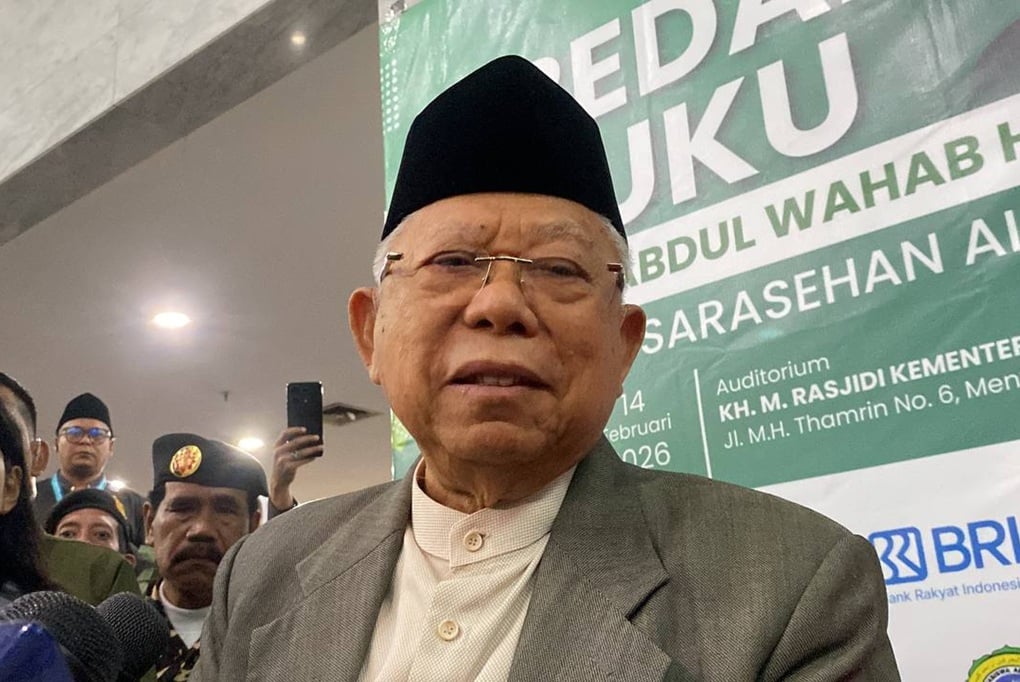
Ma’ruf Amin, the 13th Vice President of Indonesia, recently paid tribute to the late KH Abdul Wahab Hasbullah, highlighting the unique contributions of this influential figure in Indonesian history. During his remarks, Amin described Hasbullah as a rare leader who embodied the essence of being a scholar, statesman, and politician.
The commemoration took place in Indonesia, where Amin reflected on Hasbullah’s significant impact on both religious and political spheres. He noted that the late cleric was instrumental in shaping the nation’s religious landscape while also playing a pivotal role in its political development.
Legacy of Leadership
KH Abdul Wahab Hasbullah, who passed away in 2023, was a prominent figure in the National Awakening Party and a respected Islamic scholar. His dedication to education and community service established him as a key leader among clerics and political figures in Indonesia. Amin emphasized that Hasbullah’s legacy continues to inspire current and future generations.
Amin recounted various initiatives spearheaded by Hasbullah that fostered unity among different religious and ethnic groups in Indonesia. His commitment to social justice and education helped bridge divides, making him a beloved figure across the country. “He was not just a cleric; he was a visionary who understood the importance of harmony in our diverse society,” Amin stated.
As Indonesia faces contemporary challenges in governance and societal cohesion, Amin called for a renewed commitment to the values that Hasbullah championed. He urged leaders and citizens alike to draw inspiration from Hasbullah’s teachings and his dedication to public service.
Influence on Modern Politics
The influence of KH Abdul Wahab Hasbullah extends beyond religious interpretations; his political activism laid the groundwork for many of today’s leaders. Ma’ruf Amin pointed out that the late cleric’s approach to politics was deeply rooted in moral and ethical principles. This perspective remains crucial in addressing the challenges of modern governance.
In his tribute, Amin also acknowledged that Hasbullah’s vision for a just and equitable society resonates with ongoing efforts to improve the lives of all Indonesians. He underscored the importance of maintaining dialogue among different factions to foster a spirit of cooperation, much like Hasbullah did during his lifetime.
The Vice President’s reflections serve to remind the country of the profound impact that religious leaders like Hasbullah have on the nation’s socio-political fabric. As Indonesia looks to the future, Amin’s call for unity and collaboration reflects the enduring relevance of Hasbullah’s teachings in promoting peace and understanding.
In conclusion, Ma’ruf Amin’s homage to KH Abdul Wahab Hasbullah highlights a critical moment for Indonesia as it navigates a complex political landscape. The late cleric’s contributions as a scholar, statesman, and politician continue to serve as a guiding light for future leaders and the broader community.