The ongoing fuel blockade imposed by the United States is severely impacting the daily lives of Cubans, leaving many struggling to meet basic needs. In Holguín, a city in eastern Cuba, residents express their distress over the blockade, which has intensified under former President Donald Trump. One local hairdresser, Marta Jiménez, described the situation as a “vicious, all-encompassing spiral downward,” highlighting the profound effect on her life and others around her.
Many are grappling with limited access to essential services such as transportation and electricity. Due to the lack of gasoline, public buses are not operational, and electricity availability is restricted to only three to six hours daily. Cooking has become a challenge as well, with families resorting to burning wood and charcoal in their homes. Jiménez’s plea underscores the desperate situation: “The blockade is suffocating us — especially single mothers.”
Humanitarian efforts are underway to alleviate some of the suffering. Recently, a group delivered 2,500 pounds of lentils to Holguín, aided by fundraising from organizations like CODEPINK and Puentes de Amor. On a previous trip, they provided 50-pound bags of powdered milk to a local children’s hospital. Despite these efforts, basic needs remain unmet, and many Cubans assert that what they truly require is oil.
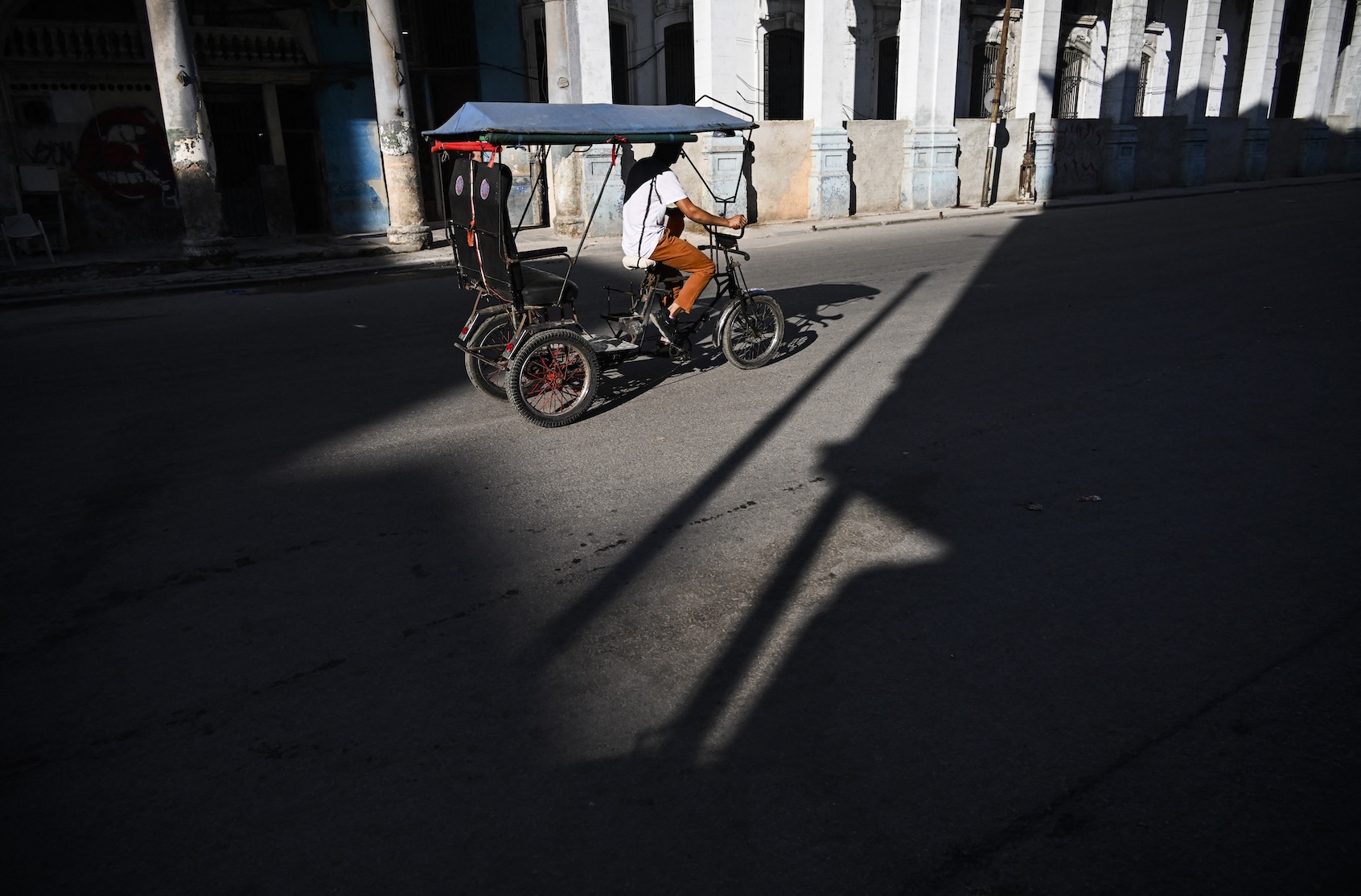
Transportation options in Holguín reflect the current crisis. The absence of taxis at the airport forced visitors to hitch rides in donation trucks. The streets are filled with bicycles and electric vehicles, as gasoline-powered cars and buses have become a rarity. Motorcycles, often imported from abroad, remain out of reach for most locals. For instance, Javier Silva, a 35-year-old resident, lamented that his monthly salary of 4,000 pesos — worth less than $10 — makes it impossible for him to purchase a motorcycle priced near $2,000.
Cuba’s economic landscape has shifted dramatically, with rising inflation further squeezing families. Despite not paying rent or mortgages, many struggle to afford food, especially staples like pork, chicken, and milk. The situation worsened after Hurricane Melissa devastated crops in the region, making recovery efforts challenging due to fuel shortages.
While some Cubans direct their frustrations toward their government, many also recognize the role of U.S. sanctions in their plight. During the thaw in relations between the United States and Cuba from 2014 to 2016, residents experienced improved living conditions. One man recalled, “It was the same Cuban government we have now. But when the U.S. loosened the rope around our necks, we could breathe.”
Efforts to sustain their communities are evident among the people. Neighbors exchange goods, and the government provides meals for vulnerable populations, including the elderly and disabled. Yet, as the state faces increasing challenges in food distribution and fuel for cooking, reliance on community support becomes more crucial.
An elderly volunteer at a feeding center shared the lengths to which he goes to secure firewood, displaying a piece of a pallet he scavenged. His determination reflects the resilience of the Cuban people, who continue to adapt to increasingly difficult circumstances.
As conditions deteriorate, uncertainty looms over the future. While calls for regime change resonate among some, others question the viability of such a transition. One individual humorously suggested that making Trump the minister of tourism could lead to a resolution. Yet, the reality remains that the blockade has created a complex situation with no clear path forward.
Amidst the hardships, many maintain a spirit of resilience. Ernesto, a refrigerator repairman, summed up the sentiment: “We’re rebels. We defeated Batista in 1959. We survived the Bay of Pigs. We’ll survive this too.” His words echo a sentiment deeply ingrained in the national consciousness, reflecting the enduring hope of the Cuban people in the face of adversity.