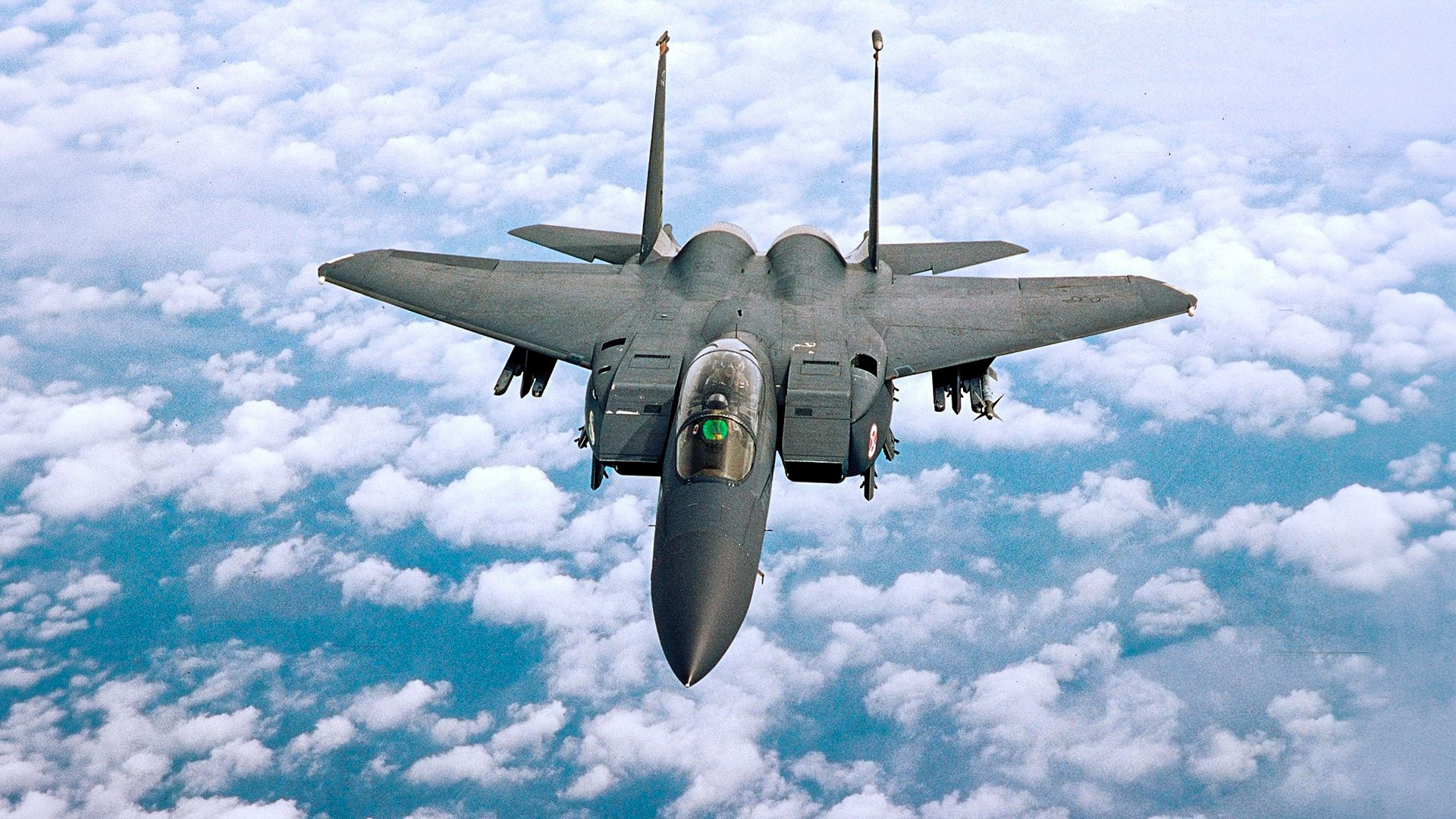
The Boeing F-15 Eagle stands as a symbol of American air superiority, renowned for its unmatched combat record. This twin-engine supersonic fighter jet has never been shot down in air-to-air combat, boasting a flawless record with over 104 aerial combat victories since its debut in March 1976. Its exceptional performance and reliability have earned it the affectionate nickname, “America’s Sweetheart.” Currently, the US Air Force is investing in the F-15EX Eagle II, a modernized variant expected to be operational well into the 2040s.
Unyielding Legacy in Combat
Developed during the 1970s, the F-15 was engineered to excel in air-to-air engagements. Its reputation was solidified through successful missions conducted by both the US and Israeli air forces. Since entering service, the F-15 has maintained a perfect record, particularly highlighted during the Gulf War. In 1991, the F-15C accounted for 36 of the 39 aerial victories claimed by the US Air Force. The aircraft’s first recorded kill happened in 1979 when Israeli pilot Moshe Melnik downed a Syrian MiG-21.
The Israeli Air Force played a pivotal role in establishing the F-15’s dominance, with significant victories during the 1982 Lebanon War. In a notable engagement, Israeli forces destroyed over 80 Syrian aircraft without suffering any losses. Similarly, the Royal Saudi Air Force has effectively utilized the F-15C and the F-15SA models for regional defense, including a notable incident in which Captain Ayehed Salah al-Shamrani shot down two Iraqi Mirage F1s in a single engagement.
Engineering Marvel of the Cold War Era
When the F-15 was introduced, it represented a groundbreaking advancement in fighter jet design. It was the first US fighter aircraft where the thrust produced by its engines exceeded the aircraft’s weight, allowing for impressive vertical climbs. The F-15’s airframe comprises approximately 37.3% aluminum and 25.8% titanium, with selective use of advanced composites for certain components. This design enables the F-15 to perform tight maneuvers at up to nine Gs without losing airspeed.
The F-15 has evolved through several generations, including the F-15A/B, F-15C/D, F-15E, and the latest F-15EX. The F-15C model introduced significant upgrades, including improved electronics and increased fuel capacity, while the F-15E Strike Eagle was designed to combine air-to-air superiority with ground attack capabilities. The Strike Eagle can carry nearly all air-to-ground munitions in the US Air Force inventory, making it one of the most versatile aircraft in history.
The F-15EX Eagle II, the most recent iteration, incorporates state-of-the-art technology with a digital fly-by-wire control system and advanced mission capabilities. It can carry a heavier payload than its predecessors, designed to complement stealth fighters like the F-22 Raptor and F-35 Lightning II.
The durability of the F-15 is legendary. During a training exercise in 1983, an Israeli F-15D collided with another aircraft, resulting in the complete loss of its right wing. Despite this, the pilot successfully landed the aircraft, showcasing the resilience of its design. Throughout the Gulf War, F-15s often returned to base after sustaining damage, further demonstrating their robustness and reliability.
The F-15’s unique lifting body design, which includes a wide fuselage that also contributes to lift, sets it apart from many other aircraft. Approximately 26% of its structure is titanium, strategically used in high-stress areas. This engineering ensures that the aircraft can withstand the rigors of high-speed maneuvers and combat situations.
The F-15A, the original single-seat version, was specifically designed with a focus on air-to-air combat. However, as the need for multi-role capabilities grew, the F-15E was developed, making significant modifications to enhance its versatility. Its distinctive dark gray paint facilitates low-level operations during nighttime ground attacks and has made it the backbone of US power projection in conflicts such as those in Iraq and Afghanistan.
As the US Air Force adapts to contemporary warfare, the F-15EX Eagle II is set to play a crucial role. With its capacity to carry up to 29,500 pounds of ordnance and the ability to launch up to 12 air-to-air missiles, this aircraft is positioned to support stealth operations efficiently. By allowing stealth fighters to maintain their low visibility while executing critical missions, the F-15EX serves as a formidable asset in modern aerial combat.
In conclusion, the Boeing F-15 Eagle’s legacy as “America’s Sweetheart” is not only a testament to its unparalleled combat record but also a reflection of its continued evolution to meet modern warfare demands. As the US Air Force integrates the F-15EX into its fleet, this iconic fighter jet remains a key player in maintaining air superiority for years to come.