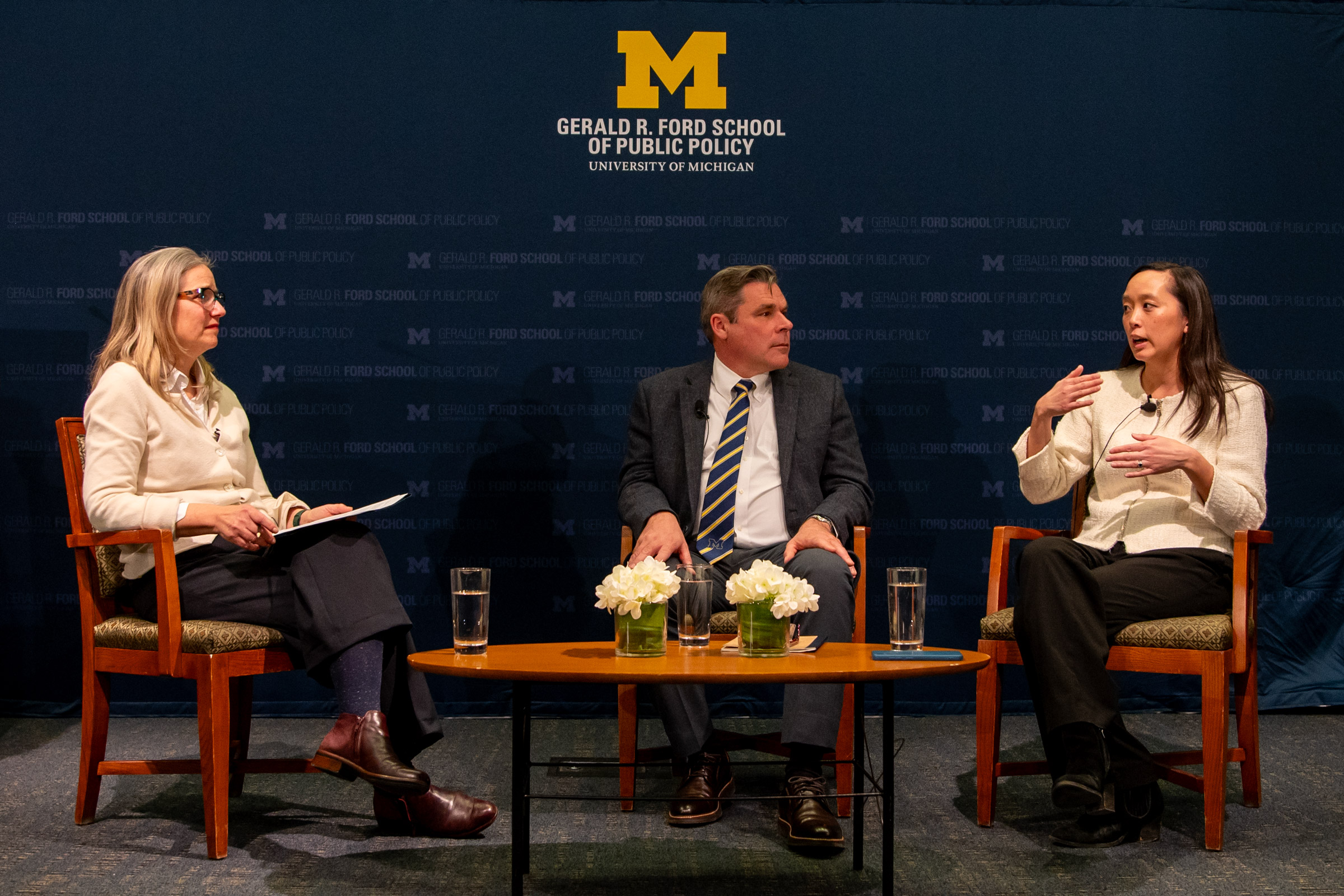
UPDATE: In a pivotal discussion on March 25, 2025, at the Walter and Leonore Annenberg Auditorium, Michigan State Senators Stephanie Chang and John Damoose underscored the urgent need for bipartisan cooperation in today’s political climate. The event, titled “Conversation Across Differences,” hosted by the Ford School of Public Policy, attracted around 75 attendees, highlighting the community’s keen interest in political collaboration.
The dialogue, mediated by political science expert Jenna Bednar, focused on how legislators can transcend party lines. Damoose emphasized the importance of fostering personal relationships, stating, “There isn’t anybody on Earth who can make me stand up and say anything negative about Stephanie Chang as a person.” His comments reflect a growing sentiment among politicians that collaboration can yield significant results, despite ideological differences.
Senator Chang highlighted her successful partnership with Senator Ruth Johnson, R-Holly, in passing Michigan Senate Bills 611 and 612, designed to expedite protection orders for domestic violence survivors. “We were able to pass that legislation through the Senate with unanimous support, and it would not have been possible without bipartisan sponsorship,” Chang said. The bills ensure that protection orders are served within 72 hours at no cost, showcasing a critical victory for survivor advocacy.
The senators also addressed the impact of term limits on their ability to collaborate effectively. Chang noted that her longer tenure in the Senate has allowed her to cultivate deeper relationships compared to her previous shorter terms in the House. “Serving longer terms allows for actual relationship building,” she explained, emphasizing the Senate’s unique capacity for bipartisan initiatives.
The conversation further explored Damoose’s decision to diverge from party norms, particularly during a budget dispute in December 2025, where he faced backlash for prioritizing effective governance over party lines. “If something’s right, I’m going to do it,” Damoose asserted, encouraging fellow legislators to prioritize collaboration over party loyalty.
As the discussion wrapped up, Damoose urged attendees to foster relationships across the political spectrum. “Relationships do matter,” he stated, advocating for efforts to bring different groups together for meaningful dialogue and collaboration.
Attendee Nina Attisha, an LSA sophomore, expressed optimism about the event’s message. “Even though the media shows that there’s so much polarization in politics, there’s still ways that politicians work across that and collaborate,” she said, highlighting the importance of visibility in bipartisan efforts during such divisive times.
The conversation at Weill Hall serves as a hopeful reminder that amidst rising political polarization, collaboration is not only possible but essential for progress. As both senators continue to champion bipartisan initiatives, their efforts may inspire others to prioritize unity over division in the current political landscape.
For further updates on this developing story and more on bipartisan efforts in Michigan, stay tuned.