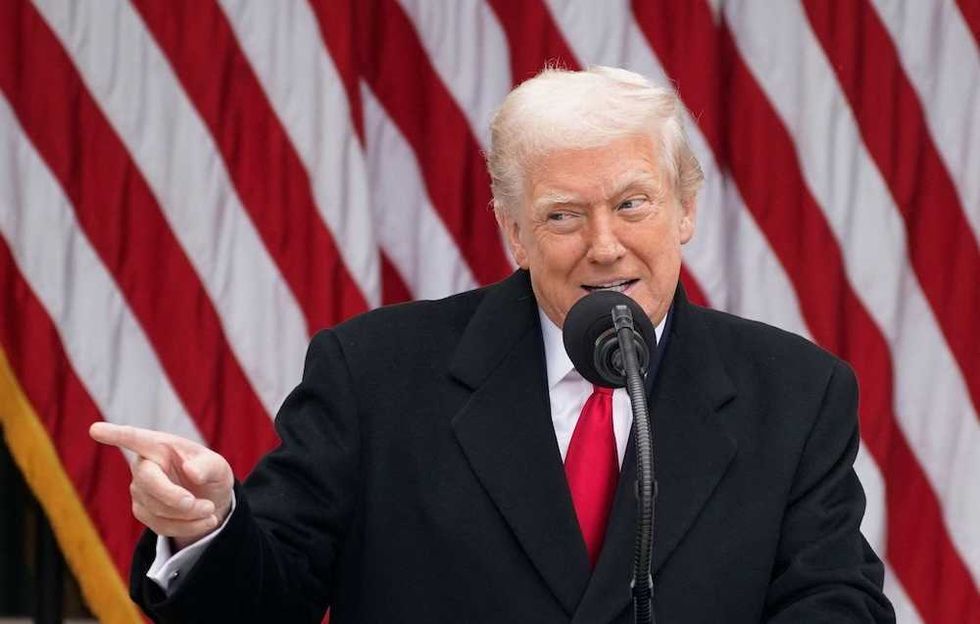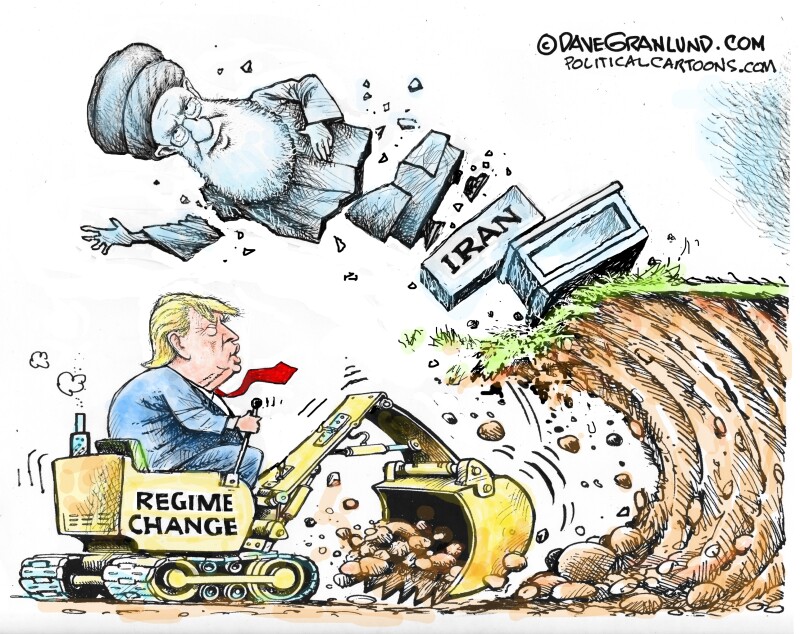
President Donald Trump has launched Operation Epic Fury, a military initiative aimed at countering the longstanding threats posed by the Islamic Republic of Iran. This operation marks a significant shift in U.S. foreign policy, emphasizing the need to confront Tehran’s aggressive actions directly and decisively. Critics label this effort a “war of choice,” yet Trump and his administration argue that it is a necessary response to Iran’s persistent hostility toward the United States.
Since the 1979 revolution, Iran’s leadership has openly declared its animosity towards America, frequently chanting “death to America” at public gatherings and using state media to propagate this message. The Iranian regime has not only vocalized its intentions but has also acted on them, supporting terrorist activities across the globe, including in Lebanon and the Persian Gulf. Its actions have resulted in significant American casualties, particularly through the use of advanced weaponry in conflicts in Iraq and Afghanistan.
Trump’s administration asserts that the decision to engage militarily comes after numerous attempts to negotiate peace. In a notable offer, the U.S. proposed to supply Iran with guaranteed uranium for peaceful power generation in exchange for the country abandoning its nuclear ambitions. Iran’s rejection of this offer has led to the current military engagement.
Operational Goals of Epic Fury
The objectives of Operation Epic Fury are clear and focused. The primary aim is to dismantle Iran’s missile capabilities, which pose a direct threat to Israel and potentially to European and American territories in the future. The joint air campaign, which involves cooperation with Israel, seeks to neutralize the missile infrastructure that has been a source of regional instability.
Another critical goal is to address Iran’s nuclear ambitions. The U.S. administration has drawn a firm line: no nuclear weapons for Tehran. By targeting facilities and materials associated with Iran’s nuclear program, the operation is designed to prevent the country from developing the capability to produce nuclear weapons.
Additionally, the operation aims to eliminate key figures within the Iranian regime, including Ayatollah Ali Khamenei, to disrupt the leadership structure that has perpetuated violence against both its own citizens and foreign adversaries. Trump’s message to the Iranian populace has been clear: “Take back your country. America is with you.” This statement aims to inspire hope and encourage a shift toward a more democratic governance in Iran.
Regional Implications and Future Prospects
The implications of Operation Epic Fury extend beyond Iran. Recent developments have seen nations like Saudi Arabia and other Gulf States aligning more closely with U.S. and Israeli interests against Iranian aggression. This shift marks a departure from previous isolationist stances and reflects a growing consensus about the need for collective security in the region.
The potential success of this operation could pave the way for broader regional peace agreements similar to the Abraham Accords, fostering collaboration based on mutual interests. The administration’s hope is that a successful military campaign will lead to a more stable Middle East, countering the narrative that U.S. military involvement creates chaos.
As U.S. servicemen and servicewomen engage in this mission, the hope is that their bravery and skill will secure a peace that has eluded diplomatic efforts for decades. The outcome of Operation Epic Fury could redefine how history remembers Trump, potentially labeling him as a “peace President” who ended a long-standing conflict on his terms.
The situation remains fluid, and while the operational goals are ambitious, the long-term effects on U.S.-Iran relations and regional stability will take time to unfold.