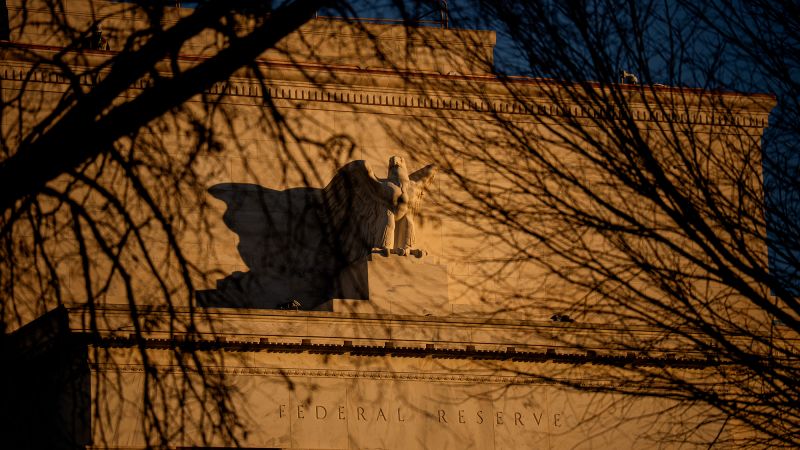
The Federal Reserve is confronting a significant challenge as the worst global oil crisis in decades unfolds. Rising tensions due to President Donald Trump’s policies towards Iran have caused oil prices to surge, with West Texas Intermediate (WTI) crude briefly hitting $120 per barrel last week. This dramatic increase threatens to elevate the cost of goods and services across the United States, while simultaneously putting pressure on businesses and households, potentially stalling economic growth and hiring.
As Fed policymakers prepare to meet this week, they face a dual threat of rising inflation and a weakening job market. The current situation places them in a precarious position, particularly as Kevin Warsh, Trump’s nominee to lead the central bank, awaits Senate confirmation. This comes at a time when advocating for lower interest rates could be politically unwise.
Historical Context of Oil Crises
The United States now stands as the world’s largest oil producer, significantly reducing its reliance on imported crude compared to previous energy crises. Yet, experts warn that the disruption to global energy markets today is more pronounced than in the past. According to Nicholas Mulder, a history professor at Cornell University, the amount of Gulf oil production affected by current conflicts is “much larger” than during the 1973 Arab-Israeli War, with approximately 20 million barrels impacted compared to just 4.5 million barrels in 1973.
In October 1973, a surprise attack by Egypt and Syria on Israel led to the Organization of Petroleum Exporting Countries (OPEC) cutting off oil supplies to Western nations. The resulting economic pain for the US was severe, given its heavy dependence on foreign oil. During that period, then-Fed Chair Arthur Burns hesitated to raise interest rates, arguing that inflationary pressures, including the oil shock, were largely beyond the reach of monetary policy. Economists now believe that this “stop and go” approach entrenched inflation without providing significant support for economic growth.
Current Fed officials, having learned from past mistakes, generally accept that monetary policy plays a crucial role in managing economic shocks. However, the ongoing conflict presents unique challenges. As noted by Josh Freed, senior vice president of the climate and energy program at Third Way, the physical damage from Iranian attacks on energy facilities complicates the situation and introduces a level of uncertainty not seen in previous crises.
Impact on American Consumers
Americans are already feeling the effects of rising oil prices. A recent survey by the University of Michigan revealed that consumer sentiment declined by 2% in March, with the ongoing conflict cited as a significant concern. The Bureau of Labor Statistics indicated that employers shed 92,000 jobs in February, raising the unemployment rate to 4.4% from 4.3%. Although job openings increased by 400,000 in January, there remain more unemployed individuals than available positions.
The expectation of inflation appears to be growing among the public. Tani Fukui, senior director of economic and market strategy at MetLife Investment Management, noted, “There’s very little question that there is going to be an inflation effect” resulting from the conflict with Iran. However, he emphasized that the extent of this effect remains uncertain.
As the Federal Reserve grapples with these challenges, the key question remains: can the lessons of history guide its response to avoid a downturn in the economy during this oil crisis? The stakes are high, with potential implications not only for markets but also for the financial well-being of millions of Americans.