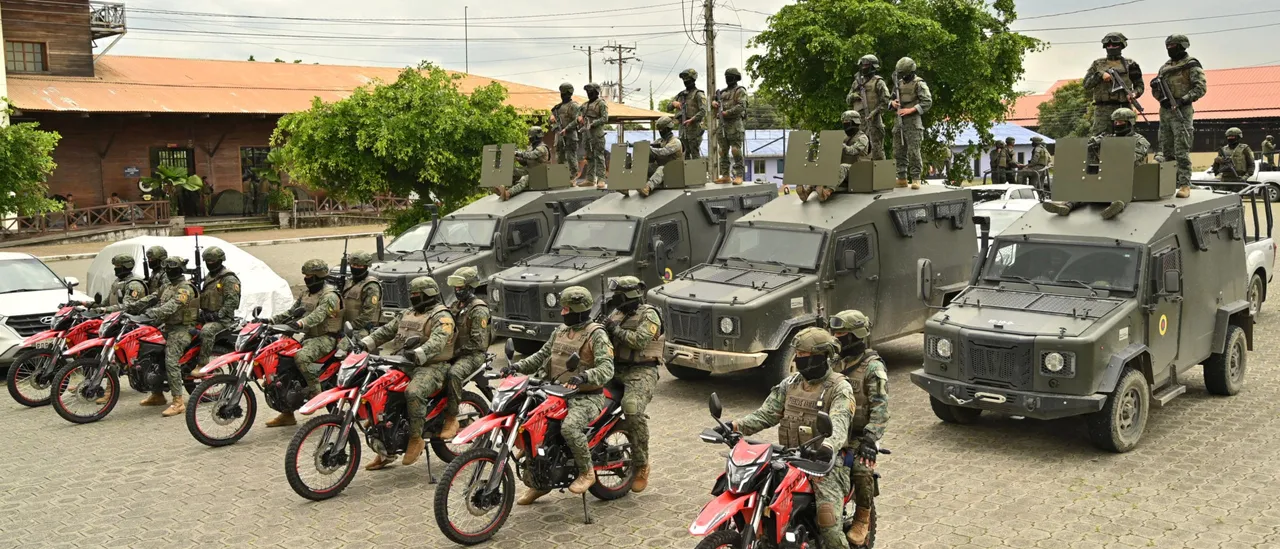
Ecuador commenced a significant two-week operation against drug traffickers on March 15, 2026, with the backing of the United States. The initiative involves the deployment of over 75,000 police officers and soldiers aimed at dismantling criminal gangs in several provinces, including Guayas, Los Rios, and Santo Domingo de los Tsachilas. This campaign comes as part of a broader effort to tackle escalating drug-related violence in the country.
In an announcement to residents, Ecuadorian Interior Minister John Reimberg emphasized the seriousness of the situation, stating, “We’re at war.” He urged citizens to remain indoors during the curfew hours of 11 p.m. to 5 a.m. in coastal regions, which will remain in effect until March 30. The government seeks to bolster security as violence linked to drug trafficking has surged in recent years.
Reimberg highlighted the scale of the operation, noting that around 35,000 police officers have been deployed specifically in the provinces of Guayas, Los Rios, El Oro, and Santo Domingo de los Tsachilas. He addressed criminal organizations directly, asserting, “To the mafias: your time is up. Nothing can stop us.” This strong message was disseminated through a post on social media platform X, where he shared details of the operation.
The campaign is part of a larger strategy initiated by Ecuadorian President Daniel Noboa, who has been intensifying efforts against cocaine traffickers over the past two years. Despite these initiatives, the country has struggled to reduce associated crimes, such as murders and extortion. According to the BBC, approximately 70% of cocaine produced in neighboring Colombia and Peru is believed to pass through Ecuador, exacerbating the challenges faced by law enforcement.
The timing of this operation aligns with discussions held at the “Shield of the Americas” summit earlier in March, where former U.S. President Donald Trump announced a coalition of 17 countries aimed at combating drug cartels. At the summit, Trump urged Latin American leaders to consider military action against these organizations, comparing them to a “cancer.” He stated, “We don’t want it spreading,” underscoring the urgency of the situation.
The involvement of the U.S. extends beyond logistical support. The FBI plans to establish an office in Ecuador to investigate organized crime and corruption, further enhancing cooperative efforts in addressing these pressing issues. While it remains unclear whether U.S. soldiers will participate directly in the campaign, there have been indications of joint operations, including the elimination of a “narco sub” near Ecuador’s northern border.
With drug-related violence continuing to pose a significant threat to public safety, this operation reflects Ecuador’s commitment to confronting the challenges posed by powerful drug trafficking networks. As the campaign unfolds, the effectiveness of these decisive actions will be closely monitored both domestically and internationally.