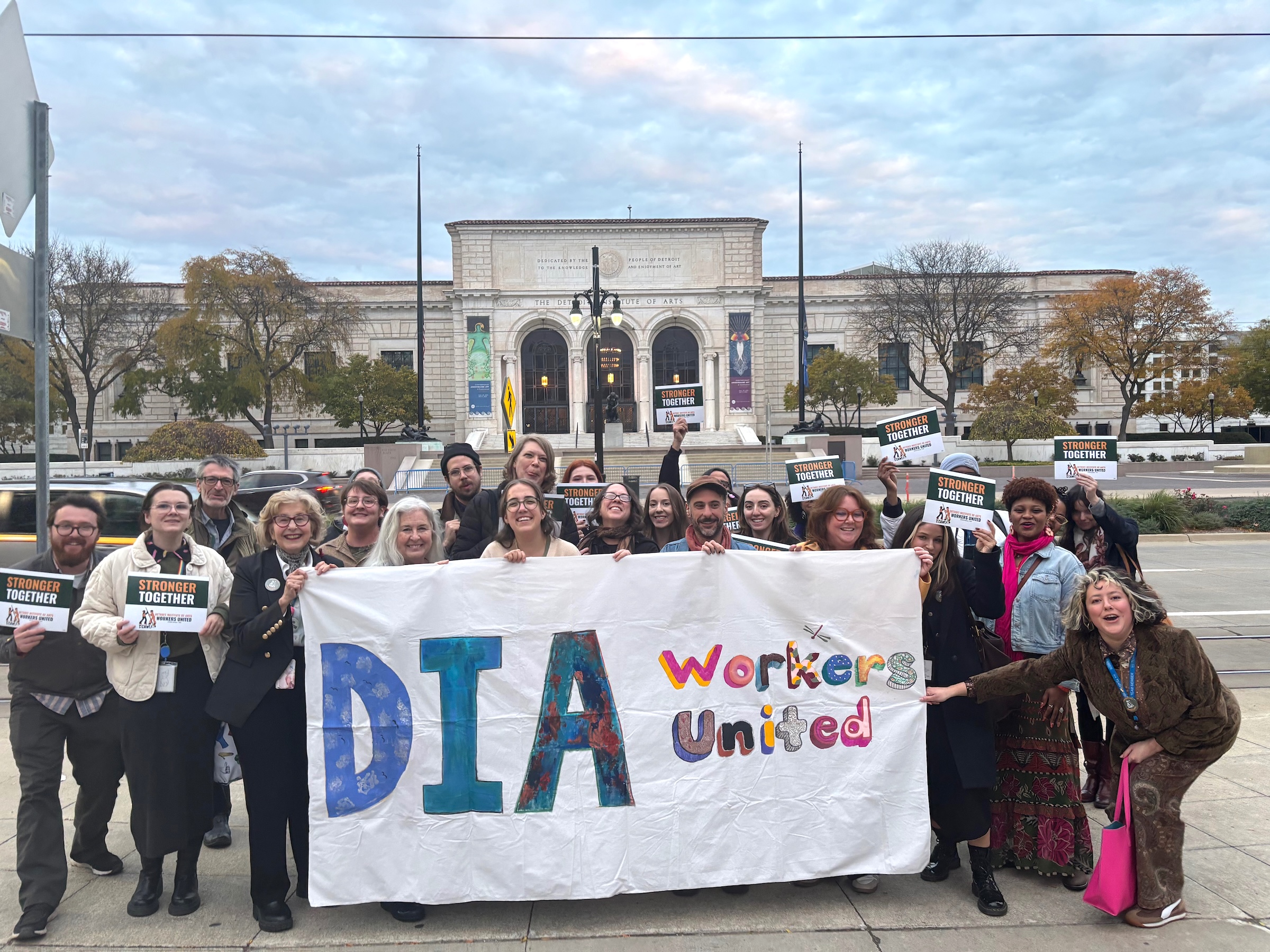
UPDATE: In a bold move, dozens of employees at the Detroit Institute of Arts (DIA) have officially announced their push to unionize through AFSCME Cultural Workers United. This urgent development, marked by a letter requesting union recognition submitted on November 4, 2024, signals a growing trend among arts and culture institutions nationwide.
The newly formed group, known as DIA Workers United, is advocating for fair wages and better working conditions amidst rising living costs in Detroit. Organizers, including Sarah Burger, a preparator with two decades of experience at the museum, assert they represent a “strong majority” and are striving for voluntary recognition from the museum’s administration.
“Serious conversations about unionizing began towards the end of 2024,” Burger noted. She emphasized that almost every department within the museum is now represented, showcasing a united front. The push comes as employees face challenges with increasing rents and housing costs in a city undergoing significant revitalization.
DIA Workers United is motivated by a deep love for the museum and its mission. Burger shared, “Staff are passionate about their work, but they just want to make ends meet.” The current lowest wage for museum employees stands at just $16.50 an hour, a rate that many argue is insufficient given the museum’s financial stability, bolstered by the Tri-County millage funding from Macomb, Wayne, and Oakland counties.
While praising the museum’s growing endowment and secure budget, Burger expressed concern that full-time employees should not be forced to take on second jobs to support their families. “In a financially secure institution, there’s no reason that full-time employees should be working a second job,” she stated.
The group has also raised alarms over prolonged vacancies, asserting that certain positions have remained unfilled for over a year, placing unfair burdens on existing staff without appropriate compensation or recognition.
“We don’t want this to be an ‘us versus them’ situation,” Burger explained, contrasting their approach with that of other institutions, such as the Los Angeles County Museum of Art, which recently declined to recognize its staff’s union. “We want to work with [the museum], we want to negotiate,” she added, highlighting the potential for a collaborative partnership that could benefit both employees and the institution.
As the situation develops, the DIA has yet to respond to requests for comment regarding the union’s recognition. The outcome of this movement could significantly impact not only the employees’ livelihoods but also the future of labor relations within cultural institutions across the nation.
Stay tuned as this story unfolds, and watch for official responses from the museum and further developments from DIA Workers United. This unionization effort represents a pivotal moment for cultural workers seeking better support and recognition in their vital roles.