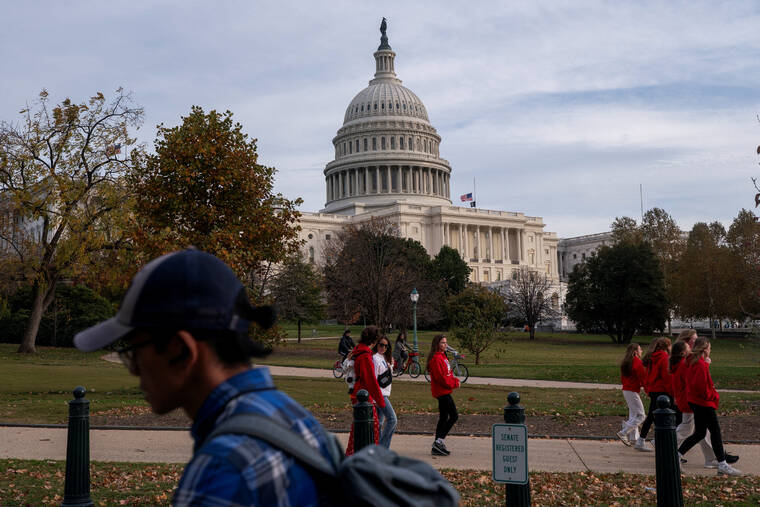
The U.S. Senate is poised to vote on a crucial bill aimed at ending the federal shutdown, which has now lasted for 40 days. A vote is expected on Sunday night to advance a House-passed measure that would fund the government through January 2026. This legislation will be amended to include a package of three full-year appropriations bills, according to Senate Majority Leader John Thune.
While the Senate moves forward, the amended bill must still be approved by the House of Representatives and signed by President Donald Trump, a process that could take several days. Senate Democrats, however, have expressed reluctance to support the funding measure without addressing healthcare issues, particularly the need to extend expiring subsidies under the Affordable Care Act.
Senator Richard Blumenthal, a Democrat, indicated he would oppose the funding measure but suggested there is potential for enough Democratic support to pass it. He expressed concerns about accepting “a vague promise of a vote at some indeterminate time” regarding healthcare tax credits.
As the shutdown enters its sixth week, it has severely impacted federal workers and disrupted essential services such as food aid and park operations. There are growing fears that air traffic control staffing shortages could hinder travel during the busy Thanksgiving holiday season on November 27, 2023. Senator Thom Tillis, a Republican from North Carolina, noted that the increasing repercussions of the shutdown have created a sense of urgency to reach an agreement. He mentioned that the proposed resolution would also aim to reverse some of the mass layoffs initiated by the Trump administration.
Warnings about the economic consequences of a prolonged shutdown have emerged, with White House economic adviser Kevin Hassett stating that if the government remains closed, it could lead to negative growth in the fourth quarter, particularly if air travel does not stabilize by Thanksgiving.
In parallel to the legislative discussions, President Trump reiterated his proposal to replace Affordable Care Act subsidies with direct payments to individuals. He criticized the current subsidies as a “windfall for Health Insurance Companies” and labeled them a “DISASTER for the American people.” On his Truth Social platform, Trump expressed his readiness to work with both parties once the government reopens.
Treasury Secretary Scott Bessent and Senator Lindsey Graham, a close ally of Trump, clarified in separate interviews that the healthcare proposal would not be introduced until after lawmakers agree on a federal funding measure. Bessent confirmed, “We are not going to negotiate with the Democrats until they reopen the government.”
As Americans prepare to shop for health insurance plans under the Affordable Care Act for 2026, experts predict that monthly premiums could more than double on average, as pandemic-era subsidies are set to expire at the end of the year. The Republican-led Senate rejected a proposal from Senate Minority Leader Chuck Schumer for a one-year extension of tax credits in exchange for agreeing to reopen the government.
Democratic Senator Adam Schiff expressed concern that Trump’s healthcare initiative could undermine the Affordable Care Act, potentially allowing insurance companies to deny coverage for individuals with pre-existing conditions. Schiff stated, “The same insurance companies he’s railing against in those tweets, he is saying: ‘I’m going to give you more power to cancel people’s policies and not cover them if they have a pre-existing condition.’”
As the Senate prepares for the vote, the nation watches closely, hoping for a resolution that will restore government operations and provide clarity for millions of affected Americans.