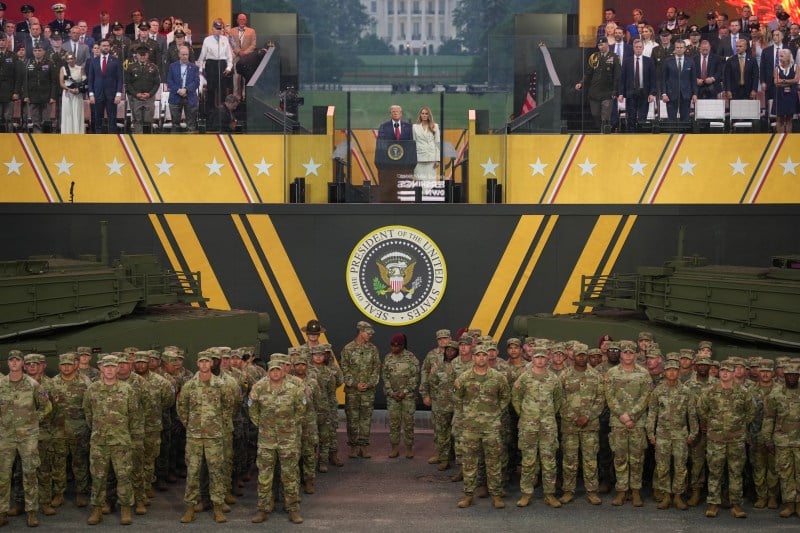
UPDATE: On this Veterans Day, urgent concerns are rising about the integrity of the U.S. military amid alarming reports of politically motivated purges within its ranks. Sources reveal that Secretary of Defense Pete Hegseth is actively removing senior officers deemed unsatisfactory by the Trump administration, undermining decades of military professionalism and threatening the armed forces’ effectiveness.
Recent data from the New York Times highlights Hegseth’s unsettling pattern: promoting loyalty over competence. Officers are being dismissed not solely for poor performance but because of their gender, race, or prior associations with former Joint Chiefs Chair Mark Milley. This shift raises critical questions about the military’s future role in American society and its ability to remain apolitical.
The military’s tradition of political neutrality has been a cornerstone of democracy. However, analysts warn that recent actions may transform the armed forces into a politically charged organization, echoing tactics seen in authoritarian regimes. As stated in Caitlin Talmadge’s influential work, The Dictator’s Army, militaries under dictatorial control often suffer in effectiveness due to a focus on internal loyalty rather than operational capability.
As the Trump administration reinforces its grip on power, Hegseth’s strategy could lead to a military less prepared for international threats and more focused on quelling domestic dissent. This shift threatens not only military preparedness but also the very fabric of American democracy. The purging of experienced leaders creates a vacuum of knowledge and expertise at a time when the global security landscape is increasingly complex.
The implications of these changes are dire. With officers selected based on their allegiance to the administration rather than their qualifications, U.S. forces may lack the experienced leadership needed to respond to significant global conflicts. This is especially concerning as the military faces renewed challenges abroad, including tensions in regions like the Middle East and Eastern Europe.
Should these practices continue, the U.S. could see a decline in morale among patriotic officers, as many may choose to leave an increasingly politicized military environment. The potential loss of talented leaders could exacerbate operational deficiencies, leaving the nation vulnerable.
Furthermore, Hegseth’s actions reflect a troubling trend of militarization of domestic issues. The military’s involvement in policing and public order may lead to a diversion from its primary mission of defending the nation against external threats. This is reminiscent of the missteps seen in Iraq and Afghanistan, where military resources were stretched thin on nation-building efforts instead of focusing on core defense responsibilities.
As the nation honors its veterans today, it is crucial to recognize the risks posed by an unaccountable military leadership. The ongoing purges not only threaten military effectiveness but also the principles of democracy that veterans fought to protect.
In light of these developments, citizens are urged to stay informed and engaged. The integrity of the military—and by extension, American democracy—depends on the actions taken today. The implications for the future are profound, and the need for accountability has never been more urgent.
As we reflect on the sacrifices made by veterans, we must also advocate for a military that is insulated from partisan politics and dedicated to defending the freedoms of all Americans. If current trends continue unchecked, this Veterans Day may mark a pivotal moment in U.S. history, with consequences that could resonate for generations.