BREAKING: An extraordinary discovery has just emerged from the Greek-Albanian border, where researchers have unveiled a massive spider colony housing an estimated 110,000 spiders within the sulfur-rich depths of Sulfur Cave. This unique finding features two species coexisting harmoniously, challenging previous assumptions about arachnid behavior.
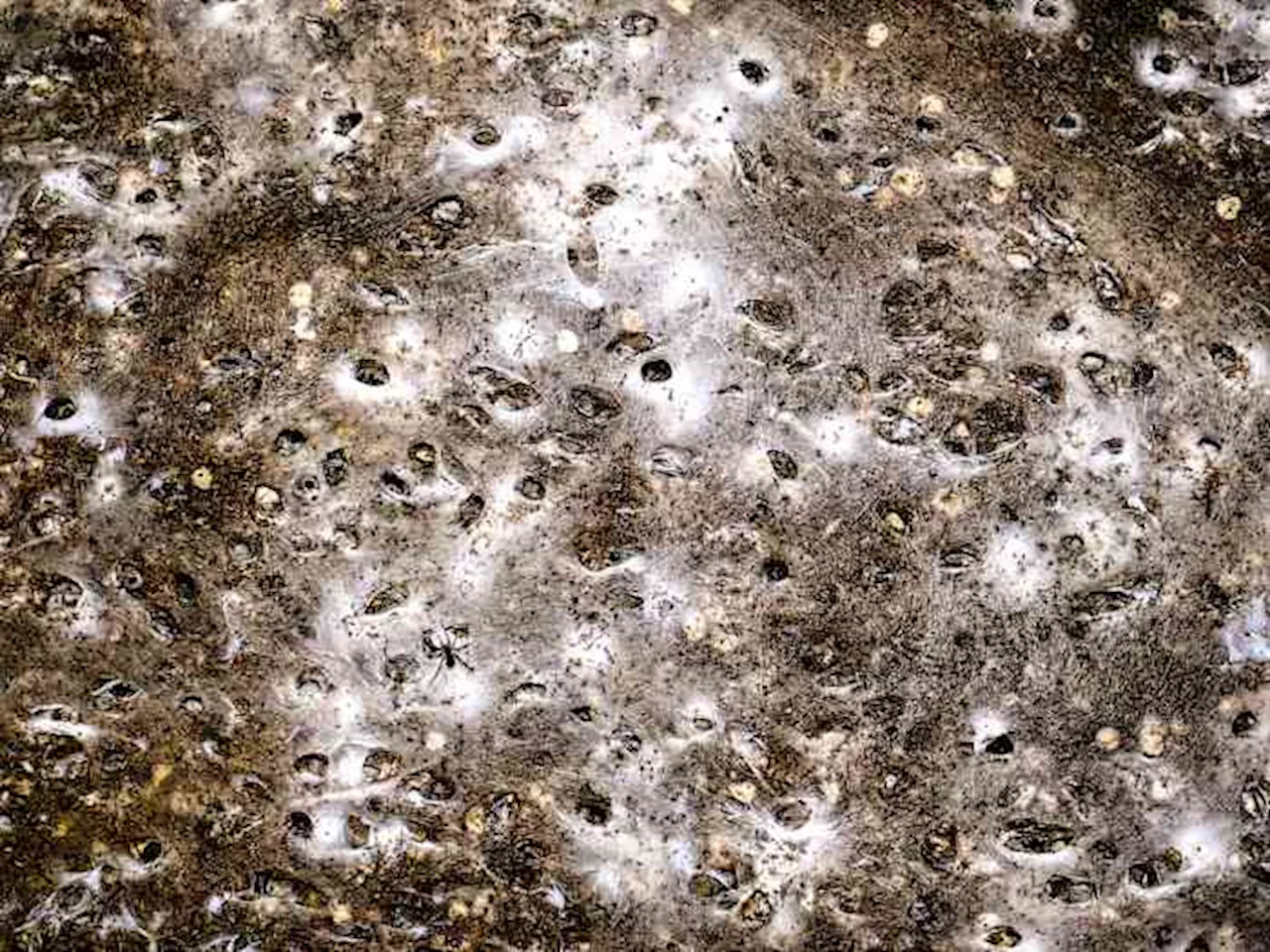
The study, recently published in the journal Subterranean Biology, reveals that approximately 69,000 Tegenaria domestica (common house spiders) and 42,000 Prinerigone vagans are living side by side in an area measuring 1,140 square feet—a web sprawling across a narrow passage wall. Such peaceful coexistence among different spider species is extremely rare, akin to humans sharing an apartment without conflict.
Researchers, led by biologist Marek Audy, first observed the colony in 2021, but a collaborative effort expanded to include scientists from multiple universities, leading to a deeper investigation into the dynamics of this remarkable ecosystem. “I was very excited because group living is really rare in spiders,” said evolutionary biologist Lena Grinsted from the University of Portsmouth. “The fact that there was this massive colony of spiders living in a place that nobody had really noticed before is extremely exciting.”
The cave provides a unique habitat, with 2.4 million midge flies swarming around the spider colony—an unusually dense food source in a predator-scarce environment. This constant supply may explain why these spiders can thrive together, defying the typical predatory behavior observed in arachnids. “So often if you have spiders in close vicinity, they will fight and end up eating each other,” Dr. Grinsted added.
Intriguingly, the research suggests that the darkness of the cave may impair the spiders’ vision, allowing them to coexist without preying on each other. Dr. Grinsted mentions that the larger spiders may have adapted to respond to vibrations from the landing flies rather than attacking their smaller counterparts.
In a deeper investigation, co-author Dr. Blerina Vrenozi from the University of Tirana noted that DNA analysis showed the cave’s spider species differ genetically from those found outside, indicating a unique evolutionary path. “It’s the same species, but different DNA,” she stated, emphasizing the significance of this discovery.
The findings have sparked widespread curiosity online, particularly due to the striking images of the thick, blanket-like webs that cover the cave walls. Audy remarked, “The web is dense; it’s more like a blanket, and when there’s danger, the female crawls back and hides.” This adaptation allows the spiders to raise their offspring in relative safety, laying fewer eggs than their outdoor counterparts.
As researchers continue to study this remarkable colony, the implications for evolutionary biology are profound. Dr. Sara Goodacre, a professor at the University of Nottingham, emphasized the need for further exploration into how such communities form. “Natural selection will favor the ‘best’ strategies,” she noted, suggesting that the dynamics within this ideal environment could reveal essential insights into survival strategies among arachnids.
With this discovery, questions arise regarding conservation and territorial claims, as the spider web straddles the border between Greece and Albania. “From a conservation point of view, we did something interesting there and marked out a border,” Audy stated, highlighting the complexities of studying such unique ecosystems.
As the scientific community delves deeper into this captivating finding, there is no doubt that the coexistence of these spider species will continue to intrigue researchers and nature enthusiasts alike. Stay tuned for more updates on this developing story and its implications on our understanding of arachnid behavior.