JJ Barea’s unexpected transition into coaching began during a summer trip to his hometown of Mayagüez, Puerto Rico, in 2017. While attending a local basketball game, he received an impromptu offer to coach the struggling Indios de Mayagüez, who had recently fired their coach. Barea, a former NBA player with the Dallas Mavericks, was taken by surprise when the team’s owner approached him with the proposition.
“I always go to those games just for fun,” Barea recalled. “I played in that league before the NBA.” Though he had moved past Baloncesto Superior Nacional (BSN) after his 11th NBA season, the league remained significant to him. After consulting with Mavericks owner Mark Cuban and general manager Donnie Nelson, Barea received the green light to take on the role, guiding the team through the remainder of the season.
From Local Courts to NBA Bench
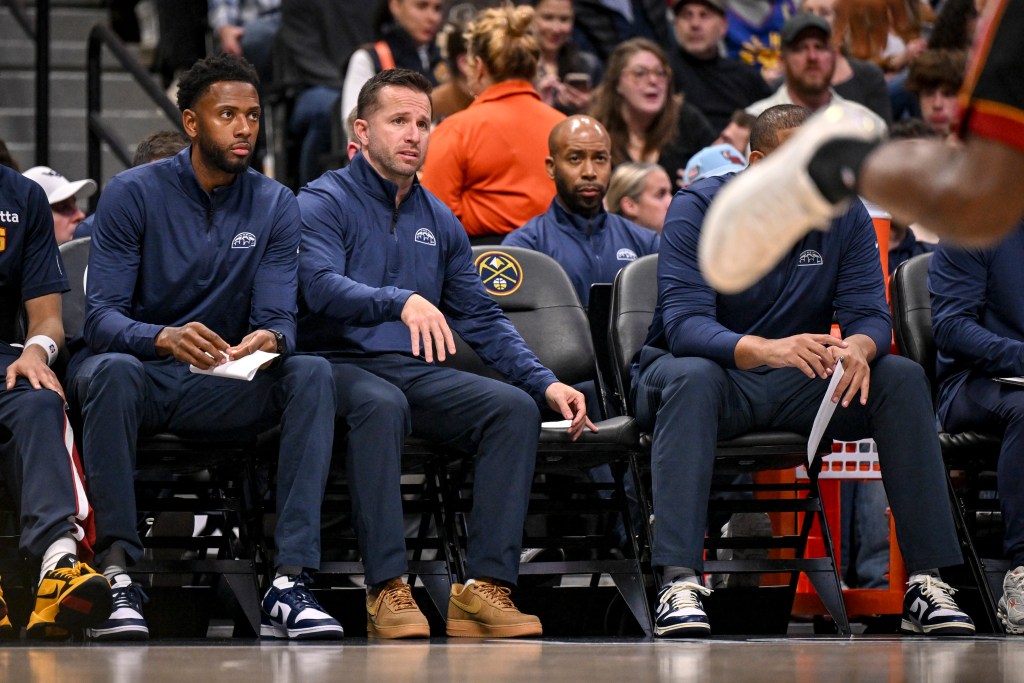
Fast forward eight years, Barea now serves as an assistant coach for the Denver Nuggets under head coach David Adelman. His role focuses on offensive strategy, but Adelman emphasizes that Barea’s vibrant personality and ability to connect with players are equally vital to his presence on the bench. “His attitude, his energy, who he is as a person, the way he can talk to the players,” Adelman said.
Barea’s basketball journey has always been intertwined with his Puerto Rican identity. After attending Northeastern University, he played for the Cangrejeros de Santurce in the BSN before signing with the Mavericks as an undrafted free agent. His pivotal moment came in 2011, when he scored 17 points in Game 5 of the NBA Finals, becoming only the second Puerto Rican to win an NBA championship.
His connection to Puerto Rico deepened during the aftermath of Hurricane Maria, when he mobilized the Dallas community to raise funds for recovery efforts. Utilizing Cuban’s private plane, he transported essential supplies back to his home island. Barea continued to honor his roots by returning to play for Santurce in his later years, cherishing the joy of the game.
Building Relationships and Future Aspirations
Growing up, Barea was influenced by his mother, who coached tennis and volleyball. Although he excelled in multiple sports, he gravitated towards team sports, relishing the camaraderie and shared experiences. “Team sports are more fun,” he noted, reflecting on his childhood memories of traveling across Puerto Rico to compete.
His relationship with Adelman has been pivotal in his coaching career. The two crossed paths during Barea’s tenure with the Minnesota Timberwolves, where they bonded over sports discussions after games. Their shared experiences laid the groundwork for Barea’s eventual hiring by Adelman as he sought former players who could resonate with the current roster.
In his new role, Barea has quickly connected with Nuggets players, even showcasing his golfing skills during training camp in San Diego. Adelman appreciates Barea’s insights drawn from his time playing alongside legendary big man Dirk Nowitzki. Barea aims to enhance the team’s performance by sharing strategies that worked during his own playing days.
Barea’s passion for basketball extends beyond coaching. He is currently working on a sports complex in San Juan, which will feature three basketball courts and a soccer field. This project, born from his desire to give back to the community, aims to serve as a training ground for Puerto Rico’s national team. He hopes that one day, either the Nuggets or the Mavericks will hold training camp at the facility.
“Traveling the whole world playing for Puerto Rico for me is like the coolest thing you can do,” Barea expressed, underscoring his commitment to representing his homeland. He remains optimistic about his coaching career, stating, “I’m enjoying it and I’m doing better than I thought I was going to do early in my career.”
As Barea embraces his coaching journey with the Nuggets, he reflects on how his spontaneous start has shaped his approach. The lessons learned during his brief coaching stint in Mayagüez influenced his understanding of the game and solidified his decision to pursue coaching seriously. “Coaching was fun,” he concluded, “and it would be worth pursuing later on.”