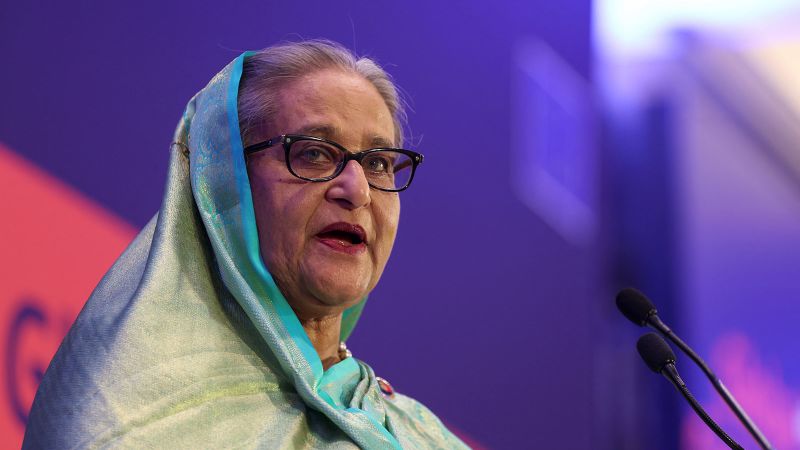
The former Prime Minister of Bangladesh, Sheikh Hasina, has been convicted of crimes against humanity in connection with the violent suppression of student protests that led to her removal from power. The verdict was rendered by a panel of three judges from the International Crimes Tribunal on Monday, marking a significant moment in the country’s political landscape. Prosecutors are seeking the death penalty, and the court is currently in session to determine her sentence.
The charges against Hasina include inciting extrajudicial killings, ordering lethal force against protestors, and directing law enforcement to use drones and helicopters during the unrest. The court heard that approximately 1,400 protestors lost their lives and up to 25,000 were injured over several weeks of protests in 2024. These events ultimately culminated in Hasina fleeing to India in August of that year.
The trial faced substantial criticism from Hasina’s legal team, who highlighted concerns regarding the fairness of the proceedings. Last week, they submitted a formal appeal to the United Nations Special Rapporteur on extrajudicial executions, arguing that there were serious deficiencies in due process and fair trial rights.
Despite her absence from the courtroom in Dhaka, where she remains in self-imposed exile, the verdict could have wide-ranging implications for Bangladesh’s political stability. Hasina ruled the nation with strict authority from 2009 until her ousting in 2024, and the conviction may ignite further political turmoil as the country approaches national elections expected in February 2025.
The trial has drawn international attention, with observers closely monitoring the developments. As tensions rise within the country, there are fears that Monday’s ruling could lead to increased unrest among her supporters and exacerbate the already volatile political environment.
As the court prepares to announce its sentence, the outcome of this case will likely influence the trajectory of Bangladesh’s political future and the legacy of Sheikh Hasina, a figure who has been both revered and reviled throughout her tenure. This story is ongoing, and updates will follow as new information becomes available.