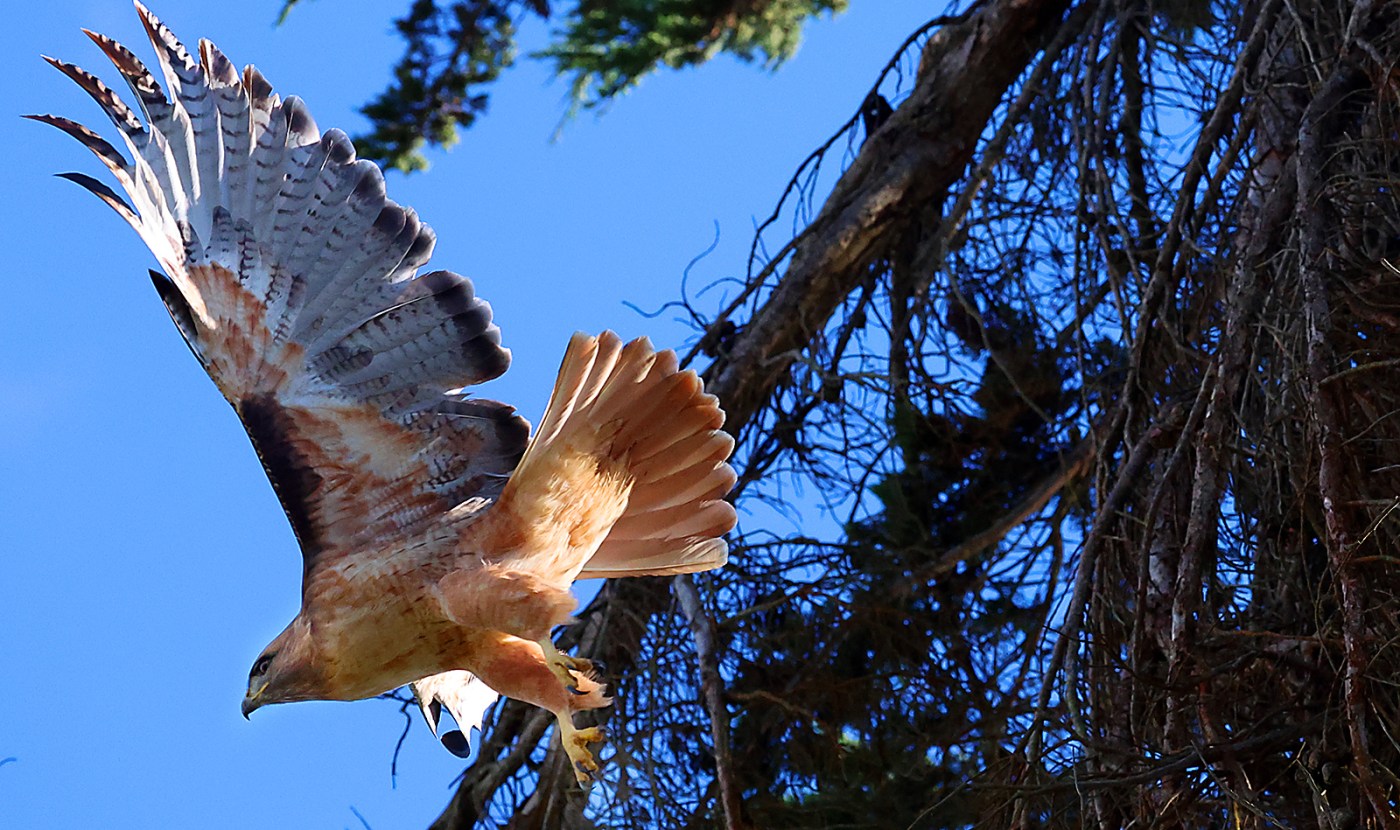
BREAKING: A stunning display of nature unfolded today as a red-tailed hawk was spotted hunting for food at Lighthouse Field State Beach in Santa Cruz, California. Witnesses observed the majestic bird as it gracefully lifted off from a branch, showcasing its impressive nearly 5 feet wingspan while scanning the landscape for prey.
The hawk was seen successfully capturing a rodent, a moment that highlights the ongoing survival struggles of wildlife in urban settings. This urgent sighting is a reminder of the raw beauty and resilience of nature, as these birds migrate across vast distances from the Arctic Circle in northern Alaska and Canada down to parts of Central America during non-breeding seasons.
According to the Cornell Lab of Ornithology, the red-tailed hawk is the most common hawk in North America. Many bird watchers take delight in spotting these birds soaring above open fields or perched atop telephone poles, their keen eyes fixed on the ground for movement. Locally, red-tailed hawks are more abundant in winter, as they are joined by northern migrants seeking warmer climates.
The adult red-tailed hawk typically stands between 18-26 inches tall and is known for its striking appearance and remarkable hunting skills. These birds have been observed hunting in pairs, strategically guarding opposite sides of the same tree to catch unsuspecting prey like tree squirrels.
The emotional impact of such sightings cannot be understated. The presence of these hawks serves as a vital indicator of ecological health in the area. The oldest known wild red-tailed hawk was found in Michigan in 2011, boasting an impressive age of 30 years, 8 months, a testament to the resilience of this species.
As nature enthusiasts continue to flock to Lighthouse Field, the urgent need to protect these habitats becomes increasingly clear. Observers are encouraged to remain vigilant and respectful of wildlife, ensuring these incredible creatures can thrive for generations to come.
Stay tuned for more updates as this story develops. The dynamic interactions between wildlife and their environments continue to unfold, reminding us of the beauty and fragility of nature.