The incidence of silicosis among workers in California’s countertop fabrication industry has sharply increased, prompting urgent calls from medical and occupational safety experts for the state to take decisive action. Health officials warn that existing regulations are insufficient to protect hundreds of relatively young workers from contracting this incurable lung disease. Experts advocate for a complete phase-out of hazardous engineered stone, akin to measures already implemented in Australia.
Engineered stone, prevalent in the U.S. market, often contains over 90% pulverized crystalline silica, a significantly higher concentration than natural stones like marble and granite. During the cutting and polishing processes, fine silica particles are released into the air. When inhaled, these particles can settle in the lungs, leading to tissue scarring and severely impaired respiratory function. Furthermore, exposure to respirable silica has been associated with lung cancer and chronic obstructive pulmonary disease.
According to the California Division of Occupational Safety and Health (Cal/OSHA), an estimated 1,000 to 1,500 stoneworkers in the state may develop silicosis within the next decade, potentially resulting in approximately 285 deaths. The state employs around 5,000 countertop fabrication workers, predominantly Latino immigrants.
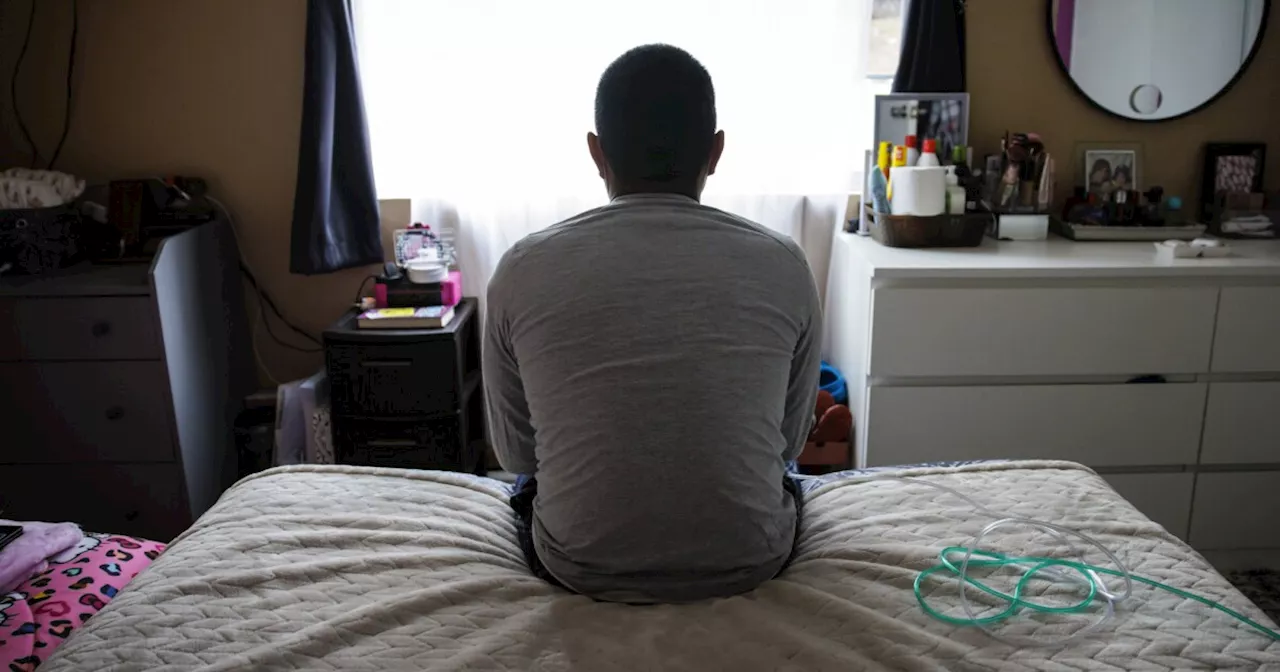
Among those affected is Javier Lopez, a 43-year-old father of four who now relies on an oxygen machine for breathing due to his condition. Lopez has been waiting for a double lung transplant after years of working with engineered stone. Tragically, two of his colleagues have already died from the disease, while three others are on lung transplant waiting lists. Lopez expressed his frustration, stating, “I feel desperate just sitting here unable to do anything.”
The urgency for regulatory change has grown in light of these health crises. Medical professionals recommend that California emulate Australia’s approach, which included banning the manufacture and supply of engineered stone benchtops in July 2024. This ban compelled major manufacturers to transition to silica-free alternatives in the Australian market, although many continue to sell their higher-silica products in the U.S.
Despite the companies’ claims that their products are safe when proper protocols are followed, evidence suggests otherwise. A spokesperson for Cosentino North America stated, “Silicosis is preventable when proper safety and health measures are in place to protect workers against inhalation of silica dust in the workplace.” However, the reality on the ground indicates that compliance with safety measures is alarmingly low.
Cal/OSHA investigations have shown that 94% of the 107 fabrication sites examined had violations of silica regulations as of mid-October 2023. The state has approved stricter standards, yet advocates like Maegan Ortiz, director of the Instituto de Educacion Popular del Sur de California, argue that little progress has been made in protecting stoneworkers. Ortiz emphasized that many workers are still exposed to harmful dust even in larger shops that claim to follow safety regulations.
Despite the mounting evidence and the rising number of cases—over 430 confirmed silicosis cases in California since 2019, including 25 deaths and 48 lung transplants—state regulatory bodies have yet to implement a comprehensive ban on engineered stone. A draft memorandum obtained by KQED suggested that the Governor’s Office could issue an emergency declaration to halt the processing of artificial stone, but that draft remains unvetted.
The lack of action at the state level raises concerns about the well-being of countless workers. Lopez’s wife lamented the lack of accurate information provided by manufacturers and employers about the risks associated with artificial stone. “It’s painful because I’ve always seen him working. He’s always looked out for us,” she said, visibly distressed about her family’s financial struggles since Lopez’s illness.
The legal landscape is also changing, as numerous workers, including Lopez, have initiated lawsuits against major manufacturers of engineered stone, such as Caesarstone and Cosentino. These companies are facing claims from over 500 individuals regarding silica-related injuries. For instance, Caesarstone reported a $46 million provision for probable losses in its recent earnings call, reflecting the growing financial implications of these lawsuits.
As the demand for engineered stone continues to rise, particularly in California, where rebuilding efforts following recent wildfires are underway, the health risks to workers remain a pressing concern. The multibillion-dollar artificial stone industry is expected to grow, driven by consumer preferences for affordable, stain-resistant materials. Yet, many homeowners remain unaware of the potential health hazards faced by the workers who create their countertops.
Experts predict that silicosis cases will keep increasing even if exposure to silica dust were to cease immediately. By the time symptoms manifest, the disease is often already advanced. Dr. Ryan Hoy, a respiratory physician and researcher at Monash University, stated, “Unfortunately, that is definitely the tip of the iceberg of workers that are currently affected.”
California’s public health officials and medical experts advocate for an immediate transition to safer alternatives. They point to Australia’s experience, where manufacturers adapted to market changes without significant disruptions to the building industry. Dr. Hayley Barnes, a pulmonologist who has studied silicosis in Australia, noted that fears of job losses and industry collapse with the ban on engineered stone did not materialize.
The tide of public opinion is shifting, and advocates are calling for more stringent regulations to protect workers in California’s stone industry. As the number of silicosis cases continues to rise, the need for action is increasingly urgent. The time for change is now.