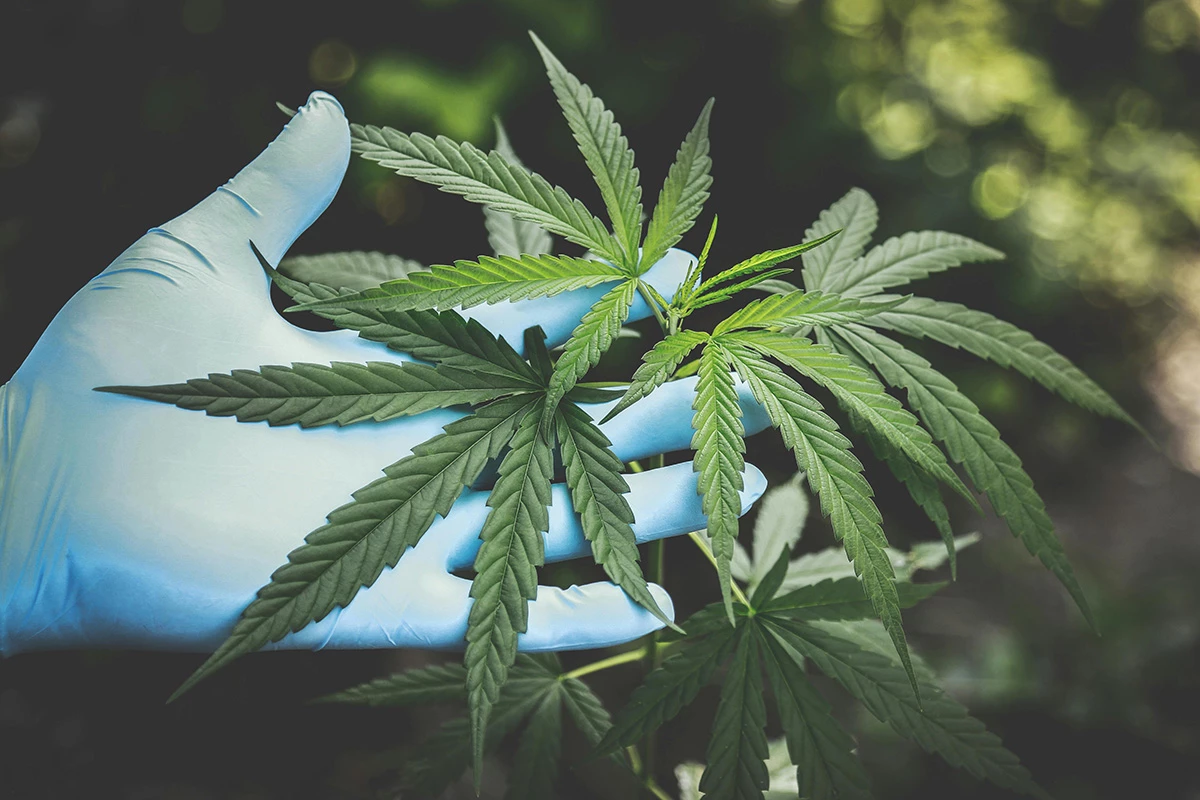
A team of biologists from The University of Adelaide in Australia has created a groundbreaking scanner designed to evaluate the potency of cannabis plants before they are harvested. This innovative technology addresses a critical need for medical cannabis growers who must ensure their crops comply with regulations concerning the levels of Tetrahydrocannabinol (THC), the psychoactive compound responsible for the high associated with cannabis use.
Understanding the potency of cannabis is vital not only for medical growers but also for industrial hemp farmers, who are constrained by strict THC limits. According to Dr. Aaron Phillips, who led the study published in Industrial Crops and Products, “The capacity to predict cannabinoid profiles weeks before harvest has significant implications for cannabis production, enabling growers and breeders to enhance product quality, reduce costs, and ensure regulatory compliance.”
The scanner offers advantages such as identifying plants with optimal cannabinoid content, thereby streamlining the cultivation process. It also assists growers in determining the best time for harvest, maximizing yield and reducing the growth cycle duration. This predictive capability could further aid researchers in classifying cultivars, enabling early selection of diverse parent plants in breeding programs.
Innovative Leaf-Scanning Technology
The device employs a method known as fan leaf hyperspectral reflectance (FLHR), which allows for instant readings using intact fan leaves. This eliminates the need for costly and time-consuming laboratory techniques such as high-performance liquid chromatography (HPLC) and gas chromatography-mass spectrometry (GC-MS), which rely on hazardous chemicals.
Using specialized broadband halogen lighting and a spectroradiometer, the scanner measures the wavelengths of light reflected from the leaf’s surface. This technique captures data across 2,151 wavelength bands, enabling the researchers to assess the biochemical composition of the leaves without any invasive procedures.
The team has developed machine learning models that analyze the spectral data from leaf scans, correlating it with the actual cannabinoid concentrations found in the mature flowers of the plants. This data-driven approach ensures a high degree of accuracy in predicting the final cannabinoid content.
To validate the reliability of their model, the researchers employed a “leave-one-out” validation scheme. This involved training the model on data from nearly all plants in the study and testing it on one previously unseen plant. This rigorous process was repeated for all 70 plants in the experiment, demonstrating the model’s performance in realistic conditions.
Future Developments and Applications
The research team plans to further enhance the technology by incorporating additional genotypes and exploring the earliest stages of growth at which cannabinoid content can be predicted accurately. They are collaborating with Compolytics, a German spectral sensing firm, to develop a compact scanning device comparable in size to a supermarket barcode scanner.
Looking ahead, Dr. Phillips noted an ambitious goal: “to test our approach with drones that can scan fields of hemp to find plants that exceed legal THC thresholds.” This advancement could revolutionize the way cannabis and hemp are cultivated, ensuring compliance with regulations while optimizing quality and yield.
As the cannabis industry continues to evolve, innovations like this scanner will play a crucial role in shaping sustainable practices and improving the efficiency of cultivation methods, ultimately benefiting both growers and consumers.