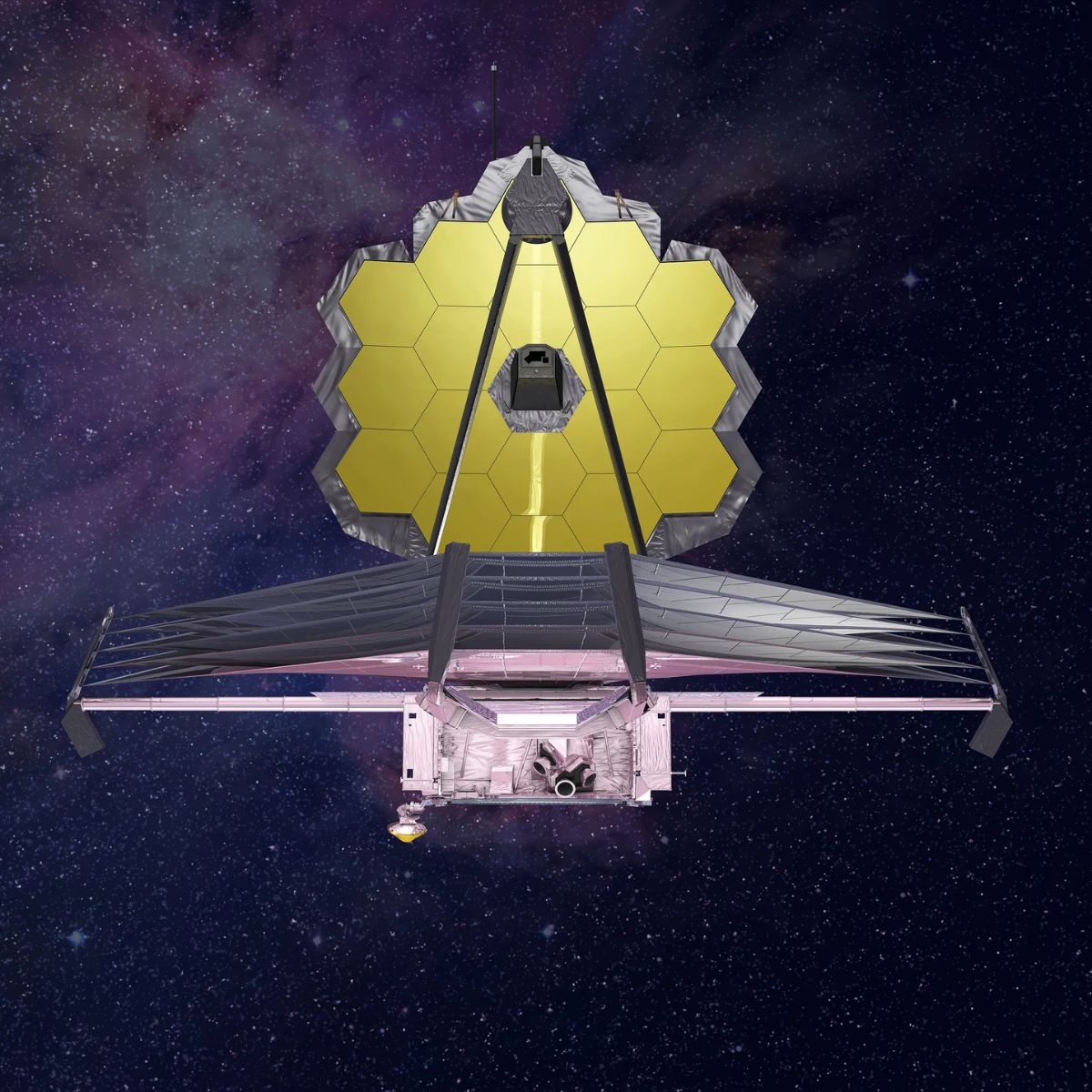
The James Webb Space Telescope has identified a supermassive black hole in the early universe that is expanding at an extraordinary rate. This discovery, made by researchers affiliated with the European Space Agency (ESA), provides significant insights into the formation and growth of black holes shortly after the Big Bang, approximately 1.5 billion years later.
Analysis of the data gathered by Webb reveals that this black hole is not only massive but is also growing much faster than previously anticipated. This challenges existing theories regarding the rate at which supermassive black holes can accumulate mass in the early universe.
Unprecedented Findings in Cosmic Evolution
Researchers utilized Webb’s advanced infrared capabilities to observe the distant galaxy housing this black hole. The findings suggest that the black hole is consuming gas and dust at a rate that is significantly higher than what current models predict for such an early cosmic environment. Analyzing the brightness and emissions from the galaxy, scientists calculated that the black hole’s mass could exceed 1 billion solar masses.
The implications of this discovery are broad, potentially reshaping our understanding of cosmic evolution. Supermassive black holes typically form through the merging of smaller black holes and the accumulation of matter over time. The rapid growth rate observed poses questions regarding the mechanisms that allow such massive structures to develop in a relatively short timeframe.
Future Research Directions
The implications of this discovery extend beyond the black hole itself. It opens new avenues for investigating how galaxies and their central black holes interact and evolve together. Upcoming observations from the James Webb Space Telescope will focus on similar structures to determine whether this rapid growth rate is an isolated case or part of a broader phenomenon in the early universe.
As researchers continue to analyze the data, they anticipate that further findings will provide more clarity on the origins of supermassive black holes. The collaboration between various international teams, facilitated by the ESA, underscores the importance of global efforts in understanding our universe’s complex history.
This discovery not only enriches our knowledge of astrophysics but also highlights the capabilities of modern telescopes to unveil the mysteries of the universe. As scientists delve deeper into the cosmos, they hope to uncover more about the forces that shaped the very fabric of our existence.