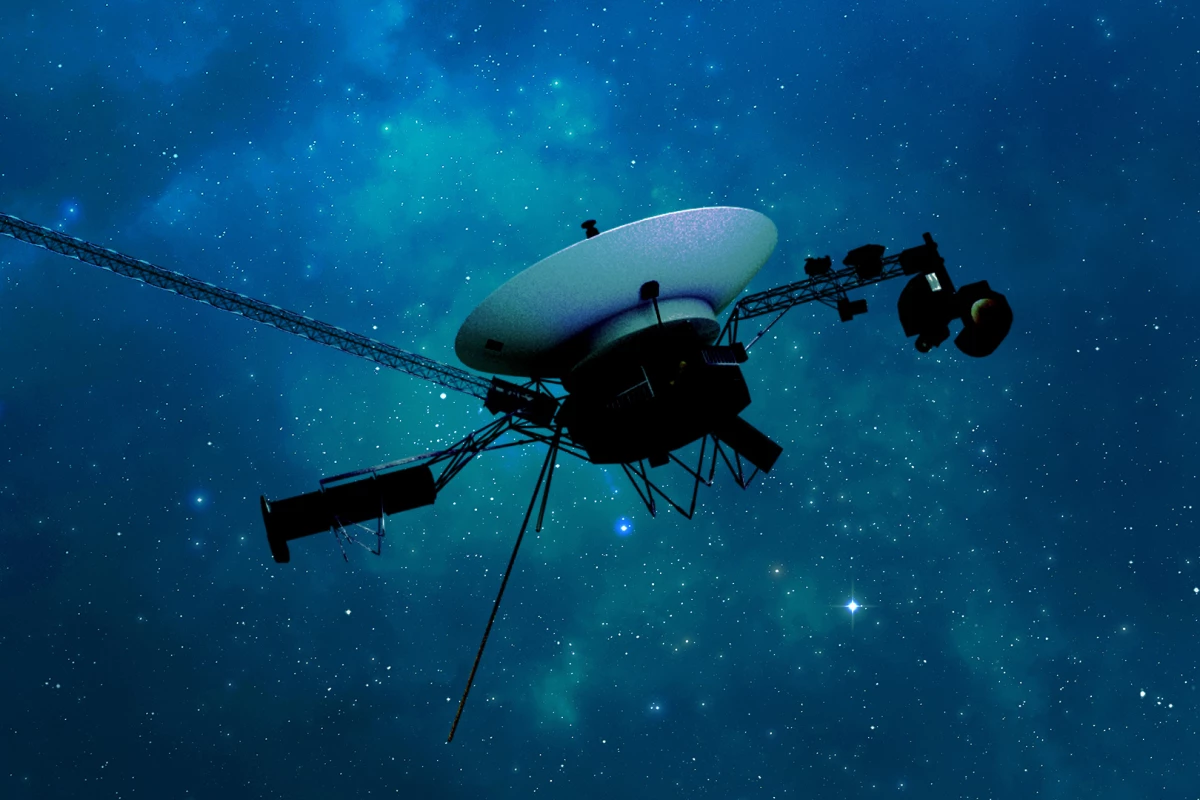
As it journeys further into the cosmos, the Voyager 1 spacecraft is set to achieve a remarkable milestone. By approximately November 15, 2026, it will become the first human-made object to be located a full light day away from Earth, meaning that a radio signal sent from our planet will take 24 hours to reach it. This unprecedented distance underscores the vastness of space and the impressive capabilities of this aging probe, which was launched in 1977.
Voyager 1’s mission began with a focus on the outer planets, specifically Jupiter and Saturn. After successfully conducting flybys, the probe has continued on a trajectory into interstellar space. As it travels, the time it takes for light to reach Voyager 1 has steadily increased. Currently, the probe is situated about 15.7 billion miles (approximately 25.3 billion km) from Earth, with a radio message taking 23 hours, 32 minutes, and 35 seconds to arrive.
The experience of communicating with distant space missions illustrates the challenges posed by the speed of light. For instance, during the Apollo Moon landings, a communication delay of about 2.6 seconds was noticeable, owing to the Moon’s distance of roughly 226,000 miles (around 363,000 km). As missions venture farther, the delays become more significant. For example, a message to Mars can take up to four minutes, while signals to Jupiter can take up to 52 minutes. Even Pluto, which continues to be debated in terms of its planetary status, requires a signal delay of nearly 6.8 hours.
The aging technology of Voyager 1 remains operational despite the challenges of extreme cold and radiation in deep space. NASA aims to keep the probe functioning until its nuclear power source expires, which is anticipated to happen within the next few years. This determination reflects the profound commitment of the NASA team to maintain communication with their historic spacecraft.
As Voyager 1 moves farther from Earth, its sister probe, Voyager 2, remains closer at a distance of approximately 19.5 light hours. Despite the incredible distances involved, both spacecraft remain in contact with Mission Control through NASA’s Deep Space Network. However, as Voyager 1 crosses the threshold into the realm of a one-day light delay, engineers will face a new reality. Any commands sent to the probe will take two days to be acknowledged, transforming the process of maintaining the spacecraft into a slow-motion exercise in patience.
Voyager 1’s journey continues to captivate the imagination of scientists and the public alike. The probe’s ability to withstand the harsh conditions of space for nearly five decades is a testament to human ingenuity and the ongoing quest for knowledge beyond our home planet. As it draws closer to the milestone of being one light day away, Voyager 1 serves as a beacon of exploration and discovery in the uncharted territories of the universe.