The Utah Legislature announced on November 21, 2023, its decision to appeal a congressional district map ruling by 3rd District Judge Dianna Gibson to the Utah Supreme Court. This move comes in response to Gibson’s controversial selection of a congressional map for the 2026 midterm elections, which has reignited a lengthy legal battle over redistricting in the state.
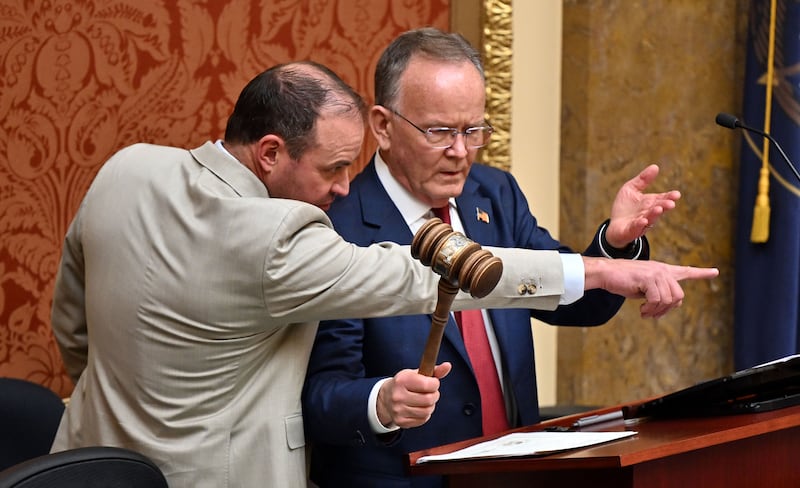
Approximately three dozen Republican lawmakers gathered at the Utah Capitol to discuss their next steps, emphasizing the urgency of their response. Senate President Stuart Adams and Speaker Mike Schultz expressed their commitment to a swift resolution, seeking a permanent injunction to expedite a final ruling from Gibson. This would enable them to file a full appeal with the state’s highest court.
Consultations with Utah Governor Spencer Cox led to plans for a special legislative session on December 9, 2023. During this session, lawmakers may consider postponing candidate filing deadlines to allow for further adjustments to the state’s electoral boundaries. Schultz articulated the significance of this moment, stating, “This is a defining moment for Utah’s governance. Two branches of government, those branches chosen by Utah voters, are standing together to correct this wrong.”
The background of this dispute traces back over the past 18 months, during which Utah courts determined that the GOP majority had violated the state constitution. This included amending the Better Boundaries initiative, known as Proposition 4, in 2020 and evading the anti-gerrymandering provisions set forth in 2021. Although the Legislature complied with Gibson’s orders to redraw congressional seat boundaries, they challenged the courts’ involvement, asserting that redistricting falls under legislative authority.
Tensions escalated when Gibson rejected the Legislature’s remedial map, which aimed to create two more competitive districts. Instead, she favored a map submitted by the plaintiffs, resulting in four uncompetitive districts, including a Democratic-leaning seat in northern Salt Lake County. Adams criticized this outcome, stating, “By design or by default, Judge Gibson has authorized the most partisan, and thus the most gerrymandered map in the history of the state of Utah.”
State election officials have begun the necessary adjustments to align the electoral process with the new map. Nevertheless, legislative leaders maintain hope for a successful court challenge against the so-called “Map 1” before the next election cycle.
Looking ahead, legislators are also considering a constitutional amendment to clarify their authority over ballot initiatives, particularly those affecting the structure of government. This initiative would parallel a previous amendment, known as Amendment D, which was set to appear on the 2024 ballot but was invalidated by Gibson due to concerns over the clarity and publicity of its language.
As this situation unfolds, the implications for Utah’s political landscape and governance will be closely monitored, with both sides preparing for a significant legal battle in the coming months.