Agricultural practices in China have evolved significantly over recent decades, particularly in the North China Plain, a key grain-producing region. A recent study led by Professor Yong Hou from China Agricultural University examines the challenges and opportunities for integrating crop and livestock systems in this area, which is characterized by both intensive farming and environmental concerns.
The research, conducted in Quzhou County, Hebei Province, highlights the consequences of agricultural specialization. Since the implementation of reform and opening-up policies, agricultural production efficiency has increased. However, this has come at a significant environmental cost, including excessive use of chemical fertilizers, leading to water eutrophication and air pollution. Within this context, the study underscores the urgent need for improved nutrient cycling through Integrated Crop-Livestock Systems (ICLS).
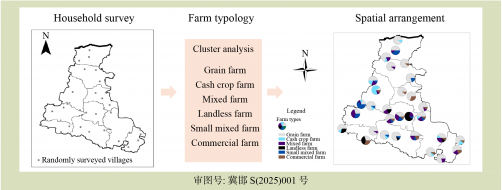
The findings were published in the journal Frontiers of Agricultural Science and Engineering. The research team, which included scholars from Wageningen University & Research and Nanjing Agricultural University, utilized household surveys and spatial analysis to investigate the types and distribution of farms in the region. They randomly selected 300 farm households from 30 villages across 10 townships, identifying six major farm types: grain farm, cash crop farm, mixed farm, commercial farm, small mixed farm, and landless farm.
Farm types such as grain farms, which mainly produce wheat and maize, are facing serious challenges due to the over-application of chemical fertilizers. Meanwhile, landless and mixed farms often depend on imported feed, resulting in high manure production but low application rates in the fields. This situation contributes to a broken nutrient cycle, further exacerbating environmental issues.
Spatial distribution analysis revealed that different farm types cluster in distinct regions. For instance, landless farms are primarily located in the central part of Quzhou County, while cash crop farms are concentrated in the northern and southwestern areas. This pattern indicates a significant spatial decoupling of crop and livestock production, raising concerns about the sustainability of agricultural practices in this vital region.
The study also identified key policy factors influencing the current agricultural landscape. Farmland protection policies and grain subsidies have favored the dominance of grain farms. The Household Contract Responsibility System (HCRS) has led to land fragmentation, with most farms covering less than 1 hectare. Additionally, the outflow and aging of rural labor have limited technological advancements in farming practices.
To tackle these challenges, the study proposes several policy recommendations. One suggestion is to guide grain farms in reducing chemical fertilizer use through free soil testing services and adjusted fertilizer subsidies. Another recommendation includes strengthening manure treatment facilities in livestock and poultry farms to facilitate manure-feed exchange between crop and livestock producers. Additionally, optimizing regional layouts to balance crop and livestock ratios could enhance sustainability, including developing breeding operations in major grain-producing areas or establishing manure return channels in concentrated breeding regions.
This comprehensive study provides a scientific foundation for transitioning towards sustainable agricultural practices on the North China Plain. Its methodology can also be adapted for use in other regions, contributing to the dual goals of enhancing agricultural productivity while ensuring ecological protection. As the world grapples with the challenges of sustainable food systems, the insights from Quzhou County may serve as a valuable model for future agricultural policies.