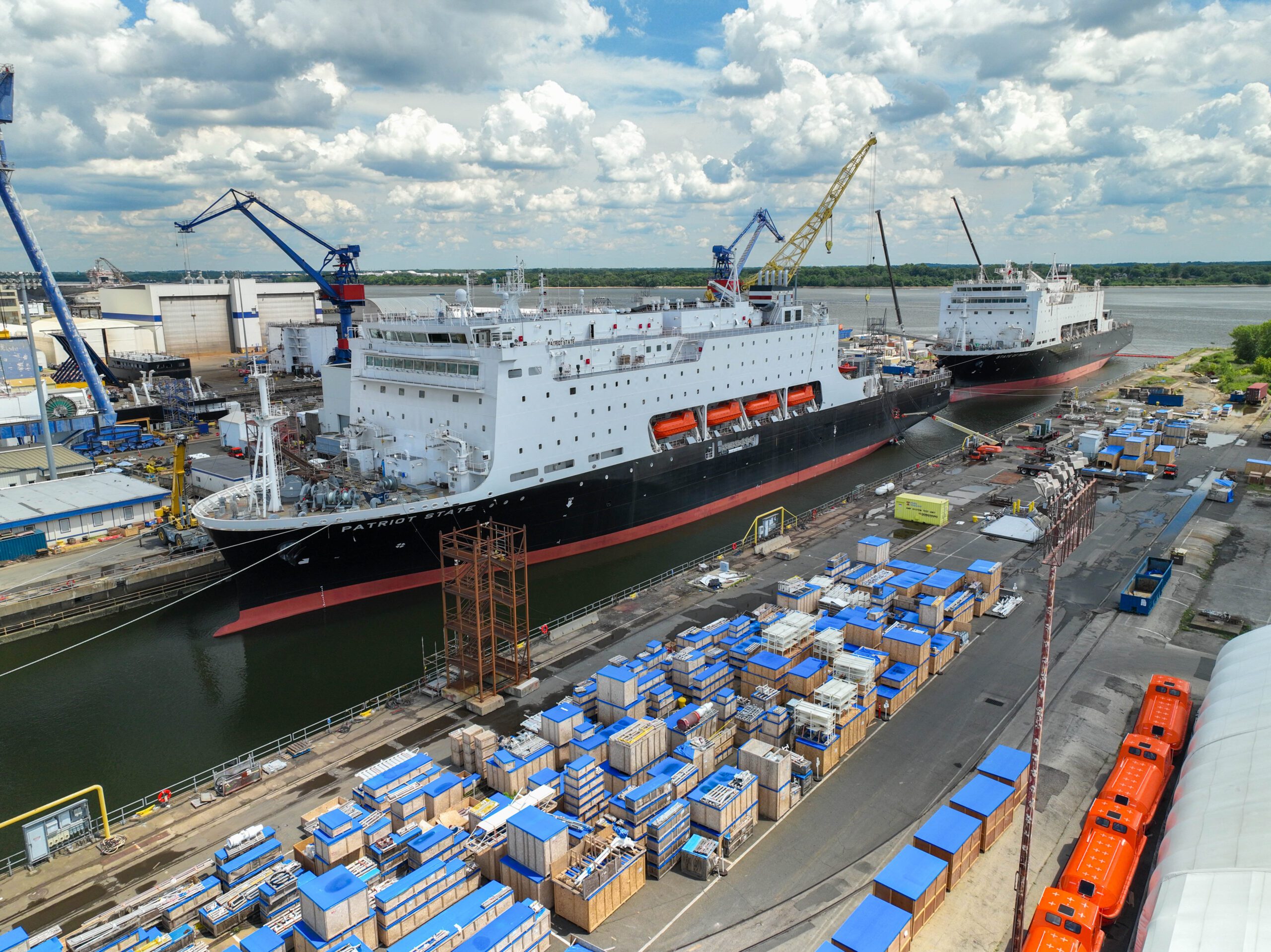
The U.S. shipbuilding industry is on the brink of significant transformation, driven by lessons learned from South Korea’s advanced shipbuilding practices. As highlighted in the 2024 Clarksons Global Shipbuilding Review, South Korea and China dominate the global market, with South Korea increasing its shipyard output by 22% and capturing a 28% market share in compensated gross tonnage last year. Meanwhile, China’s output rose by 18%, securing a commanding 53% market share.
In response to this competitive landscape, the U.S. is actively pursuing policies to enhance its shipbuilding capabilities. Two significant initiatives have emerged. The first is the proposed Shipbuilding and Harbor Infrastructure for Prosperity and Security (SHIPS) for America Act, which has garnered bipartisan support but has yet to be signed into law. The second initiative, an executive order titled “Restoring America’s Maritime Dominance,” mandates the development of a comprehensive Maritime Action Plan, which was due by November 5, 2023.
The Maritime Action Plan aims to strengthen the U.S. maritime industrial base, focusing on shipbuilding, repair, and components, while also recognizing the critical need for a well-trained domestic maritime workforce. Proposed measures include a Maritime Security Trust Fund, reforms to the acquisition process, and expanded mariner training, alongside modernization efforts at the U.S. Merchant Marine Academy.
Collaborative opportunities are also on the horizon. During a recent visit to South Korea, President Trump secured an investment of $150 billion from the South Korean shipbuilding sector into U.S. shipyards. Already, HD Hyundai Heavy Industries has partnered with Huntington Ingalls Industries to construct auxiliary ships for the U.S. Navy, marking a significant step in enhancing U.S. shipbuilding capabilities.
Learning from South Korea’s Shipbuilding Success
The partnership with South Korea represents a strategic move for the U.S. The nation’s major shipyards, including HD Hyundai Heavy Industries, Hanwha Ocean, and Samsung Heavy Industries, are recognized for producing high-quality vessels through innovative practices and digitalization. U.S. officials have expressed admiration for the efficiency and technological advancements observed in South Korean shipyards during recent visits.
South Korea’s success is attributed to decades of collaboration with global partners and substantial investments in digital technologies. This approach has enabled South Korean shipbuilders to adopt and refine best practices, resulting in a highly efficient industrial system capable of delivering projects on time and within budget. The concept of the “digital shipyard” is pivotal. By leveraging digital 3D workflows and digital twins, shipyards can optimize the design process from inception to production and beyond, enhancing information accessibility among stakeholders.
With the ability to work on shared models simultaneously, naval architects and engineers can complete more design iterations rapidly, reducing errors and costs while improving quality. These optimized models also expedite the classification approval process, further streamlining operations.
Addressing Workforce Challenges
As the U.S. navigates its shipbuilding renaissance, addressing workforce shortages is critical. The U.S. currently faces challenges in attracting a sufficiently trained maritime workforce, a struggle that is not unique. South Korea itself has grappled with similar issues, particularly following the COVID-19 pandemic when newbuilding work resumed. The workforce, previously reduced from around 203,000 to approximately 92,000 following the 2014 market downturn, has struggled to regain its numbers.
Digital technologies can play a vital role in overcoming recruitment challenges. By eliminating redundant tasks, engineers and naval architects can enhance their productivity, making the industry more appealing to younger generations. The rapid advancements in artificial intelligence also promise to unlock new efficiencies and value in shipbuilding processes.
Revitalizing the U.S. shipbuilding industry is crucial for various reasons, including job creation, economic growth, and national security. Through strategic partnerships and the adoption of proven practices from allies like South Korea, the U.S. has a pathway to not only climb the global shipbuilding rankings but to re-establish its maritime strength. By embracing the digital shipyard concept and focusing on workforce development, the U.S. can position itself for a successful future in shipbuilding.