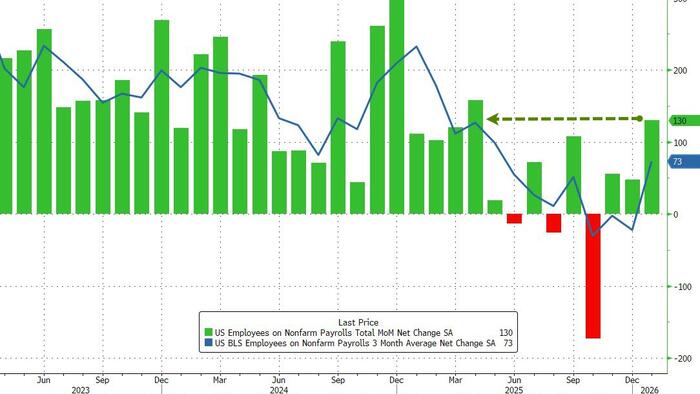
The United States economy added an unexpected **130,000 jobs** in January 2025, marking the highest monthly increase since December 2024. This figure surpassed the median estimate of **65,000 jobs** and came as a surprise to analysts who had anticipated significantly weaker numbers. The **Bureau of Labor Statistics (BLS)** released the report after a period of warnings from the Trump administration, which had suggested a much lower job growth expectation ahead of the announcement.
Leading up to the jobs report, members of the administration, including economic adviser **Peter Navarro**, expressed concerns. Navarro stated that expectations for job growth needed to be revised downward, while former chairman of the Council of Economic Advisers, **Kevin Hassett**, advised not to panic if the data fell short. Market predictions were cautious, with many traders estimating a total of only **35,000 jobs** would be added. The actual figures caught both market experts and the public off guard.
Context of Job Gains and Revisions
Despite the positive surprise, the BLS’s report also included significant negative revisions to previous months. December’s job growth was revised down from **50,000 to 48,000**, and November’s figures were adjusted from **56,000 to 41,000**. These revisions reflect a trend where **25 of the last 26 jobs reports** were adjusted downward, indicating a weaker employment landscape than previously understood.
The January increase of **130,000 jobs** was notable not just for its size but also because it was higher than **79 out of 80 forecasts**, with only **Citigroup’s** estimate of **135,000 jobs** being more optimistic. Alongside job growth, the unemployment rate fell to **4.3%**, down from **4.4%** in December, surprising analysts who expected the rate to remain unchanged.
Among various demographic groups, the jobless rate for teenagers decreased to **13.6%**, while rates for adult men, women, and various ethnic groups also showed modest improvements. The labor force participation rate rose slightly to **62.5%**, indicating a growing number of individuals actively participating in the job market.
Sector-Specific Insights
The report highlighted strong job gains in specific sectors. **Health care** accounted for the largest share of new jobs, adding **82,000** positions, primarily in ambulatory services and hospitals. **Social assistance** and **construction** sectors also contributed significantly, with gains of **42,000** and **33,000** jobs, respectively. Conversely, the federal government saw a loss of **34,000 jobs**, continuing a downward trend that has seen federal employment decline by **327,000** since its peak in October 2024.
While the January figures reflect a brief moment of optimism, analysts caution that upcoming revisions may paint a less favorable picture. The BLS’s benchmark revisions typically adjust employment counts to align with comprehensive payroll data. For March 2025, the reported total nonfarm employment level was revised downward by **898,000**, indicating that job creation for the year was far less robust than initially reported.
The adjustment revised the total job addition for 2025 from **584,000 to 181,000**, suggesting that the economy added an average of only **15,000 jobs per month** rather than the previously expected **49,000**. This stark revision raises concerns about the sustainability of job growth and the overall health of the labor market.
As the economy navigates these complexities, the Federal Reserve may face pressure to adjust interest rates in response to the evolving employment landscape. Analysts will be closely monitoring future reports for further indications of economic stability or decline.