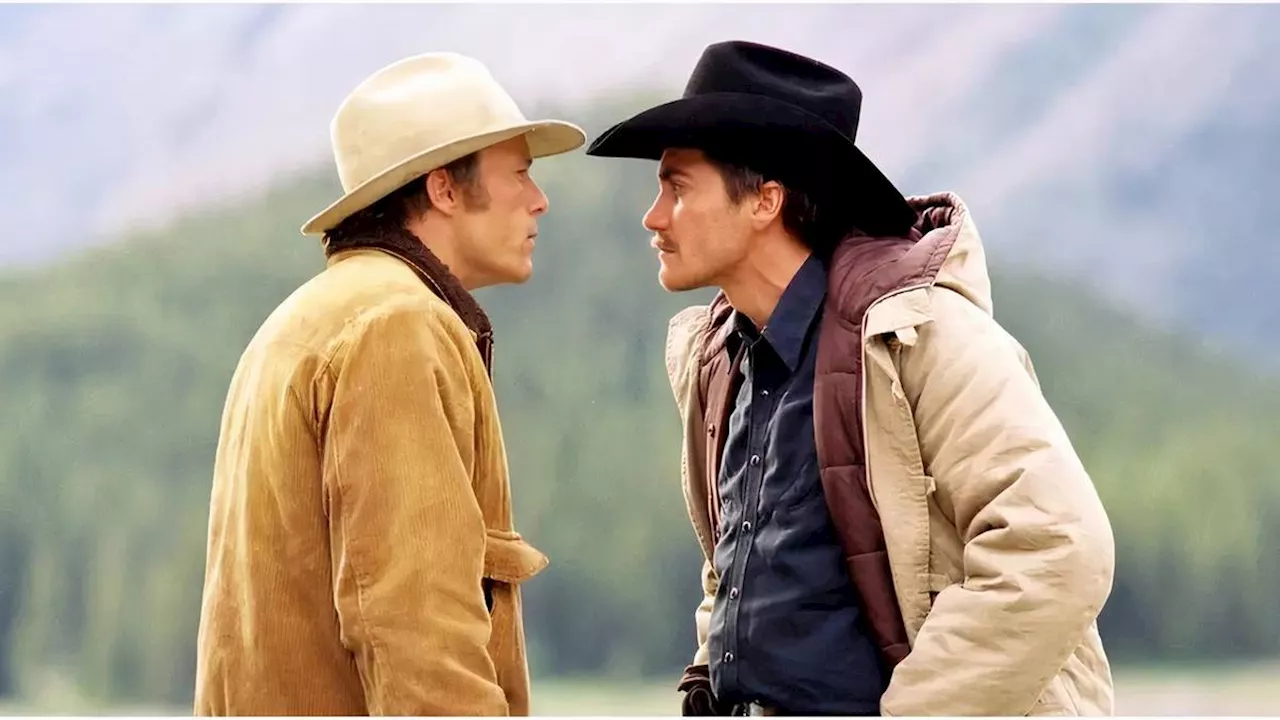
Brokeback Mountain, the groundbreaking film directed by Ang Lee, continues to resonate with audiences nearly two decades after its release. Premiering at the Venice Film Festival on September 2, 2005, and hitting theaters on December 9, 2005, the film tells the poignant story of forbidden love between two cowboys, Jack Twist and Ennis Del Mar, played by Jake Gyllenhaal and Heath Ledger. Despite initial backlash and competition from other films, its legacy remains significant in both cinematic history and discussions surrounding LGBTQ+ representation.
The film opens in 1963 in the expansive landscape of Wyoming’s Big Sky country. Jack and Ennis’s first intimate encounter is a complex tapestry of passion and conflict. The rawness of their connection is palpable, as they navigate their feelings against a backdrop of rigid societal expectations. The vastness of the surrounding wilderness mirrors the emotional distance they must traverse in their lives, illustrating the challenges of living authentically in a world that demands conformity.
Brokeback Mountain is adapted from Annie Proulx‘s 1997 short story, which explores not only the external prejudices faced by the protagonists but also their internal struggles with identity and desire. Ennis, portrayed by Ledger, embodies the torment of a man unable to reconcile his true self with societal norms. His character is marked by a perpetually clenched jaw and a refusal to embrace his emotions, showcasing the profound impact of toxic masculinity.
As the narrative unfolds, time becomes fluid, with Jack and Ennis’s relationship evolving over the years. After their summer together herding sheep, both men return to their respective lives—Ennis marries Alma, while Jack marries Lureen. Despite their attempts to conform, the emotional bond between them remains unbroken. The film deftly illustrates how their love flourishes in secrecy, with the absence of explicit dialogue often replaced by glances and gestures.
The editing choices made by Geraldine Peroni and Dylan Tichenor further emphasize the intensity of Jack and Ennis’s relationship. Their time together is portrayed as an uninterrupted continuum, enhancing the sense of urgency and inevitability that defines their love story. The editing, coupled with Lee’s masterful direction, captures the essence of their connection while also highlighting the constraints imposed by society.
In terms of supporting characters, Michelle Williams and Anne Hathaway deliver powerful performances as Alma and Lureen, respectively. Alma’s quiet suffering and Lureen’s emotional distance reflect the broader impact of societal repression on personal relationships. Their portrayals add depth to the film, underscoring the theme that love often exists amid pain and unspoken truths.
The film’s cultural significance was recognized during the 2006 Academy Awards, where it was nominated for eight Oscars, including Best Picture and Best Director for Ang Lee. While it ultimately lost to Crash, the film’s impact on cinema and LGBTQ+ narratives has been profound. It has grossed nearly $180 million against a budget of $14 million, a testament to its enduring appeal.
The tragic loss of Heath Ledger in 2008 imbues his performance with an even deeper resonance. Ledger’s portrayal of Ennis captures a man whose life is marked by repression and longing, making his absence all the more poignant. The emotional weight of his character reflects the struggles faced by many in the LGBTQ+ community, highlighting the ongoing need for acceptance and understanding.
In the years since its release, Brokeback Mountain has become a landmark film, not just for its narrative but for its role in advancing conversations about love and identity. The film’s legacy remains a powerful reminder that art can challenge societal norms and foster understanding in a world often defined by division.
As audiences revisit Brokeback Mountain, they find a story that transcends time, echoing the universal themes of love, loss, and the quest for acceptance. Ang Lee’s work continues to invite viewers to reflect on their own relationships and the societal barriers that can inhibit genuine connection.