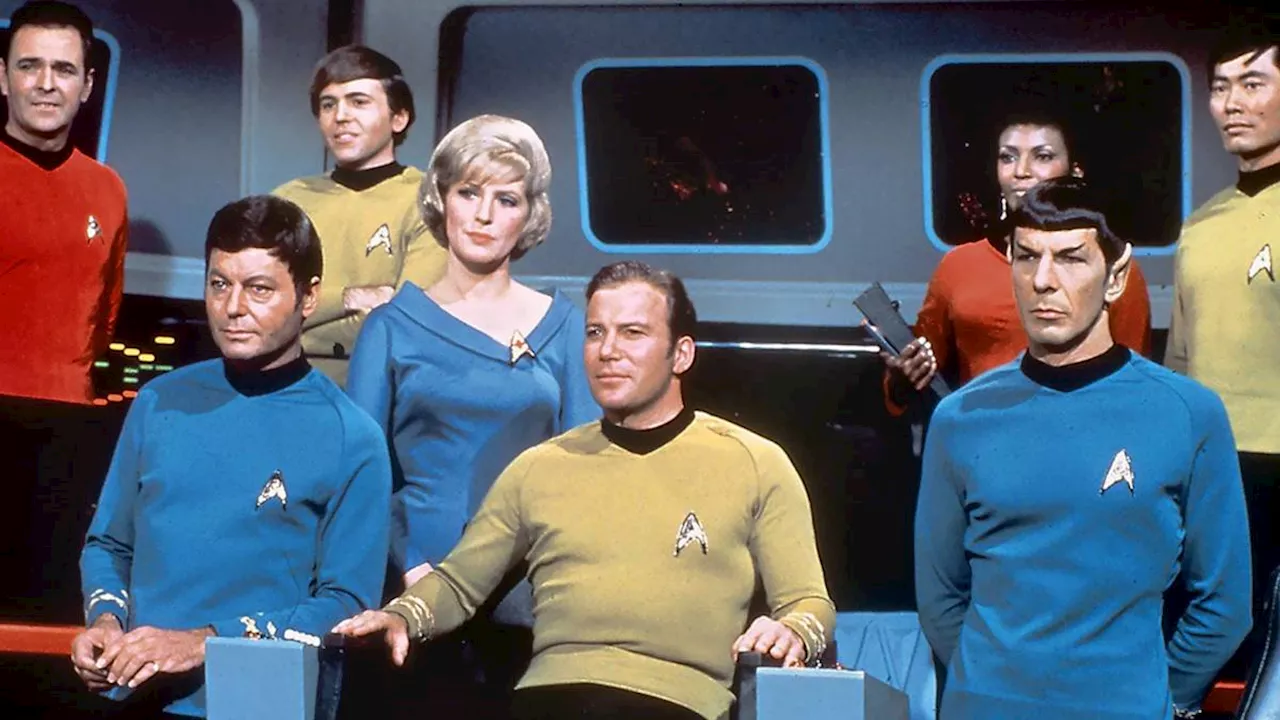
The episode titled “Shore Leave” from the original *Star Trek* series, which first aired in 1966, has garnered mixed responses as viewers reflect on its imaginative plots and underlying themes. While it once captivated audiences with its whimsical narratives, many now find it challenging to watch due to its problematic elements.
In “Shore Leave,” the crew of the USS Enterprise lands on a seemingly deserted planet in the Omicron Delta system. Captain James T. Kirk, played by William Shatner, permits off-duty personnel to explore the planet, which is devoid of life but deemed habitable. Dr. Leonard McCoy and Lt. Hikaru Sulu, portrayed by DeForest Kelley and George Takei, respectively, venture out to survey the environment. Their exploration leads to bizarre encounters, including an anthropomorphic white rabbit and a young girl in search of the creature, reminiscent of Lewis Carroll’s *Alice in Wonderland*.
The episode is noted for its eclectic mix of scenes featuring a samurai, a World War II fighter plane, and even a knight in shining armor. These fantastical elements created a narrative that appealed to younger audiences, offering a thrilling escape from reality. As a child, the imaginative premise of “Shore Leave” provided a sense of wonder, allowing viewers to experience a variety of genres in one episode.
Despite its initial charm, a retrospective viewing reveals significant flaws. The episode feels disjointed, lacking a cohesive storyline, and appears to be a collection of loosely connected scenes rather than a well-constructed narrative. The original script, penned by science fiction writer Theodore Sturgeon, emphasized the importance of fantasy in relaxation. However, network executives at NBC requested revisions that ultimately diluted the story’s clarity, resulting in a final product that feels unstructured and overly whimsical.
Critics now point out how certain elements of “Shore Leave” reflect outdated attitudes. The character of Yeoman Barrows, for instance, faces an unsettling encounter with Don Juan, which is portrayed not as a romantic interlude but as an assault. This depiction raises uncomfortable questions about consent and the implications of the planet’s ability to conjure the characters’ desires. The episode’s handling of such themes seems overly simplistic, especially compared to the series’ reputation for tackling complex social issues.
Additionally, the portrayal of female characters remains a concern. Barrows is reduced to a mere prop in a narrative that prioritizes male characters’ desires over meaningful development. This aspect contrasts sharply with the progressive ideals that *Star Trek* is often celebrated for.
As the landscape of television evolves, many classic shows are revisited through contemporary lenses, often revealing problematic themes that were overlooked in the past. While “Shore Leave” remains a part of *Star Trek*’s legacy, its shortcomings highlight the need for critical engagement with media.
In conclusion, “Shore Leave” offers a fascinating glimpse into the creativity of 1960s television but ultimately fails to resonate with modern audiences. The imaginative storytelling that once enchanted viewers now raises significant questions about representation and narrative coherence. As fans continue to celebrate *Star Trek* for its groundbreaking themes, it is essential to acknowledge and critique episodes like “Shore Leave” for their shortcomings.