The 1980s produced a number of vehicles that have since become infamous for their unappealing designs and lackluster performance. While some of these cars may have had their moments, they are largely remembered for the discomfort and dissatisfaction they brought to their owners. This article revisits five of the most unappealing cars from this decade, highlighting their unique characteristics and the reasons they remain uncelebrated.
The AMC Pacer: A Fishbowl on Wheels
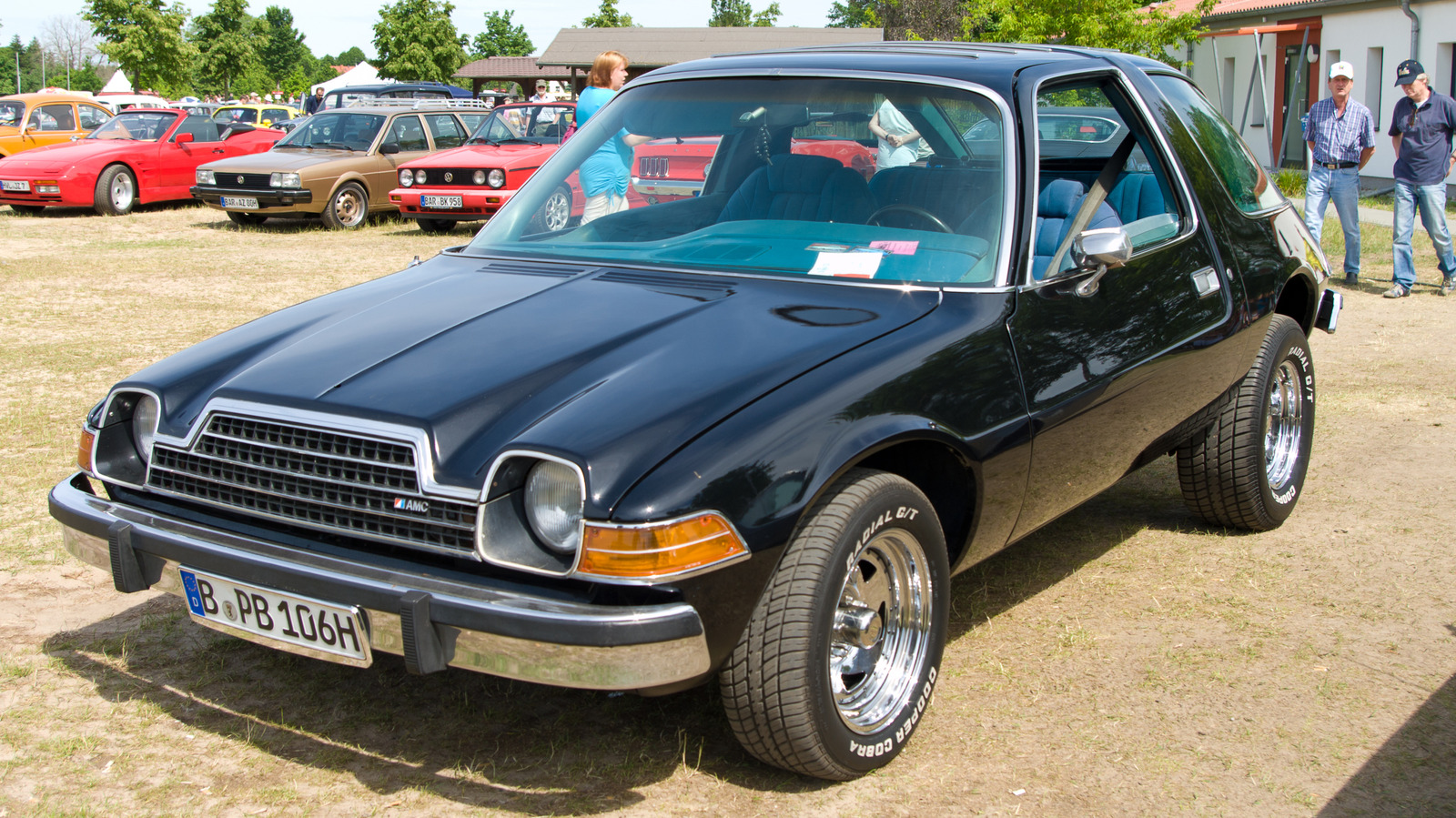
One of the most iconic examples from this era is the AMC Pacer, often referred to as “the fishbowl.” Produced from 1975 to 1980, the Pacer was marketed as a “wide small car.” However, its design, which featured a large glass area, left drivers feeling exposed. Motor Trend aptly described it as making one feel “like a goldfish being boiled in its own bowl.”
Originally intended to be powered by a rotary engine, the Pacer was ultimately fitted with an inline-six engine due to fuel economy and emissions concerns. While initial sales were promising, peaking at 117,244 units in 1976, interest waned sharply, with only around 2,000 units produced in its final year. The Pacer’s design and subsequent ownership experiences contributed to its reputation as a poor choice for car buyers.
The MGB: Once a Classic, Now Outdated
The 1980 MGB marked the end of an era for the quintessential British sports car. While early models boasted elegant chrome bumpers, changes in U.S. regulations led to the addition of unattractive black rubber bumpers starting in 1974. This shift transformed the MGB into a vehicle that critics described as visually unappealing.
With increased ride height to meet bumper requirements, the MGB suffered from handling issues, as noted by Car and Driver in 1980. The magazine compared it to “a septuagenarian running a decathlon,” highlighting its poor performance. Despite its legacy, the MGB’s final years were marked by obsolescence, with production ending in the U.S. in 1980.
The Lincoln Versailles: A Missed Opportunity
In an attempt to compete with Cadillac’s stylish Seville, Ford introduced the Lincoln Versailles in 1977. Unfortunately, this model was essentially a rebranded Ford Granada, with limited new design elements. The Versailles retained its predecessor’s side profile, leading to criticisms of its aesthetics.
Despite its luxurious features, including leather seats and air conditioning, the Versailles struggled to gain traction in the market. Sales peaked at 21,000 units in 1979 but plummeted to 4,784 in its final year, 1980. In total, the Versailles sold only a fraction of what its competitor, the Cadillac Seville, achieved during the same period.
The Dodge Rampage: A Unique but Unsuccessful Design
The Dodge Rampage debuted in 1982 and was built on the platform of the Dodge Omni. Its hybrid design sought to blend the characteristics of a car and a pickup, yet it was often described as “homely” and “dopey.” Despite its quirky appeal, sales were lackluster, with only 37,401 units sold over three years. The Rampage’s legacy was ultimately overshadowed by its limited production run and lack of market success.
The Ford EXP: A Forgotten Experiment
Finally, the Ford EXP aimed to attract entry-level consumers seeking a personal luxury coupe. Introduced in 1982, it was Ford’s first two-seater production car since the original Thunderbird. Despite its aspirations, the EXP was criticized for its design and performance, garnering the nickname “Ford’s Ugly Little Sin.”
Sales did not meet expectations, leading to the introduction of a turbocharged variant in 1984. Even with improvements, the EXP struggled to make a significant impact in the market. Production continued until 1988, but it ultimately faded into obscurity.
Reflecting on these models from the 1980s reveals a fascinating glimpse into automotive history. While some cars achieved iconic status, others served as cautionary tales of design missteps and market miscalculations. These vehicles collectively remind us how tastes and standards in automotive design have evolved over the decades.