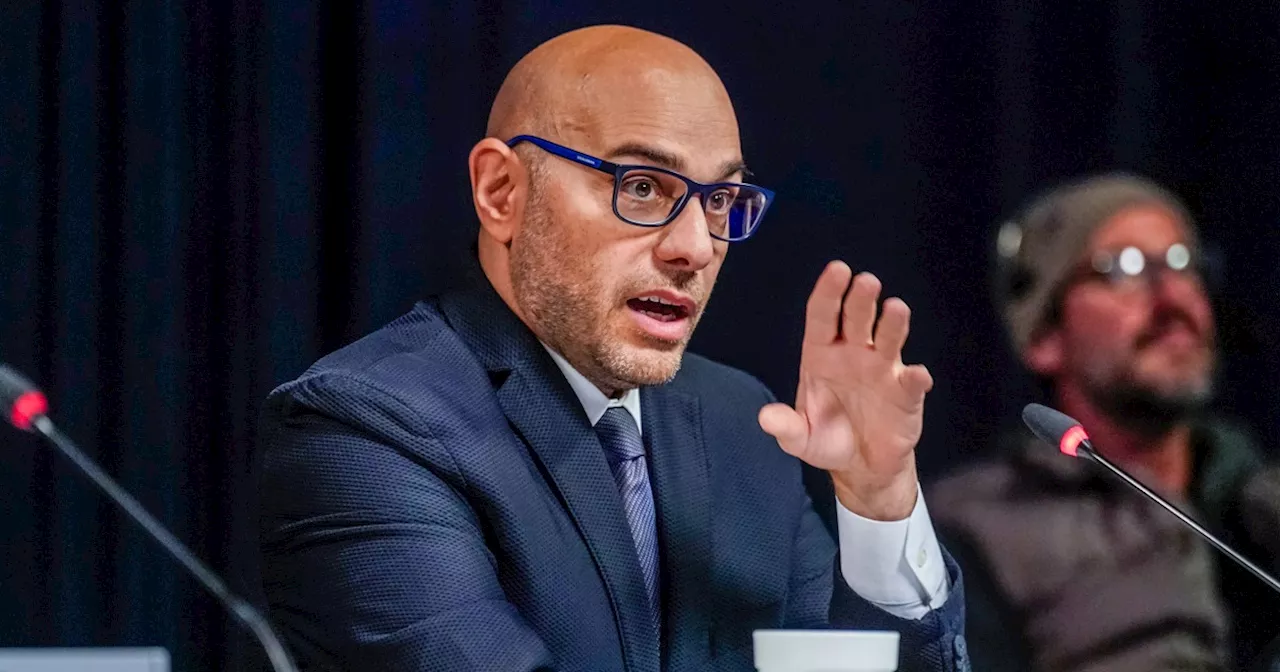
An anti-vaccine lawyer, Aaron Siri, delivered a contentious presentation on childhood immunizations during a recent meeting of the Centers for Disease Control and Prevention (CDC) advisory panel. This marks an unprecedented shift for the Advisory Committee on Immunization Practices (ACIP), which has historically been a trusted authority on vaccine recommendations.
Siri, who has previously sued multiple health agencies and serves as the personal attorney for Robert F. Kennedy Jr., a prominent anti-vaccine activist, raised alarms about the safety of vaccines. His presentation focused on adverse events associated with routine immunizations, particularly highlighting vaccines for hepatitis B, pneumococcal disease, and the combination shot for diphtheria, tetanus, and pertussis.
Public health experts reacted strongly to Siri’s appearance. Art Caplan, head of the division of medical ethics at NYU Langone Medical Center, described Siri’s participation as an attempt by the panel to advance an anti-vaccine ideology. Caplan stated, “This is a science issue, and he’s the wrong guy, with the wrong conflicts, with the wrong style, with the wrong information.”
During his address, Siri controversially linked childhood vaccines to autism, a claim widely discredited by scientific research. He insisted, “If you’re going to say vaccines don’t cause autism, have the data to say it.” A comprehensive body of research has consistently refuted any connection between vaccines and autism, including a significant Danish study from July that found no association between aluminum exposure from vaccines and neurodevelopmental disorders.
Siri further argued that childhood vaccines fail to prevent transmission of diseases, referencing studies conducted on a whooping cough vaccine in infant baboons. However, experts in public health emphasized that the primary goal of these vaccines is to prevent severe illness and death.
His assertion that childhood vaccines were not adequately assessed for safety drew criticism. “Siri’s claim that childhood vaccines were ‘never tested against placebo’ is a talking point, not a fact,” stated Dr. Jake Scott, an infectious diseases specialist at Stanford Medicine. Scott also noted that his research team documented 398 randomized control trials evaluating childhood vaccines against inert placebos.
The meeting, which lasted a day and a half, saw chaotic discussions, including misinformation regarding hepatitis B vaccines. Ultimately, the advisory panel voted to revise the long-standing recommendation for all newborns to receive the hepatitis B vaccine at birth. Instead, they advised that women testing negative for hepatitis B consult healthcare providers about administering the vaccine.
Siri’s presence on the panel comes after Kennedy replaced previous ACIP members, citing “persistent conflicts of interest,” with individuals who largely express skepticism towards vaccines. During the meeting, Siri disclosed multiple conflicts, including ongoing lawsuits against the Department of Health and Human Services related to vaccine mandates and claims of Covid vaccine injuries.
Notably, Dr. Paul Offit, director of the Vaccine Education Center at the Children’s Hospital of Philadelphia, declined an invitation to speak alongside Siri, citing concerns that ACIP has shifted its focus away from scientific evidence. Caplan remarked that such debates are unproductive, comparing them to unnecessary discussions about established scientific facts.
As the debate over vaccine safety continues, the implications of Siri’s testimony at a respected health agency highlight ongoing tensions in public health discourse. The CDC’s credibility as a source of vaccine information faces scrutiny as differing ideologies shape the conversation around immunization practices.