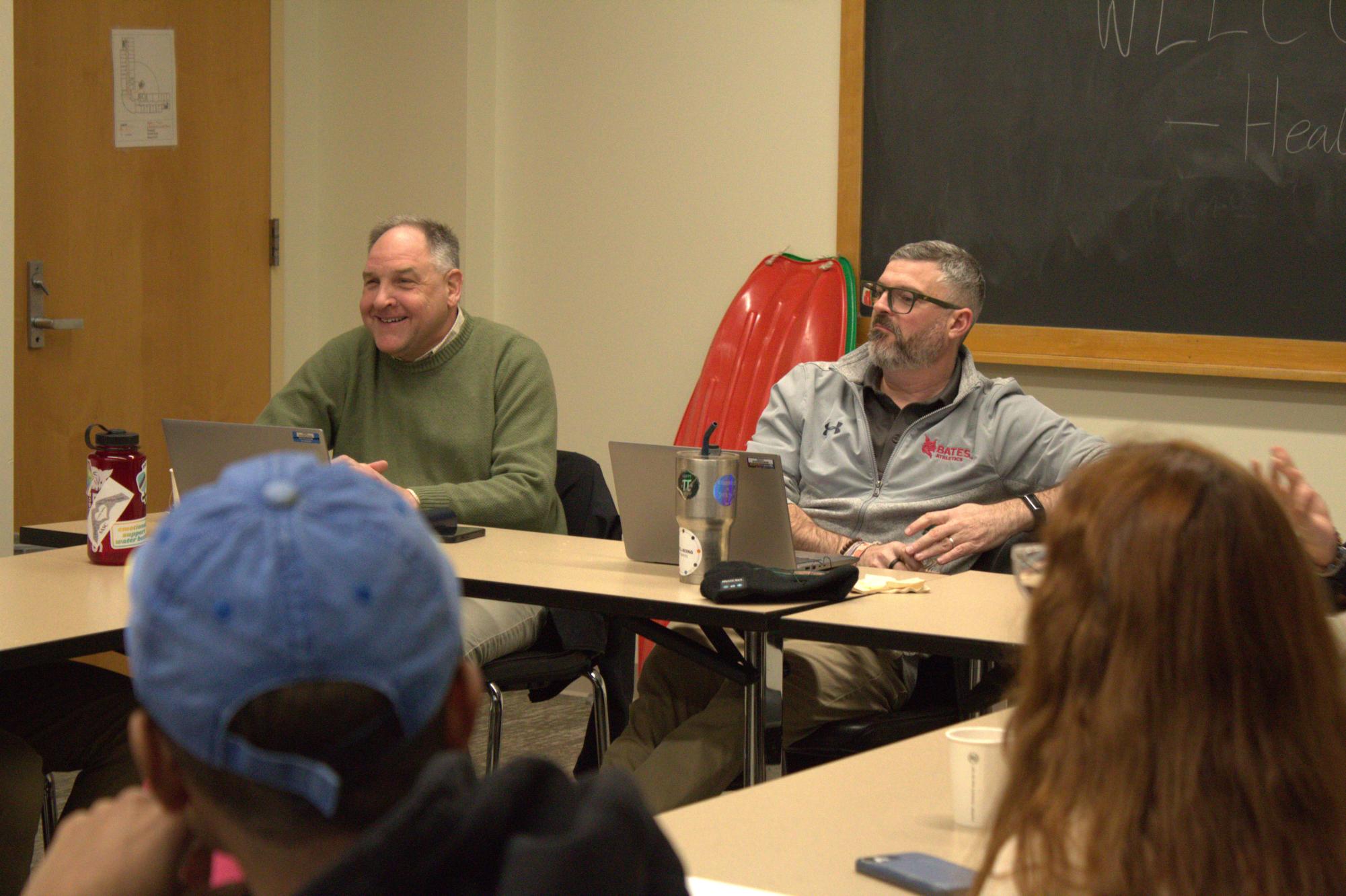
On February 5, 2024, the Gender Equity and Community Outreach club (GENCO) hosted a “Healthy Masculinities Panel” at Pettengill Hall. The event aimed to delve into the complexities of masculinity, particularly focusing on what constitutes healthy masculinity. Moderated by Dylan Patel, the panel featured insights from Professor Michael Rocque, associate professor of sociology, and Raymond Clothier, interim multifaith chaplain.
The discussion began with an exploration of how healthy masculinity can be reflected in daily habits, routines, and conversations. GENCO provided attendees with canvases and markers, encouraging creative expression, a recurring feature of their bi-weekly meetings. As the conversation progressed, panelists were asked to share their perspectives on the contrast between toxic and healthy masculinity.
Rocque emphasized the importance of rethinking traditional masculine ideals, stating, “When I think of the most masculine man in the world, I don’t think of He-Man; I think of Mr. Rogers.” He articulated that true strength encompasses bravery, sensitivity, and conviction, diverging from the stereotype of physical toughness. This perspective sparked a deeper conversation on how to model positive masculinity for younger generations.
The panel also addressed the conceptual basis of masculinity. Clothier highlighted that gender is a social construct, prompting Rocque to affirm that while gender roles may be constructed, their impact is profoundly felt in society. He noted, “It’s visceral,” suggesting that understanding masculinity requires acknowledging both its constructed nature and lived experiences.
As the dialogue shifted towards developing practices of healthy masculinity, Patel inquired about the essential elements necessary for fostering such an environment. Clothier responded, “The keys to healthy masculinity are not so different from being in healthy relationships in general.” He underscored that empathy and understanding are vital for nurturing healthy connections, which in turn cultivates positive expressions of masculinity.
Brandon Ouellette, a staff member from Bates Counseling and Psychological Services (CAPS), supported Clothier’s assertion. He emphasized that therapeutic conversations can be instrumental in addressing toxic masculinity and promoting healthier expressions. Ouellette encouraged attendees to utilize CAPS as a supportive resource.
The panel also touched on the topic of “performative masculinity.” Student Cathy Shi raised concerns about whether it is limiting to criticize men for this type of expression. Clothier humorously noted his own preferences, saying, “I love quarter-zips and matcha,” while Rocque advocated for allowing individuals to explore their masculine identities freely, including making mistakes along the way.
As the event wrapped up, GENCO Secretary Jamie Shelton encouraged participants to engage in future meetings. She highlighted the importance of casual discussions about gender within feminist, queer, and intersectional contexts. Additional details regarding upcoming GENCO events can be found on Bates Engage.
This panel not only provided valuable insights into the evolving definitions and practices surrounding masculinity but also fostered an open environment for attendees to reflect on their own experiences and beliefs.