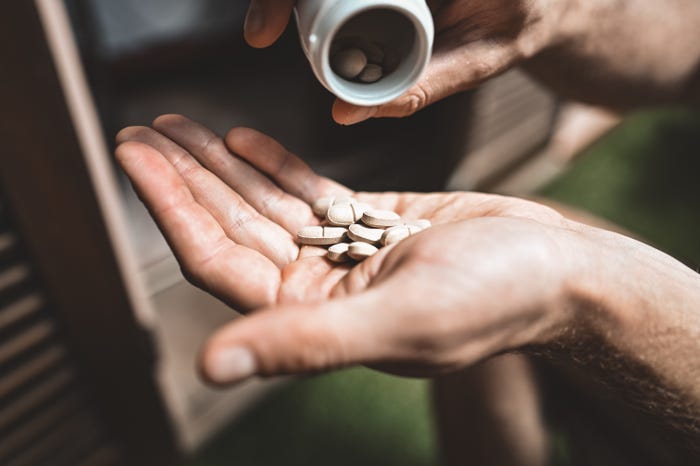
A recent study published in Nature Medicine indicates that older adults who take a daily multivitamin may experience a slight reduction in their biological age. The research, which involved 958 participants with an average age of 70, suggests that multivitamins could slow the aging process by approximately four months over two years. This marks a significant step toward understanding the potential benefits of multivitamins in aging.
The study was conducted as a large randomized control trial, wherein half of the participants consumed a standard daily multivitamin for older adults, while the other half received a placebo. Those who consistently took the multivitamin showed a slower pace of biological aging, as measured by specialized biological age clocks known as epigenetic clocks. These clocks assess changes in DNA methylation, which reflects how genes are expressed as people age.
Lead study author Howard Sesso, an epidemiologist and associate professor of medicine at Harvard Medical School, stated that the findings offer intriguing insights but cautioned against making immediate changes to supplement routines. “This doesn’t mean that everyone should go out and start taking a multivitamin,” Sesso told Business Insider. “Rather, this is starting to provide the connecting the dots.”
The study is part of a growing body of evidence suggesting that multivitamins may offer marginal benefits, particularly for older adults who might not be receiving sufficient nutrients through their diet. A separate study published in the American Journal of Clinical Nutrition in 2023 also indicated that daily multivitamins could slightly enhance performance on memory tests.
Importantly, the research indicates that more is not necessarily better when it comes to supplementation. Participants were instructed to take only one tablet per day, underscoring that excessive intake may not yield additional benefits.
The research was partially funded by the multivitamin manufacturer Centrum, which provided the pills at no cost. Despite this, the study was executed at independent institutions and received support from federal grants from the National Institutes of Health, reinforcing its credibility.
The research team employed two specific biological age clocks, known as GrimAge and PhenoAge, to assess aging rates in participants. These tools are designed to provide a comprehensive view of overall aging rather than focusing on specific health indicators, such as blood pressure or cholesterol levels.
Interestingly, the results indicated that individuals who were aging more rapidly benefitted more from taking the multivitamins. This suggests that the supplements could be particularly advantageous for older adults who are nutrient-deficient or in poorer health.
Sesso highlighted the possibility that the interconnectivity among the various vitamins and minerals within a daily multivitamin might be contributing to these observed effects. Yet, the study did not establish a direct correlation between biological age reduction and improved overall health or longevity.
Aging researcher Daniel Belsky of Columbia University, who was not involved in the study, expressed caution. He noted that biological age clocks can reflect temporary changes not necessarily indicative of longevity or health improvement. For example, accelerated aging has been observed in individuals undergoing surgery or during pregnancy, which may not have lasting significance.
The study focused exclusively on older adults, leaving a gap in knowledge regarding the effects of multivitamins on younger populations. As the evidence surrounding multivitamins and their potential health benefits grows stronger, there may be a shift in how healthcare providers approach supplementation for older adults.
Some experts, including Sesso, have begun incorporating multivitamins into their own routines based on emerging research. Sesso mentioned a long-term study funded by the National Institutes of Health that suggested men over 50 might reduce their risk of cancer and cataracts by taking a daily multivitamin.
“I am a firm believer in diet, lifestyle, and just healthy living, as best I can,” Sesso remarked, emphasizing the importance of obtaining nutrients primarily through a balanced diet while also engaging in healthy lifestyle choices.
Looking ahead, there is optimism that advancements in understanding biological age could one day enable healthcare professionals to create personalized supplement regimens tailored to individual needs. Belsky noted that as research continues, doctors may use biological age measurements to inform supplement recommendations, providing a more nuanced approach to health management for aging populations.
While the study’s findings are promising, experts caution against a rush to the pharmacy. More research is needed to clarify the implications of multivitamin use and its effects on health outcomes as people age.