Retired Marine Corps veteran Danial Payne is preparing for a special Valentine’s Day dinner with his wife, Mary, after years of struggling with debilitating tremors. After a long battle with his condition, Payne is looking forward to enjoying a meal without the stress of shaking, enabling him to reconnect with his loved one in a meaningful way.
The symptoms of Payne’s tremors began approximately twelve years ago, gradually worsening over time and significantly impacting his daily life. A memorable moment occurred during a dinner party when he realized the extent of the problem. “I got a fork full of peas and I’m bringing it to my lips and they’re going everywhere,” Payne recalled. Concerned about his health, he promptly consulted with his doctor at the Veterans Affairs Medical Center in Fresno, California.
In 2020, Payne received a diagnosis of Essential Tremor (ET), a neurological disorder that affects over 7 million people across the United States. Initially worried it could be Parkinson’s disease, the diagnosis brought some relief but also posed new challenges.
The treatment that changed Payne’s life is a non-invasive device known as the Cala kIQ System. This innovative wearable technology utilizes motion sensors to measure tremors and subsequently delivers targeted stimulation to the median and radial nerves at the wrist. This process interrupts the tremors and offers patients much-needed relief. Dr. Kate Rosenbluth, President and Founder of Cala Health, explained, “The device sends a signal to the brain that interrupts the tremor.”
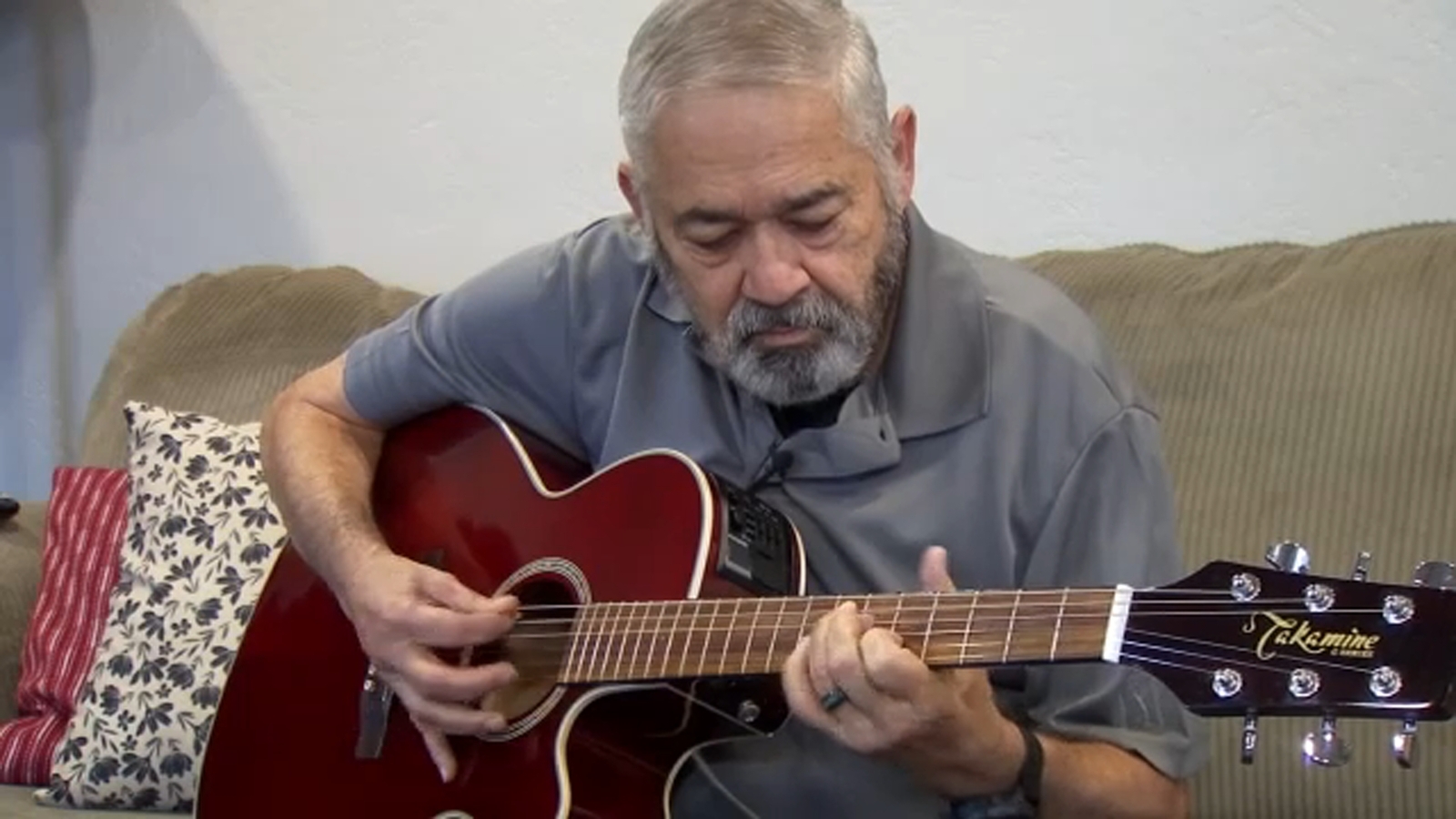
Following a year of using the Cala kIQ System, the 71-year-old veteran has experienced a significant reduction in his symptoms. This improvement has allowed him to rediscover his passion for playing the acoustic guitar and has also revitalized his relationship with Mary, who has stood by him throughout his recovery journey.
As Valentine’s Day approaches, Payne reflects on the simple joys he once took for granted. “Just the fact that I could reach across the table and hold her hand,” he shared emotionally, “that was simple. Couldn’t do it.” This year, he is eager to share that moment with his wife, marking a profound step in his recovery.
Payne encourages other veterans who are suffering from similar conditions to seek help. “Try this device, see if it works for you like it did for me and get your life back,” he urged, hoping to inspire others to take charge of their health and well-being.
As Payne prepares for a romantic evening with Mary on February 14, 2024, his story serves as a testament to resilience and the power of medical advancements in enhancing quality of life.