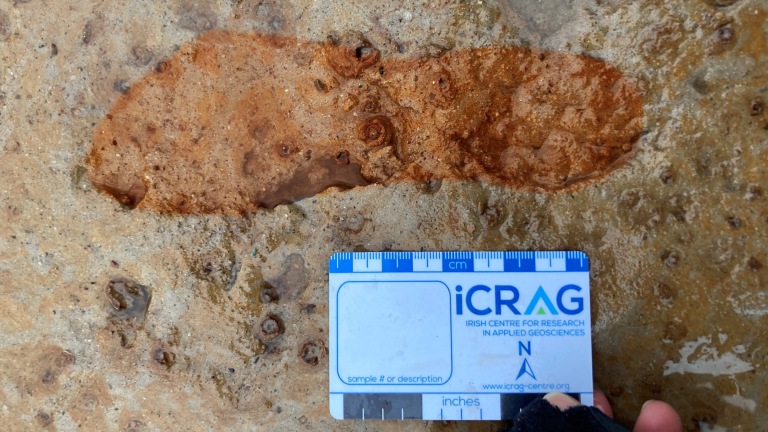
A remarkable archaeological discovery at Lunan Bay in eastern Scotland revealed Roman-era footprints just days ago, but a team of experts faced a pressing challenge to document them before they were washed away by the tide. Local residents Ivor Campbell and Jenny Snedden stumbled upon the ancient prints while walking their dogs along the beach following a fierce storm, prompting a swift response from archaeologists eager to study the site.
The couple noticed unusual markings in the damp sand, resembling both human and animal footprints. They promptly alerted Aberdeenshire council archaeologist Bruce Mann, who then enlisted the help of Kate Britton from the University of Aberdeen and her team. Time was of the essence, as the prints were vulnerable to the encroaching surf.
Documenting the Discovery
The archaeological team raced against the clock, working under wind gusts reaching up to 55 mph (88.5 km/h) as they endeavored to record the prints. Each high tide threatened to erode the site further, making their task even more urgent. Utilizing drones, cameras, and advanced 3D modeling software, the team captured images of the footprints and created plaster molds of some of the best-preserved examples, which included tracks made by barefoot humans and various animals such as red deer (Cervus elaphus) and roe deer (Capreolus capreolus).
“I’d never seen a site like this in Scotland,” Britton remarked. “It was just immediately clear that this was something special.” Beneath the footprints, the archaeologists uncovered charred plant remains, which were carbon-dated to approximately 2,000 years ago, aligning with the late Iron Age.
Significance of the Footprints
According to Gordon Noble, another archaeologist at the University of Aberdeen, the dating of these footprints coincides with significant historical events, including the Roman invasions of Scotland and the rise of the Picts. “It’s very exciting to think these prints were made by people during such transformative times,” he stated.
The site at Lunan Bay offers insights into a landscape that has changed dramatically over millennia. “This now sandy beach was once a muddy estuary,” explained William Mills, also from the University of Aberdeen. “Humans likely used this environment for hunting or gathering wild plant foods.”
Despite the team’s efforts over two days to document as much as possible, they returned a week later to find the prints entirely eroded. “Footprints that represent actions of people over minutes, thousands of years ago, were destroyed within days,” Britton lamented.
While the Lunan Bay site is unique, this discovery raises the possibility that other significant archaeological sites may still exist along Scotland’s coastline. The footprints provide invaluable information about the individuals who left them, revealing details about their approximate weight, height, and even walking speed. Such trackways can offer a glimpse into the daily lives of Iron Age communities.
As further analyses of the Lunan Bay footprints are conducted, researchers anticipate learning more about the behaviors and lifestyles of the people who inhabited the region during this pivotal historical period.