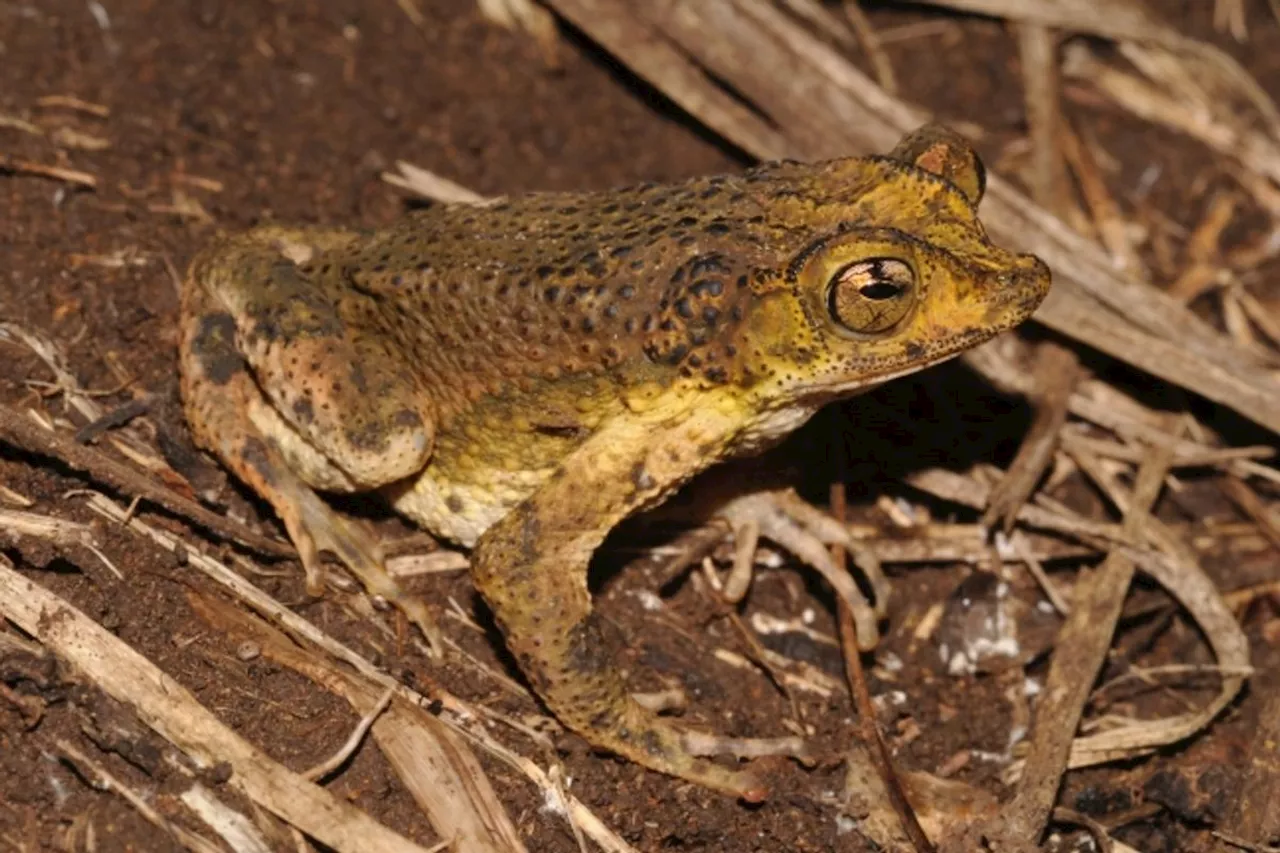
The Puerto Rican crested toad, known locally as the sapo concho, has gained unexpected fame after its brief appearance during Bad Bunny’s halftime show at the 2026 Super Bowl. This moment highlighted the plight of the only native toad species of Puerto Rico and the U.S. Virgin Islands, which is currently classified as endangered by the IUCN Red List. Bad Bunny’s engagement has raised awareness of the species, with hopes that increased visibility will aid conservation efforts.
Understanding the Sapo Concho
The sapo concho is a medium-sized amphibian, measuring between 2.5 inches and 4.5 inches. Characterized by a bumpy snout and prominent crests running from its nose to the back of its head, the toad is easily identifiable by its distinctive brown coloration. Typically nocturnal, these toads are most active between 19:30 and 01:00, often seeking shelter in small crevices during the day. They inhabit drier environments, such as rocky outcrops, and have even been observed in unusual places like abandoned tarantula nests, according to the U.S. Fish and Wildlife Service (USFWS).
The species was first identified in 1868 and was designated as threatened in 1987. The decline in their population has been attributed to several factors, including habitat loss and competition with invasive species.
Challenges Facing the Sapo Concho
The sapo concho faces significant threats primarily due to human activities. One of the most detrimental factors has been the introduction of the invasive cane toad in the early 20th century. Originally brought to control agricultural pests, the cane toad has instead dominated breeding grounds and resources essential for the native toads.
Additionally, habitat loss due to urban development, especially in coastal regions, poses a severe risk to their survival. Climate change further complicates their situation, as these toads require specific conditions for breeding. Research published in the Caribbean Journal of Science indicates that alterations in rainfall patterns can delay their breeding cycles, impacting population replenishment.
Conservation Efforts for the Sapo Concho
Despite the challenges, multiple organizations are working tirelessly to protect the sapo concho. The Fort Worth Zoo in Texas has been involved in conservation efforts since 1984. In 1989, the zoo established a breeding program aimed at reestablishing the species’ population in the wild. Collaborating with the USFWS and the Puerto Rican Department of Natural and Environmental Resources, they have implemented various conservation strategies, including habitat protection and public awareness campaigns.
The Puerto Rican Crested Toad Conservancy oversees the longest continuous reintroduction program of an amphibian globally. To date, they have successfully released over 830,000 sapo concho tadpoles into their natural habitats. The ongoing efforts of these organizations, combined with the heightened visibility from Bad Bunny’s performance, provide a glimmer of hope for the future of this unique species.
With the engaging presence of cultural figures and dedicated conservationists, there is optimism that the sapo concho can overcome its current challenges and thrive once more in its native ecosystem.