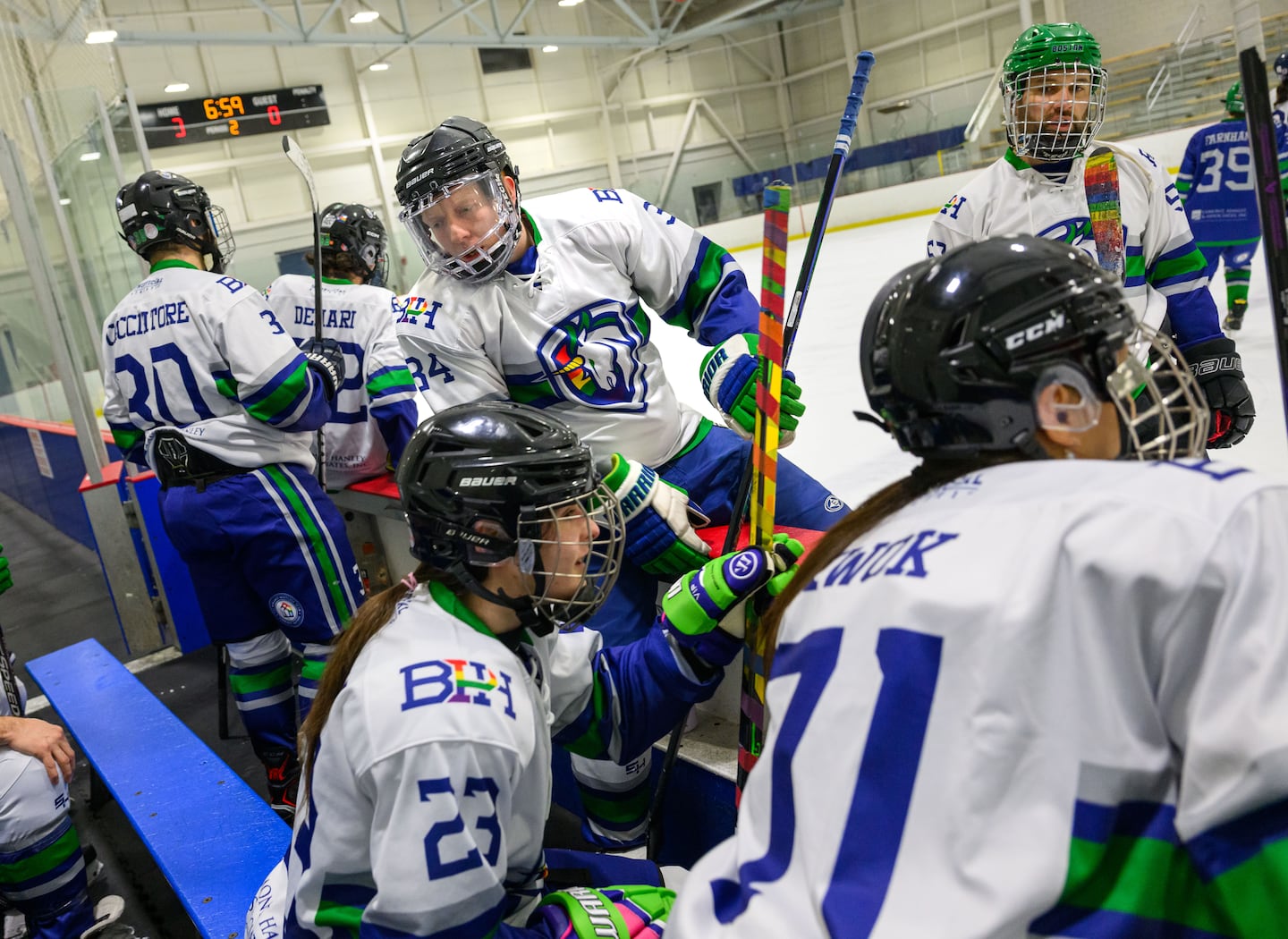
On Thursday night, the Boston Bruins will illuminate TD Garden with rainbow lights as part of their annual Hockey Is for Everyone night. This event, established nearly a decade ago, aims to support the LGBTQ+ community while raising funds for the Boston Pride Hockey league. This year, the festivities are particularly notable due to the HBO drama Heated Rivalry, which follows the romance between two closeted professional hockey players and has gained significant popularity, transcending its LGBTQ+ roots to become a mainstream cultural phenomenon.
The National Hockey League (NHL), which has never had an openly gay player in its 100-plus year history, may see a shift in attitudes as a result of the show’s popularity. NHL Commissioner Gary Bettman acknowledged the show’s impact, stating, “We’re well aware of Heated Rivalry. In terms of embracing it, I think it’s a wonderful story.” The league views the show as a “unique driver for creating new fans,” particularly among younger audiences.
As the show captures the attention of viewers, local activities have sprung up, including a look-alike contest and trivia nights, which have attracted hundreds of participants. Merchandise featuring the fictional rival teams, the Boston Raiders and the Montreal Voyagers, has also become widely available, sparking interest in hockey among demographics previously indifferent to the sport. Ryan Leblanc from Medford expressed his newfound enthusiasm, stating, “I bought a Bruins ticket, and I’ve never been to a game in my life.”
Despite the buzz surrounding Heated Rivalry, some observers remain skeptical about whether it will lead to NHL players coming out. Jim Buzinski, cofounder of the LGBTQ+ sports news site Outsports, highlighted the complexities involved in the coming-out process. “The process is fraught with so many things for people,” he noted, emphasizing that coming out is a deeply personal decision often influenced by societal pressures.
While the show may not directly encourage players to publicly identify as gay, it could foster an environment that supports openness within the sport. Edward Kian, a professor of sport management at Chowan University, believes that Heated Rivalry could help change outdated attitudes in hockey. He stated, “If the show can get more hockey fans to accept that some of the 736 athletes on NHL active rosters must be gay, then that, in turn, could theoretically lead to more gay hockey players feeling welcomed enough to come out publicly.”
Hockey is often perceived as a hypermasculine sport, which can deter players from being open about their sexuality. Jett Stone, a clinical psychologist who has studied male behavior, explained that players may view differences as liabilities within the team dynamic. This perception, combined with homophobic comments in locker rooms, often drives LGBTQ+ youth away from the sport they love.
Many individuals with personal experiences have left hockey due to these dynamics. Kevin Corsino, a member of Boston Pride Hockey, shared his story of struggling with homophobia in traditional leagues before finding a supportive environment in the LGBTQ+ hockey community. “I was so enthralled the moment I walked into that locker room,” he recalled, describing the welcoming atmosphere.
Others, like Jackie Farnham, also stepped away from hockey due to the prevalence of homophobic slurs. Farnham noted that while the environment was less hostile in middle school, high school presented significant challenges. He eventually left the sport but returned to play with Boston Pride Hockey, where he felt free to be himself.
Since the airing of Heated Rivalry, Corsino has received inquiries from LGBTQ+ players who had previously abandoned the sport. He remains hopeful that the show will encourage others to return to the ice. Despite the NHL’s efforts to promote inclusivity, including partnerships with organizations like You Can Play, challenges remain.
In 2023, the NHL faced backlash after announcing a ban on wearing specialty jerseys supporting causes like Pride during games. Following player pushback, the league reversed its decision. The visibility of Heated Rivalry may further encourage players at all levels to feel comfortable expressing their identities in a sport that has long been perceived as unwelcoming.
Professor Cheryl Cooky from Purdue University emphasized the broader cultural implications of the show’s success, noting that it engages both LGBTQ+ and straight audiences. “Hopefully it’ll lead to perhaps cultural shifts so that people on the ice and in the stands might feel safer or feel opportunities to authentically be themselves in sports spaces,” she stated.
Ultimately, regardless of whether Heated Rivalry leads to professional players coming out, it has provided the LGBTQ+ community with a compelling narrative that has been long overdue. Buzinski remarked, “The show has given us a fairy tale romance. Straight people have had fairy tale romances forever. Finally, we have one.”