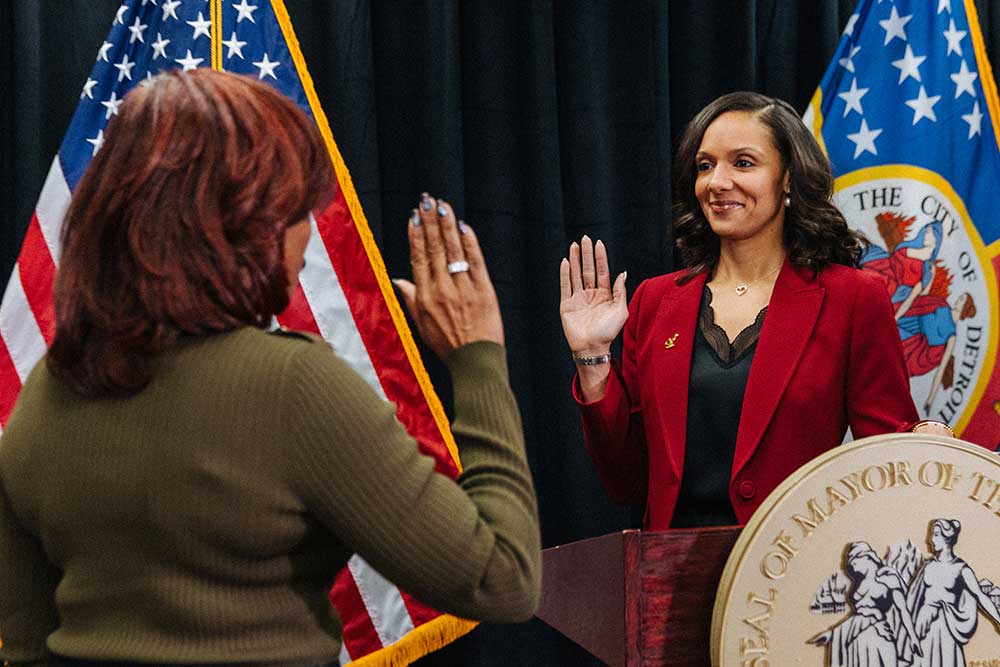
Detroit has made history as Mary Sheffield was sworn in as the city’s first female mayor on January 1, 2026. At 38, Sheffield, a prominent figure in city politics, is stepping into this role following a decisive election victory where she captured 77% of the vote. Her election marks a significant shift in leadership, ending a 324-year period in which men have held the mayoral office.
Mary Sheffield’s Vision for Detroit
In her first interview since taking office, Sheffield shared her aspirations for her administration and the city’s future. She emphasized that her success will be measured by the overall quality of life for Detroit residents. “I want Detroiters to be able to say their quality of life is better because of this administration,” she stated. Key areas of focus include neighborhood investment, job creation, and affordable housing.
Sheffield’s past experience as the youngest person elected to the Detroit City Council at age 26 has shaped her approach. Throughout her tenure, she has championed issues such as affordable housing, tenants’ rights, and environmental justice. Her commitment to progressive values has resonated with the community, positioning her as a leader who prioritizes equity and inclusion.
As she steps into her role, Sheffield faces significant challenges, including addressing the high poverty rate among Detroit’s youth and tackling the city’s ongoing disinvestment issues. Nearly half of Detroit’s children live in poverty, underscoring the urgency of her agenda.
Setting Priorities for the First Year
Sheffield outlined her immediate priorities during her tenure. The first is to make bold strides in housing reform, particularly in increasing access to homeownership. “I want to see more development of affordable housing,” she affirmed. In addition, she plans to enhance neighborhood infrastructure, addressing issues like sidewalk repairs and alley cleaning.
Moreover, Sheffield aims to reform the property tax system to alleviate the burden on residents. She recognizes the necessity of creating government structures that are accessible and responsive to the needs of citizens. “We want to bring government back into the neighborhoods,” she said, highlighting her commitment to improving community engagement.
Her administration also seeks to capitalize on Detroit’s rich cultural landscape. Sheffield underscored the importance of art and culture as vital elements of the city’s identity, proposing the establishment of an office dedicated to the creative economy. “Arts and culture are part of Detroit’s identity. They beautify neighborhoods and tell our story,” she remarked.
While Sheffield acknowledges the complexities of her new role, including navigating the expectations placed upon her as a female leader, she remains optimistic. “The people keep me motivated,” she reflected, citing the support she has received from various sectors of the city.
Sheffield’s historic election not only represents a personal triumph but also serves as an inspiration for future generations of women and girls in Detroit. “It affirms that our voices, our experiences, and our ideas belong at the highest levels of decision-making,” she said. With a focus on community empowerment and equitable development, Mary Sheffield is poised to lead Detroit into a new chapter.