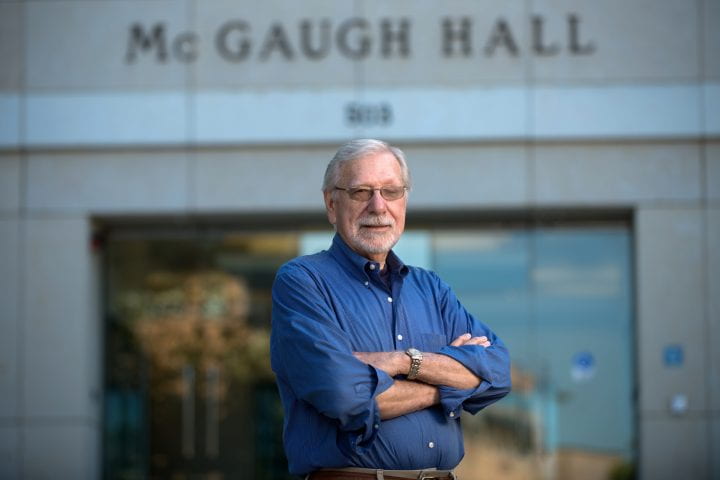
Before it became a renowned institution, the University of California, Irvine (UC Irvine) was a vision shaped by remarkable individuals. Among them is James McGaugh, a neurobiologist who played a crucial role in the university’s establishment and evolution. In 1964, he accepted an invitation from Edward Steinhaus, the founding dean of UC Irvine’s School of Biological Sciences, to create a pioneering department dedicated solely to the scientific study of the brain.
At a time when the UC system was expanding, Steinhaus proposed a radical educational framework that would replace traditional biological disciplines with a focus on levels of analysis. This approach included psychobiology, organismic biology, molecular and cell biology, and population and environmental biology. McGaugh recalls, “It was the first school of biological sciences to do that. And now throughout the country, that’s the way it is.”
Despite a stable position at the University of Oregon, McGaugh was drawn to Steinhaus’s vision for UC Irvine. He recognized the prestige associated with the University of California system and saw an opportunity to contribute to an academic institution from its very inception. “One of the main reasons I came was the name,” he explained.
When McGaugh arrived, UC Irvine was in its infancy, existing primarily as undeveloped land on the Irvine Ranch. He and his colleagues worked in temporary buildings amidst a landscape that still featured cattle grazing. “Friends of mine would come, and they’d look and say, ‘You came to this from the University of Oregon?’” he recalled. Yet, the promise of building something impactful kept his spirits high.
Influencing the Campus and Curriculum
McGaugh’s influence extended beyond the School of Biological Sciences; he played a vital role in shaping the broader university environment. As one of the few faculty members present during the early days, he participated in foundational decisions, such as the university’s academic calendar and the establishment of its social organizations. He noted, “We named every street,” and his preference for the quarter system eventually shaped the academic structure.
One pivotal moment in his early career involved a struggle to maintain the integrity of the psychobiology department. When the dean of social sciences proposed to absorb the department into a psychology framework, Steinhaus threatened to resign. McGaugh acknowledged that this decisive moment ultimately protected the department’s focus on biology. “It was Steinhaus who saved the department. He created it and saved it,” McGaugh stated.
After Steinhaus’s passing during a sabbatical, McGaugh stepped in as acting dean, a role that would lead to a longer tenure in university leadership. Although he later returned to his departmental roots, he went on to serve as vice chancellor for academic affairs and executive vice chancellor at UC Irvine.
Establishing a Global Reputation
Under McGaugh’s guidance, the school attracted notable scholars and researchers, carving out a unique niche in neurobiology. He founded the Center for the Neurobiology of Learning & Memory in the early 1980s, which became a cornerstone of UC Irvine’s research capabilities. “We were the only department of this kind in the world. … Our international recognition grew very quickly,” he noted.
Reflecting on the growth of UC Irvine from its modest beginnings, McGaugh expressed satisfaction with the legacy of the institution. “I’m immensely satisfied that we created a novel school and department of lasting significance.” He fondly recalls a time when the university was only accessible by helicopter due to the absence of major roadways.
Today, the impacts of McGaugh’s vision and leadership are evident throughout UC Irvine. From the names of the streets to the structure of its academic programs, his contributions helped establish a vibrant educational community. In sharing his journey, Distinguished Professor Emeritus James McGaugh embodies the spirit of UC Irvine’s foundation, illustrating how impactful decisions made in its formative years have led to its current status as a global research institution.