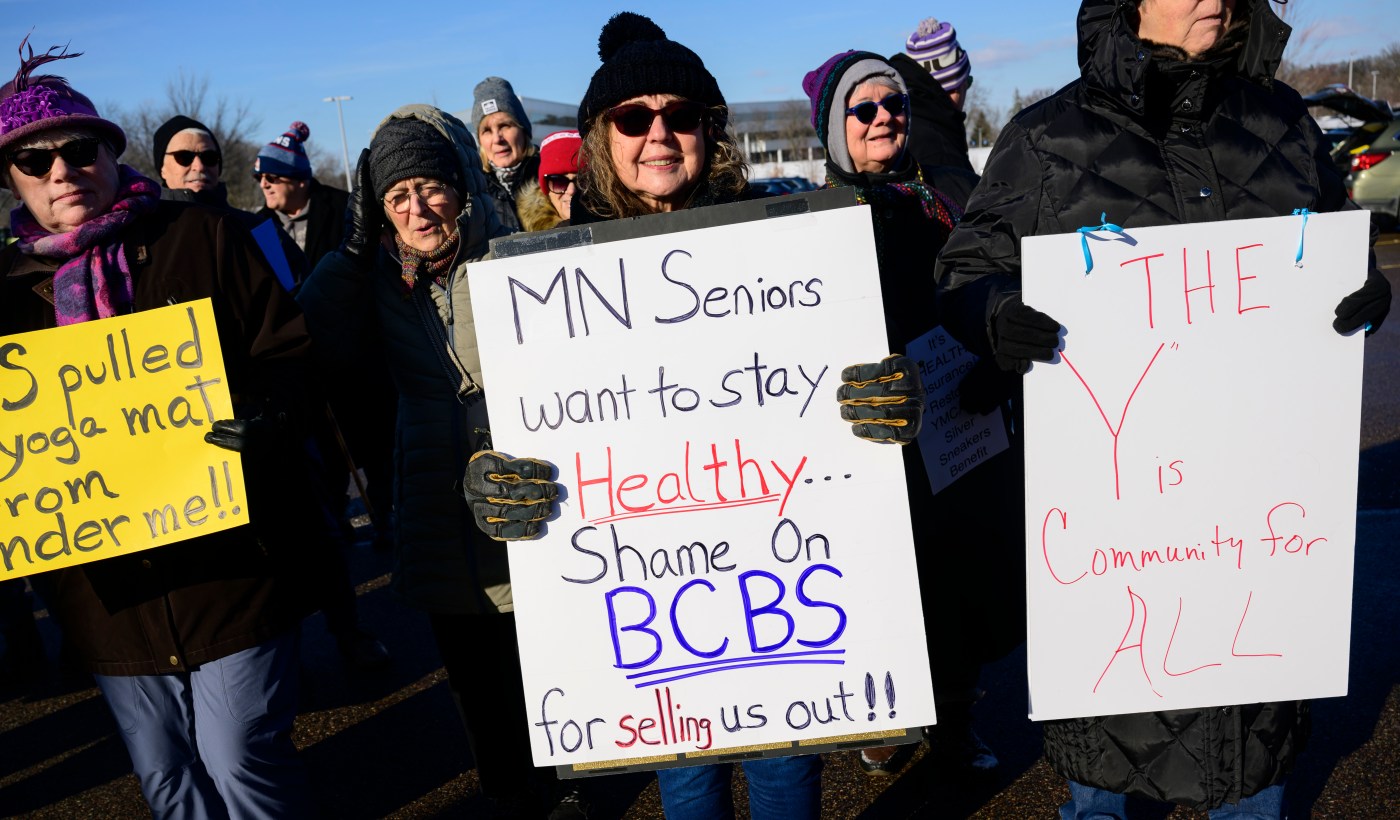
More than 50 protestors gathered at the corporate headquarters of Blue Cross Blue Shield of Minnesota in Eagan on Wednesday to express their concerns about losing their Silver Sneakers gym memberships. The protestors sought the full reinstatement of their Medicare Advantage fitness benefits, which they felt were in jeopardy.
Co-organizers Terre Thomas and Steve Brandt, a former reporter and current member of the Minneapolis Board of Estimate and Taxation, reported a positive reception from the insurance provider. The protest began as a picket outside but was relocated to the spacious parking lot after an invitation from Blue Cross officials. The event featured a brief but coordinated step-tap dance performance, highlighting the group’s commitment to preserving their fitness benefits.
On the eve of the protest, Thomas and Brandt met with Dr. Mark Steffen, the chief medical officer for Blue Cross Blue Shield of Minnesota, along with the insurer’s marketing and Medicare Advantage teams. During this meeting, they shared a timeline of events that clarified their grievances. Thomas noted that while attendees expressed concerns over corporate greed, she believed the issue stemmed largely from financial calculations rather than a lack of concern for member health.
Through a two-year contract with Tivity, a third-party benefits administrator based in Tennessee, Blue Cross Blue Shield of Minnesota had offered “Silver Sneakers” gym memberships to all 425,000 of its Medicare Advantage members. Approximately 26,000 members had utilized free gym memberships at Life Time Fitness and YMCA locations in the Twin Cities, categorized under Tivity’s “premier level” of service. Yet, only around 11,000 seniors were active members, prompting questions about the sustainability of the program given its pricing structure, which was based on the total number of members.
By June, Blue Cross Blue Shield had largely outlined the benefits it would provide for the upcoming year. However, they later discovered that UCare, a nonprofit health plan, would terminate all its Medicare Advantage contracts by 2026. This shift could lead to approximately 100,000 to 150,000 UCare members transitioning to Blue Cross Blue Shield, unexpectedly raising the insurer’s total Medicare Advantage membership above 500,000. The costs associated with Tivity’s premier level of service had already escalated before these new members were added.
In response to the challenges posed by these changes, Thomas proposed several potential work-arounds to Blue Cross Blue Shield aimed at subsidizing or negotiating more affordable memberships at YMCA and Life Time Fitness. Insurance officials indicated that any solutions could take until 2027 to implement.
To assist members affected by the changes, the YMCA has offered discounted rates of $49 per individual, reduced from $77, and $79 per couple, down from $110. While Blue Cross Blue Shield Medicare Advantage members can still access over 200 alternative gym sites in the Twin Cities, many of these facilities lack sufficient amenities, such as swimming pools, and offer limited classes tailored for seniors.
Dr. A. Mark Fendrick, a professor of internal medicine at the University of Michigan, emphasized the critical importance of exercise for seniors. “Every study of cognitive health to cardiovascular health to cancer survivorship to mental health shows regular exercise improves outcomes,” he stated, underscoring the necessity of maintaining access to fitness programs for the elderly.
The protest at Blue Cross Blue Shield reflects broader concerns about healthcare access and the well-being of senior citizens. As the situation unfolds, both members and decision-makers will need to navigate the complex interplay of healthcare costs and patient needs.