Saudi Arabia has announced that the first day of fasting for Ramadan 2026 will be on February 18, following the sighting of the crescent moon by the moon-sighting committee. The month of Ramadan, which lasts for 29 or 30 days, is a significant time for Muslims around the world as they engage in fasting from dawn to dusk.
During Ramadan, Muslims are required to abstain from eating and drinking during daylight hours, typically fasting for a duration of 12 to 15 hours, depending on their geographical location. The fast is a spiritual practice aimed at enhancing taqwa, or consciousness of God, and commemorates the moment when the first verses of the Quran were revealed to the Prophet Muhammad over 1,400 years ago.
Variations in Fasting Hours
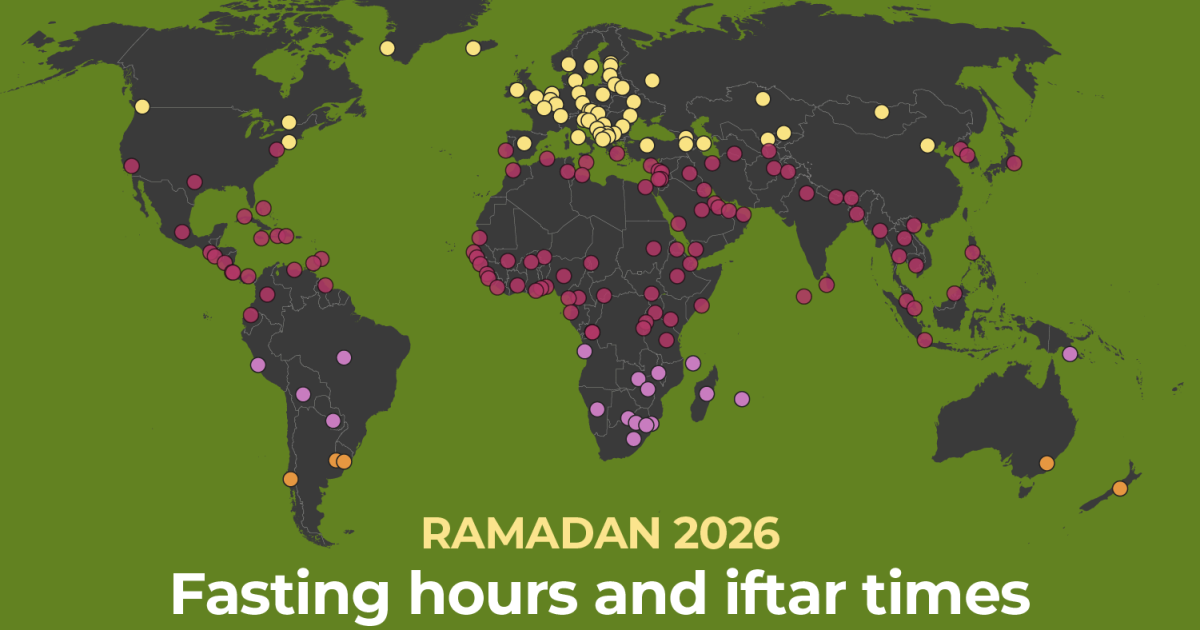
The length of fasting varies globally, influenced by the time of year and geographical position. In the Northern Hemisphere, where it is currently winter, fasting hours will be shorter. On the first day, individuals in this region can expect to fast for approximately 12 to 13 hours, with the duration increasing as the month progresses. In contrast, those residing in the Southern Hemisphere, such as in Chile, New Zealand, and South Africa, will experience longer fasting hours, lasting around 14 to 15 hours on the first day of Ramadan.
The Islamic calendar is based on the lunar Hijri calendar, which causes Ramadan to shift approximately 10 to 12 days earlier each year. This year, nearly 90 percent of the global population living in the Northern Hemisphere will see a decrease in fasting hours until 2031, when Ramadan will encompass the winter solstice, the shortest day of the year. Conversely, Muslims south of the equator will have longer fasting hours than they did the previous year.
Daily Fasting Schedule and Cultural Greetings
On the first and last days of Ramadan, Muslims engage in early morning meals known as suhoor before the fast begins, and break their fast at sunset with a meal called iftar. Specific timings for these meals will vary based on location. The attached table provides detailed information on fasting hours, suhoor, and iftar times for various cities around the world.
During this sacred month, Muslims often exchange greetings in their native languages. Common phrases include “Ramadan Mubarak” and “Ramadan Kareem”, wishing one another a blessed and generous month. These greetings reflect the spirit of community and shared faith that characterizes Ramadan.
As Ramadan approaches, preparations are underway in Muslim-majority nations and communities worldwide, highlighting the importance of this month in the Islamic faith. With the emphasis on fasting, prayer, and reflection, Ramadan serves as a period of spiritual growth and unity among Muslims across the globe.