The 1980s produced a range of vehicles that have since become infamous for their unappealing aesthetics. This era, marked by unique design choices and shifting automotive standards, left a lasting impression on car enthusiasts. Several models from this decade stand out as particularly unattractive, often accompanied by less-than-stellar ownership experiences. Here, we delve into five of the most poorly received cars from the 1980s, highlighting their quirks and shortcomings.
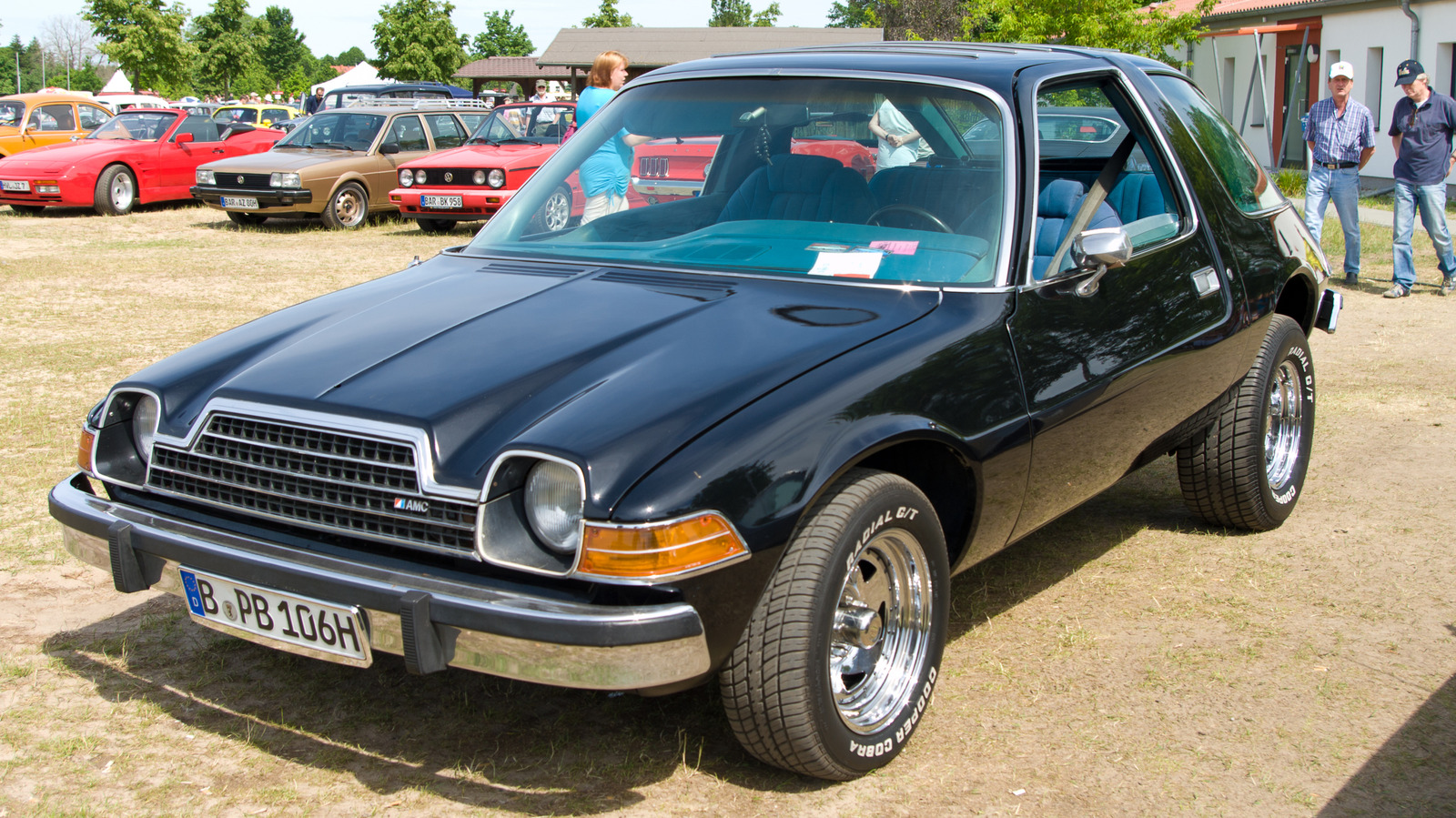
The AMC Pacer: A Fishbowl on Wheels
The AMC Pacer, nicknamed “the fishbowl,” was produced from 1975 to 1980. This vehicle was touted as a “wide small car” by its manufacturer. However, its excessive glass area, intended to improve visibility, led critics to liken it to a goldfish trapped in its bowl. Initially designed to feature a rotary engine, the Pacer ultimately relied on a standard inline-six engine due to fuel economy and emissions challenges.
Sales began strong, peaking at 117,244 units in 1976, but dwindled dramatically over the years. By its final production year in 1980, only around 2,000 models were made, illustrating the market’s declining interest in this peculiar design.
The MGB: A British Icon’s Downfall
The 1980 MGB marked the end of an era for this once-beloved British sports car. From its inception in 1962 until the early 1970s, the MGB was celebrated for its elegant chrome bumpers. However, the introduction of new U.S. regulations in 1974 resulted in the installation of bulky black rubber bumpers, which critics described as an “ugly stick” transformation.
The changes did not stop at aesthetics. Increased ride height to comply with safety standards negatively impacted handling, while cost-cutting measures further diminished the driving experience. A 1980 Car and Driver comparison lamented that the MGB “acted like a septuagenarian running a decathlon,” a stark indicator of its decline in performance and desirability.
The Lincoln Versailles: A Failed Luxury Attempt
Introduced in 1977, the Lincoln Versailles aimed to compete with Cadillac’s Seville in the compact luxury market. Unfortunately, it fell short in both design and sales. While Cadillac offered a unique body style, Lincoln simply modified the existing Ford Granada, leading to an unappealing side profile indistinguishable from its less luxurious counterpart.
Despite its initial price tag of $11,500, nearly four times that of the Granada, sales never met expectations. After a brief resurgence in 1979, sales plummeted to 4,784 units in 1980, demonstrating the public’s lack of interest in this lackluster luxury vehicle.
The Dodge Rampage: An Unpopular Hybrid
The Dodge Rampage, along with its twin the Plymouth Scamp, attempted to blend car and pickup designs, resulting in a vehicle described by Motor Trend as both “homely” and “dopey.” Debuting in 1982, the Rampage was inspired by earlier car-based pickups but failed to capture the market’s imagination.
Produced at Chrysler’s Belvidere, Illinois assembly plant, the Rampage offered a modest 84 horsepower from its four-cylinder engine. Over its three-year production run, only 37,401 units were sold, with a peak of 17,636 in 1982. A facelift in 1984 could not save it from discontinuation, marking its brief presence in the automotive landscape.
The Ford EXP: An Underwhelming Two-Seater
The Ford EXP was Ford’s first two-seater production car since the original Thunderbird, but it did not live up to expectations. Dubbed “Ford’s Ugly Little Sin,” the EXP struggled to appeal even to entry-level shoppers. With a curb weight heavier than the Escort and a similar engine producing only 70 horsepower, performance was not a highlight.
Despite attempts to revitalize the model with a turbocharged variant in 1984, the EXP faced declining sales. Workers at the production line even modified the car to resemble a restyled Escort, leading to the EXP’s eventual name change to the Escort EXP, which continued until 1988.
These five vehicles represent a curious chapter in automotive history, showcasing the challenges manufacturers faced during a decade of design experimentation and evolving consumer preferences. While they may not be celebrated for their looks or performance, they serve as a reminder of the ever-changing landscape of the automotive industry.