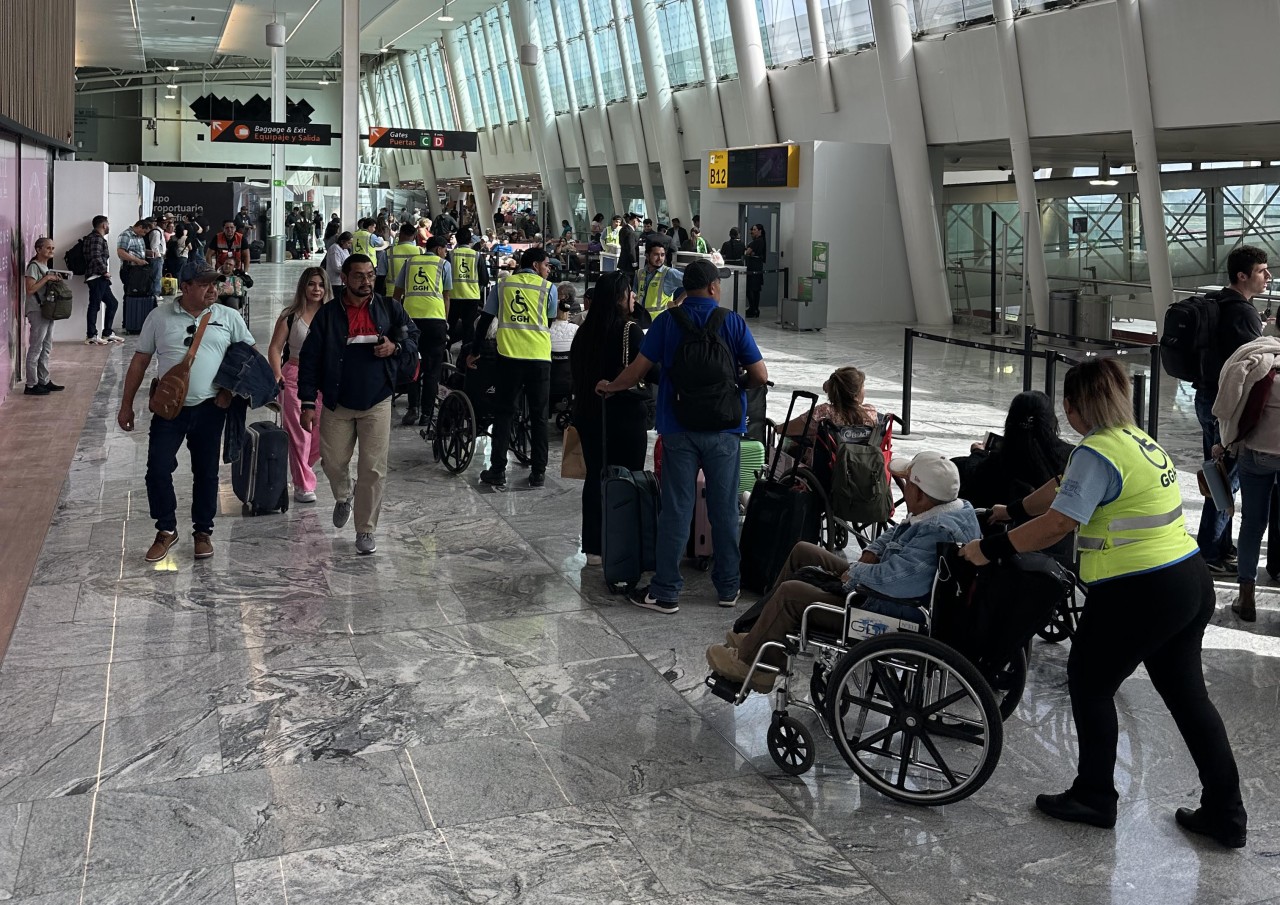
Concerns are growing among travelers regarding the increasing number of able-bodied passengers who allegedly exploit disability assistance services at airports. Many have reported witnessing individuals being wheeled onto flights only to walk off upon landing, raising questions about the integrity of these essential services.
The phenomenon, dubbed “Jetway Jesus” by some, refers to the sight of passengers who appear to need assistance boarding but then display no visible signs of disability after disembarking. This has led to frustrations among travelers who genuinely require help, particularly at crowded airports where long security lines can be a significant inconvenience.
Reports indicate that this situation has become more prevalent in recent months. According to the Airports Council International, the number of requests for wheelchair assistance has surged by 20% year-on-year. While many travelers genuinely benefit from these services, the rise in suspicious cases has prompted discussions among airport officials and airline representatives about potential abuse of the system.
Passengers have noted that the practice undermines the purpose of disability assistance. “It’s disheartening to see people taking advantage of a system meant to help those in real need,” said one frequent flyer, who wished to remain anonymous. “I’ve watched passengers who seem perfectly fine being pushed in wheelchairs, only to stand up and walk away once they reach the gate.”
Airline representatives have acknowledged the challenges posed by this issue. Emily Roberts, a spokesperson for Global Airlines, stated, “We are committed to serving all our passengers, particularly those with disabilities. We are reviewing our procedures to ensure that assistance is provided to those who truly need it.”
While some airports have begun implementing more stringent verification processes for disability assistance requests, others are struggling to strike a balance between accessibility and preventing misuse. The situation has sparked a broader debate about how to ensure fairness and support for those who genuinely rely on these services.
Travelers are calling for a more transparent approach to the process. “It’s not just about fairness; it’s about safety as well,” another passenger explained. “If people are able-bodied and skip the lines, it can create chaos and delays for everyone else.”
As this discussion continues, airport officials are exploring options such as requiring documentation to prove eligibility for assistance. However, they also recognize the importance of maintaining accessibility for passengers with legitimate needs.
The ongoing dialogue reflects a growing awareness of the complexities surrounding disability assistance in travel. As airports adjust to the changing landscape, both passengers and airlines seek to ensure that the system serves its intended purpose without being compromised by a few who choose to game the system.
In March 2024, the International Air Transport Association is expected to hold a summit addressing these concerns, providing a platform for stakeholders to share insights and develop solutions. As the industry grapples with this issue, passengers hope for a resolution that honors the needs of all travelers while maintaining the integrity of crucial support services.