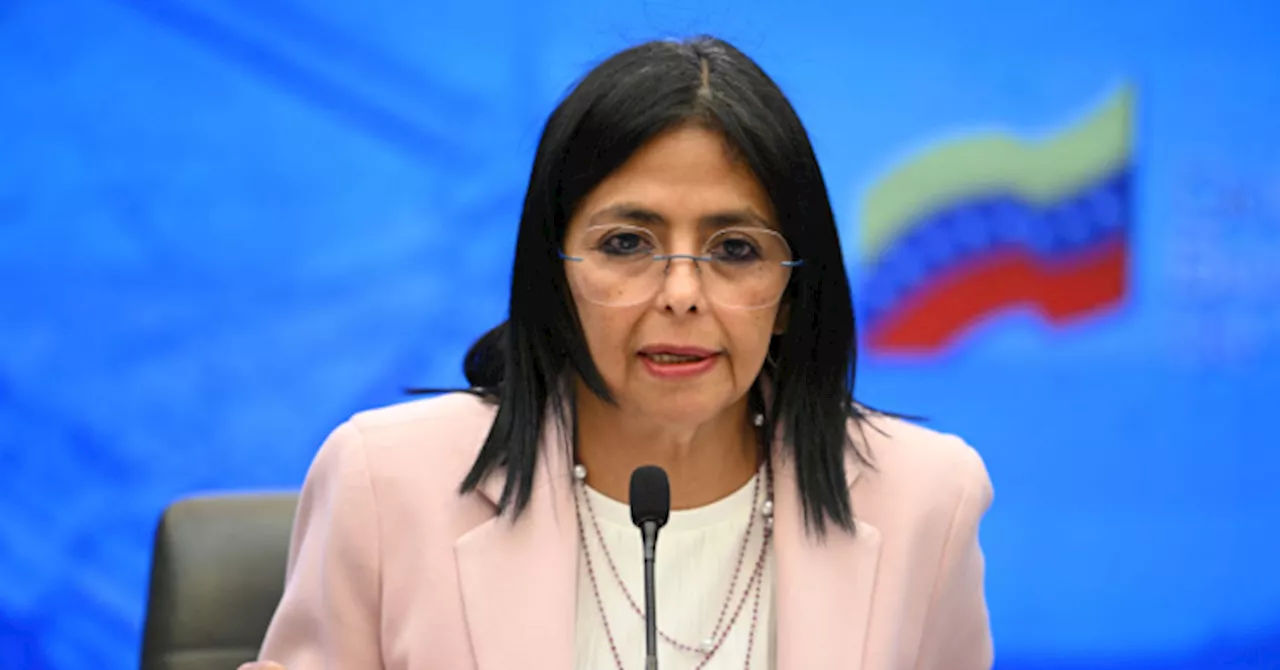
President Donald Trump confirmed on March 15, 2024, that Venezuelan President Nicolás Maduro has been captured by U.S. forces during a military operation in Caracas. Following this development, Vice President Delcy Rodríguez has stepped into a prominent role, indicating her willingness to cooperate with U.S. officials for the future of Venezuela.
In a press conference, Trump stated that Rodríguez had a conversation with U.S. Senator Marco Rubio, who is actively involved in the situation. “She’s essentially willing to do what we think is necessary to make Venezuela great again,” Trump remarked. This statement reflects the U.S. administration’s intention to engage with Venezuelan leadership amid the country’s ongoing turmoil.
Rodríguez, who has served as Maduro’s vice president since 2018 and as the oil minister since 2024, has held various significant positions within the Maduro regime over the past two decades. She is part of a powerful political alliance with her brother, Jorge Rodríguez, who leads the socialist-controlled National Assembly. The Venezuelan vice presidency is appointed by the president, lacking a democratic election process.
During the press conference, President Trump expressed concern about the political vacuum in Venezuela, stating, “If we just leave, who’s gonna take over?” He emphasized the need for U.S. involvement to ensure a stable transition of power in Venezuela. Trump noted that Rodríguez had expressed her willingness to cooperate, stating, “She had a long conversation with Marco and she said, ‘We’ll do whatever you need.’”
Despite her readiness to engage with U.S. officials, Rodríguez has also demanded that the U.S. government provide “proof of life” for both Maduro and his wife, Cilia Flores, who were reportedly captured during the same military operation. The Venezuelan regime has claimed ignorance regarding Maduro’s whereabouts since the capture.
The U.S. Department of the Treasury has previously imposed sanctions on Rodríguez and other high-ranking officials in the Maduro government, restricting their ability to operate internationally. Similarly, the European Union has enacted sanctions against Rodríguez, further isolating her and the Maduro regime amid the ongoing crisis.
Trump’s administration has signaled a willingness to assist in restoring Venezuela’s oil infrastructure, which has been severely damaged in recent years. “U.S. oil companies will fix Venezuela’s badly broken oil infrastructure,” he stated, indicating a potential economic strategy following the regime change.
The unfolding situation in Venezuela remains complex, with international ramifications. As the U.S. navigates its involvement, the future of the nation rests heavily on the cooperation of its newly empowered leadership and the response from the international community.