Zillah, a city in Yakima County, commemorates its 115th anniversary of incorporation, which took place on December 31, 1910. Residents voted overwhelmingly in favor of the incorporation, with a tally of 94 to 6. The results were certified by Yakima County commissioners on January 3, 1911, and the official incorporation documents were filed by the secretary of state on January 5, 1911.
The roots of Zillah stretch back nearly two decades before its official incorporation. The town’s development was spearheaded by Walter Granger, president of the Yakima Land and Canal Company. Granger was instrumental in constructing the Sunnyside Canal, which facilitated agricultural expansion in the Lower Valley, thereby paving the way for community growth. This initiative was a collaboration with the Northern Pacific Railway, which was keen on developing its land grants in the region.
The origin of Zillah’s name is linked to Zillah Oakes, the 19-year-old daughter of Thomas Oakes, who served as president of the Northern Pacific. In April 1892, Zillah accompanied her parents and Granger on a journey to scout potential sites for the new town. An anecdote suggests that during the trip, a wagon tipped over while crossing a stream, leading Granger to name the town in honor of the upset young girl. Other accounts indicate that the name was chosen as a tribute to the youngest member of the scouting party, further influenced by her father’s significant investment in Granger’s enterprise.
Following the naming, Zillah quickly developed its first businesses. The Zillah Hotel, constructed by Reuben Hatch, marked the community’s initial commercial establishment. Granger’s irrigation enterprise also set up its headquarters in Zillah, soon followed by a general store, a drug store, a hardware store, and a blacksmith’s shop. Within its first year, the population of Zillah grew to approximately 50 residents.
In 1894, the establishment of a school district led to the construction of the first schoolhouse, which cost around $2,200, equivalent to approximately $81,058 today. The community thrived not only due to its businesses but also because of the agricultural activity supported by Granger’s canal.
As Zillah approached the milestone of incorporation in 1910, residents filed a petition with the county. The county commissioners agreed to proceed with the incorporation but adjusted the town’s boundaries before finalizing the decision. The vote took place at the Modern Woodmen lodge hall, the largest venue available at the time. Alongside the incorporation, residents also elected town officials, who ran unopposed on what was known as the “Citizen’s Ticket.” E.J. Jaeger was chosen as the first mayor, with J.P. Fox, C.M. Mudd, J.E. Townsend, A.A. Hunter, and W.B. McDonald serving as council members.
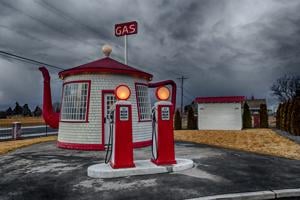
Today, Zillah is recognized not only as a city but as a key part of Yakima County’s renowned wine country. The Teapot Dome Gas Station, a distinctive landmark, serves as the city’s visitor center, reflecting the community’s rich history and ongoing development. As Zillah marks its 115th anniversary, it stands as a testament to the vision and hard work of its early pioneers and continues to evolve within the vibrant landscape of Washington State.