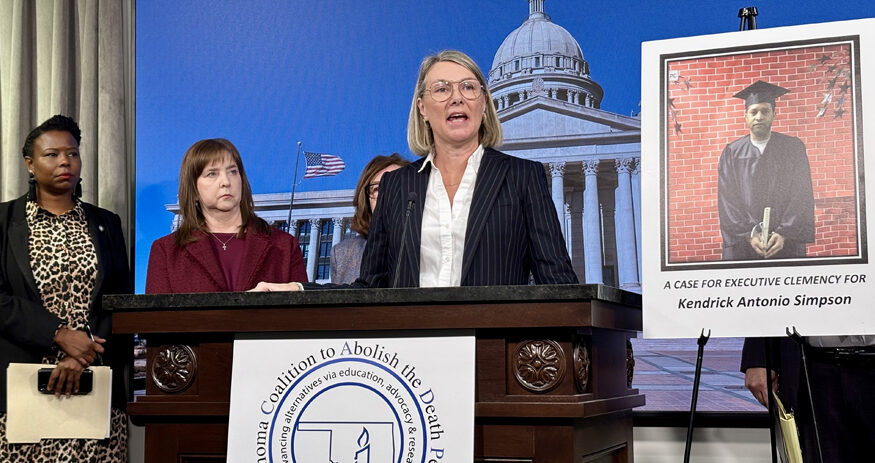
Advocates are making a concerted effort to secure clemency for Kendrick Simpson, a death row inmate scheduled for execution on February 12. With his clemency hearing before the Pardon and Parole Board approaching, two state senators and other supporters have called for mercy, highlighting concerns about the evidence presented during his original trial.
Simpson, now facing execution for two counts of first-degree murder, was involved in a deadly incident in January 2006. As a 27-year-old evacuee from Hurricane Katrina, Simpson and two associates confronted Anthony Jones and Glen Palmer at a nightclub. After leaving, they encountered the victims again in a 7-Eleven parking lot, where Simpson opened fire, killing both men. While one of Simpson’s companions performed CPR on a third victim, the others succumbed to their injuries.
The two men accompanying Simpson faced charges as accessories after they pleaded guilty to lesser offenses. Advocates for Simpson argue that critical evidence regarding his mental health and traumatic past was not adequately considered in his 2007 jury trial. According to his attorney, Emma Rolls, had this evidence been presented, it could have influenced the jury’s recommendation for the death penalty.
Simpson’s history includes surviving a near-fatal shooting in 2004, which left him with severe injuries and lingering mental health issues, including extreme paranoia and post-traumatic stress disorder. Rolls emphasized the need for jurors to understand how such trauma can impact an individual’s actions. “We all know that surviving trauma changes how the mind and body respond to fear,” said Mary Boren, a Democratic senator from Norman. “It is exactly the kind of information jurors must be allowed to consider before making an irreversible decision.”
In addition to his traumatic background, Simpson has shown significant personal growth while on death row. He was the first inmate to earn a GED diploma in that facility and has published a book of essays and poems. Rolls stated that Simpson has been taking college classes and achieving commendable grades, demonstrating his commitment to education and rehabilitation.
Describing Simpson as “profoundly remorseful,” Rolls noted that he acknowledges the pain he has caused to the families of the victims. “Kendrick accepts that he must be punished and will die in prison one way or another, but the death penalty is supposed to be reserved for the worst of the worst offenders,” she said, arguing that Simpson does not fit this criterion.
Contrasting this perspective, Oklahoma Attorney General Gentner Drummond has opposed the clemency request. He stated that Simpson has not demonstrated genuine remorse for his actions, describing him as someone who “hunted his victims” and executed them without hesitation. Drummond added that the families of the victims have endured significant pain and that Simpson’s time on death row does not merit mercy.
The upcoming hearing before the Pardon and Parole Board is set for January 14. While the Board can recommend clemency, the final decision rests with Governor Kevin Stitt. As the clock ticks down to the scheduled execution date, the case continues to draw attention, raising questions about justice, mercy, and the complexities surrounding mental health in the courtroom.