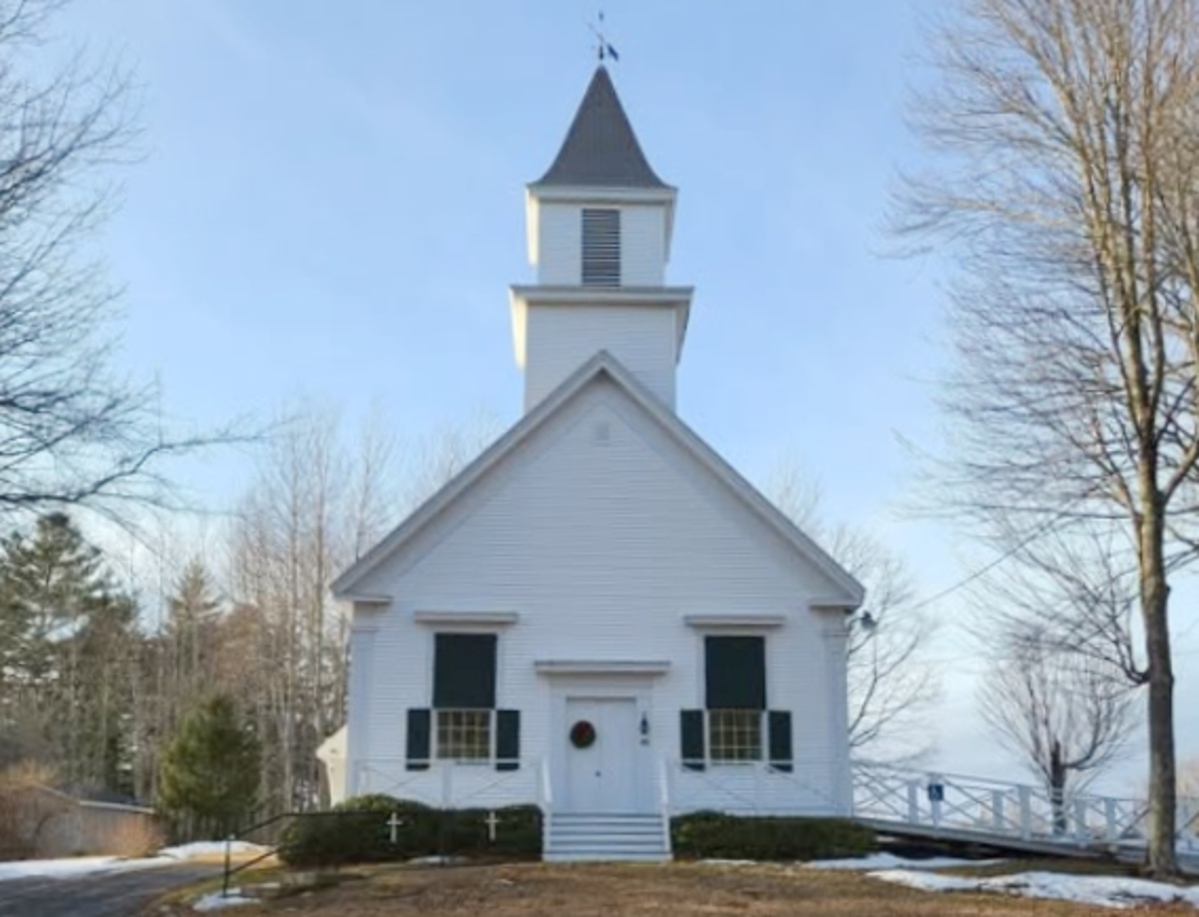
An independent church in Cushing, Maine, is taking legal action to prevent the United Methodist Church (UMC) from claiming ownership of its property. The Broad Cove Church of Cushing filed a complaint on December 3, 2023, in Knox County state court, arguing that the UMC’s efforts represent an unlawful attempt to appropriate the church’s assets.
The church, which has served the community for over 170 years, contends that the UMC is attempting a “religious land grab.” In its motion for a preliminary injunction, the church’s attorney stated that the UMC seeks to extend its diminishing holdings by asserting that Broad Cove is a Methodist-only community, thereby forcing non-Methodist members to either conform or find alternative places of worship.
According to court filings, Broad Cove Church has historically welcomed members from all Christian denominations. Despite its long-standing ties with various Methodist groups, it has maintained its independence and has not voted to affiliate with the UMC. The church has been incorporated in Maine since 1969.
The complaint also highlights the challenges faced by the UMC, which has experienced significant membership losses following a divisive schism in 2023. The church asserts that UMC’s actions are driven by a need to recover its lost congregations and property. Broad Cove’s filing states, “The UMC demands that Broad Cove knuckle under to the UMC’s ‘Book of Discipline’, with the ultimate goal of seizing Broad Cove’s real and personal property.”
Broad Cove claims that it would suffer irreparable harm if the UMC were to gain temporary control of its meetinghouse. The church’s members, particularly those who do not identify as Methodist, would be left without a place to worship in Cushing. The congregation is small and has historically relied on part-time ministers provided by the UMC, having contributed financially to support these arrangements.
Tensions escalated in 2023 when the UMC assigned a minister referred to as “Mr. Leonard.” According to the lawsuit, Leonard began insisting on changes to the church’s building and practices, attempting to draw the congregation into the UMC fold. The conflict intensified during a revision of the church’s bylaws in June 2025, when Leonard insisted that the term “non-denominational” be removed. Following the church members’ vote to terminate Leonard’s employment, the UMC issued a letter asserting that Broad Cove had never owned the church property but held it in trust for the UMC. The church argues that this claim contradicts its deeds, bylaws, and incorporation documents.
As of now, no hearing has been scheduled for Broad Cove’s request for an injunction. The church is represented by attorney Daniel Dalton from Dalton and Tomich, a Michigan law firm specializing in religious law, as well as Joshua Mitchell from Wilkie Farr & Gallagher in Washington, D.C., who is providing pro bono services as he is the son of the church’s secretary. The UMC is represented by attorneys Adam Shub and Michael Melusky from Preti, Flaherty, Beliveau & Pachios in Portland.
The outcome of this legal battle may have significant implications for the community and the future of Broad Cove Church, which is determined to maintain its independent status and mission.