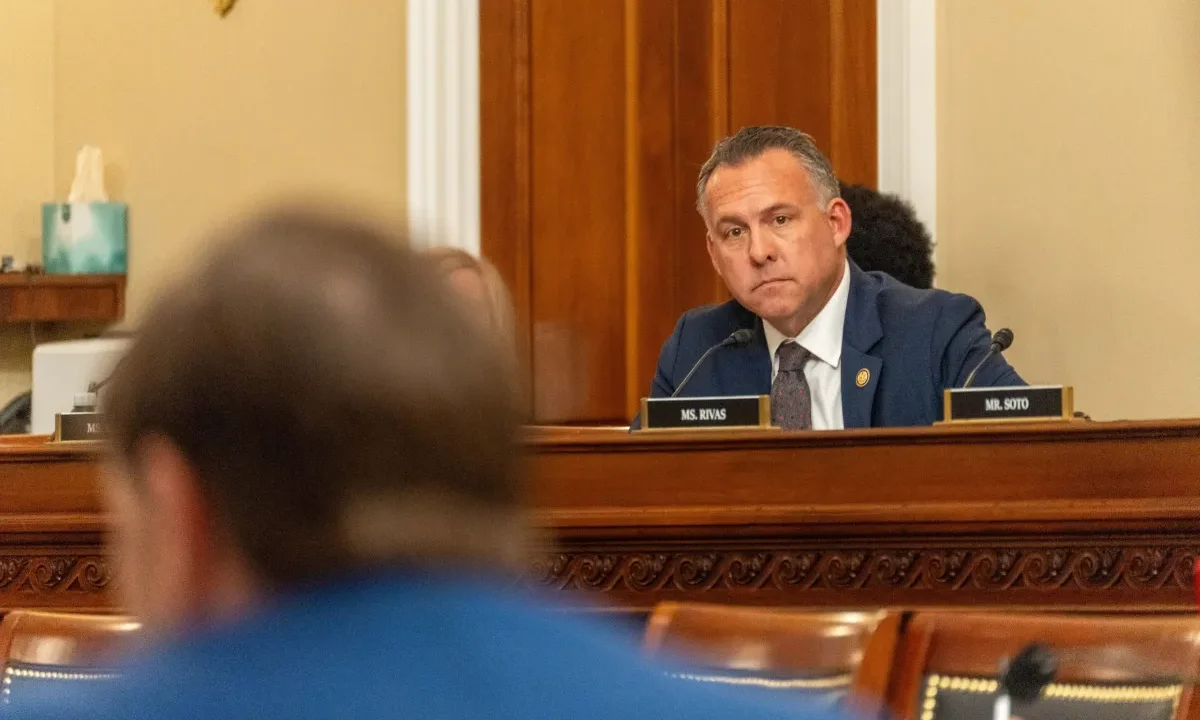
Rep. Adam Gray drew significant attention on Wednesday when he broke ranks with his fellow House Democrats to vote with Republicans, effectively ending the longest federal government shutdown in U.S. history. This pivotal decision has elicited mixed reactions from constituents and political analysts alike, as Gray now navigates the fallout from his controversial choice.
In a vote that passed with a margin of 222 to 209, Gray joined only five other House Democrats in supporting the budget bill signed shortly thereafter by President Donald Trump. While some view Gray’s actions as a pragmatic decision aimed at safeguarding his constituency, others perceive it as a betrayal of party principles, particularly with regard to his previous stance on extending health care credits.
Political Gamble or Strategic Move?
The political landscape in Gray’s district, which includes parts of Merced and Stanislaus counties, is notably competitive. Political science professor David Colnic from Stanislaus State observed that party affiliation is nearly evenly split in Gray’s 13th District. Gray secured his seat last year by a mere 187 votes, although the recent passing of Proposition 50 in California may shift the district’s political leanings slightly more toward the Democratic side.
Colnic questioned whether Gray’s decision to vote with Republicans would garner enough respect from them to offset potential loss of trust among Democratic voters ahead of the upcoming House elections. “I’m skeptical about that,” he remarked, highlighting the complexities of Gray’s position.
Divided Opinions on Gray’s Decision
Opinions on Gray’s vote are sharply divided. Marjorie Sturdy, president of the Modesto Progressive Democratic Club, expressed her discontent, calling the vote a betrayal. She criticized what she sees as a tendency for Democrats to compromise too readily in the name of bipartisanship. “While we understand Congressman Gray’s desire to prevent suffering for families in immediate need, bipartisanship does not mean paying the ransom and calling it a victory,” she stated.
Others, including local politicians, commended Gray for demonstrating political courage. Merced Mayor Matt Serratto praised Gray’s choice, stating, “We need leaders who would rather govern than grandstand.”
Councilman Shane Smith echoed this sentiment, emphasizing the importance of prioritizing the welfare of the community over political maneuvering. “Watching children go hungry to score political points in an extended shutdown helps no one,” he remarked.
Conversely, former Merced City Council member Jesse Ornelas argued that had Gray aligned with the majority of Democrats, he would have received more local support.
In defense of his decision, Gray clarified his reasoning in an opinion piece and subsequent interview, asserting, “I don’t see it as standing alone. I see it as standing with my community.” He referred to past experiences in Sacramento where he had to stand firm on behalf of Valley farmers, despite facing backlash from party leadership.
Gray’s assertion that placing community interests first earns respect across party lines reflects a belief that most constituents desire effective governance rather than partisan conflict. “When you do the authentic thing, you gain support on all sides,” he concluded.
As Gray navigates the repercussions of his decision, the broader implications for his political future remain uncertain. The response to his vote illustrates the ongoing tensions within the Democratic Party and the challenges faced by lawmakers in balancing party loyalty with the needs of their constituents.