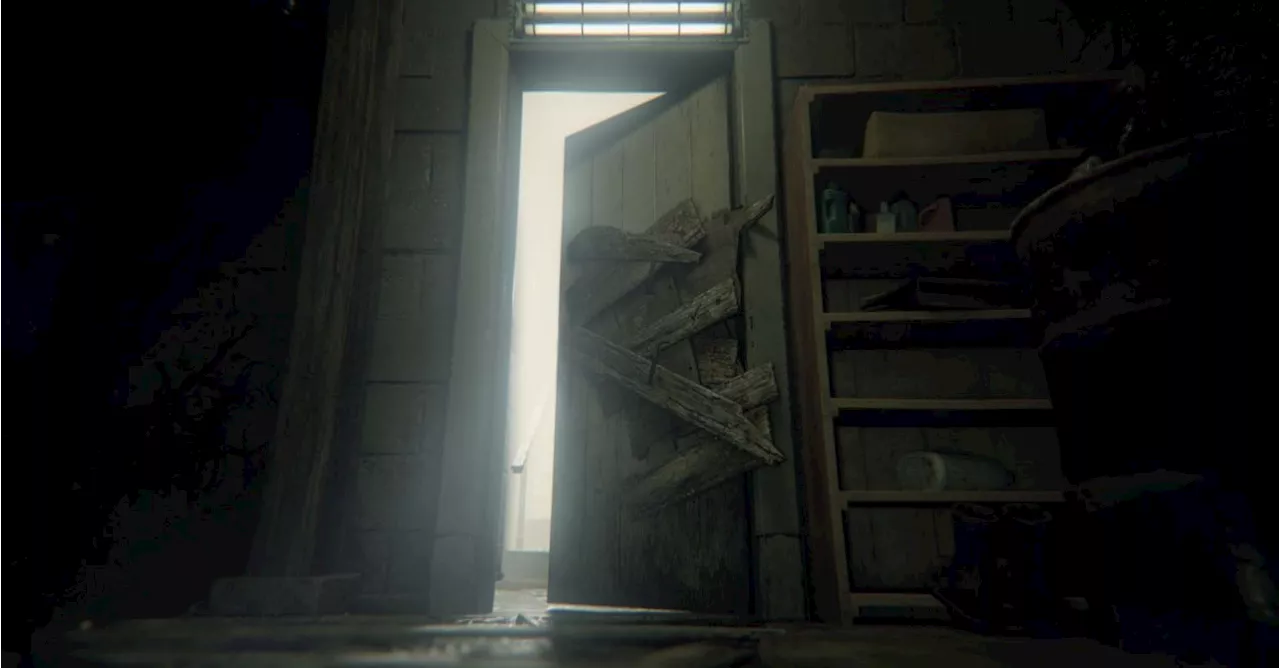
In the world of video game development, the seemingly simple task of creating interactive doors has emerged as a significant design challenge. Developers from various teams recently took to social media to express their frustrations, citing issues that range from complex animations to player expectations. Notable figures in the industry, such as Stephan Hövelbrinks, creator of *Death Trash*, highlighted that doors “have all sorts of possible bugs,” while Kurt Margenau, co-game director of *The Last of Us Part II*, remarked that getting doors right was one of the most time-consuming aspects of game design.
Designing a door in a game extends far beyond just a visual element. Developers must consider how a door functions in different contexts, particularly during moments of heightened tension, such as combat. As Margenau explained, while a door might slowly close during a fight, it remains open when players are exploring. “If a player is going to open a door, it can’t just magically fly open,” he stated. “The character has to reach for the doorknob and push it open.” But challenges multiply when considering how to close a door behind a character while they are sprinting, adding layers of complexity to the design process.
The difficulties associated with doors are not unique. Other common objects, such as ropes and mirrors, also present significant hurdles for developers. After the release of *Half-Life: Alyx*, one developer shared insights into creating realistic bottle animations, highlighting the attention to detail required in seemingly mundane elements. Liz England, a designer, pointed out that while many objects pose challenges, doors tend to be more prominent in discussions because they are ubiquitous in both games and real life. “I’ve never had to implement a mirror or a rope, but I have had my fair share of doors,” she noted.
The inherent simplicity of a door—essentially just a rectangular opening for passage—transforms into a complicated problem for development teams. Will Kerslake, game director at Crystal Dynamics, emphasized the multitude of issues that can arise. He explained that doors can open in various directions, and their handles might be positioned differently. “If you can engage with that door from different states, like crouch or sprinting, then that’s an additional set of animations,” Kerslake said.
Moreover, developers must account for player interactions and the varying angles from which they might approach a door. Issues can arise when multiple players or non-player characters (NPCs) attempt to use a door simultaneously, leading to a complex array of potential bugs. Kerslake explained, “If a door hits an NPC, does the door stop, or does the NPC move? The choices here can cause all kinds of bugs depending on your game.”
While creating functional doors is not an impossible task, some developers opt to avoid them altogether due to the complications involved. Kerslake pointed out that many games feature doorways but lack interactive doors, with some even using doors merely as progress gates. “Lots of games have doorways, but the important doors are missing or already open,” he observed.
Another critical aspect of door design is player perception. Players have a subconscious understanding of how doors should operate based on their real-life experiences. This expectation means that the accuracy required for a digital door to be believable is higher than for more fantastical objects. Galbraith explained, “Our ideas of how we interact with them are incredibly clear due to the cognitive reinforcement we have received from interacting with them.”
A door that closes too quickly, lacks friction, or features a locked handle that doesn’t jiggle can disrupt immersion. “When we see a door in a game that doesn’t behave as expected, we notice that something isn’t quite right,” he added.
Interestingly, game designers sometimes take creative liberties with door mechanics. For instance, while real doors typically swing in one direction, virtual doors may open either way. When these doors mimic the look, sound, and behavior of real-life doors, players can engage without questioning the mechanics. “To them, it’s just a weird coincidence that the brain subconsciously chooses to ignore,” Galbraith noted.
In addition to serving as aesthetic elements, doors often play critical roles in game design. They can act as barriers that require players to complete challenges or defeat bosses before progressing, thereby enhancing gameplay experience. Galbraith remarked, “Doors are just one of a variety of tools that a developer can use when designing levels.”
With such complexities surrounding door design, developers often seek alternative solutions, employing various methods to mitigate potential issues. The emphasis on creativity and innovation remains essential in producing engaging gameplay experiences, even when navigating the challenges of designing interactive doors. As Kerslake humorously concluded, “Unless the door was really tiny and cute, in which case then it’s just a-door-able!”