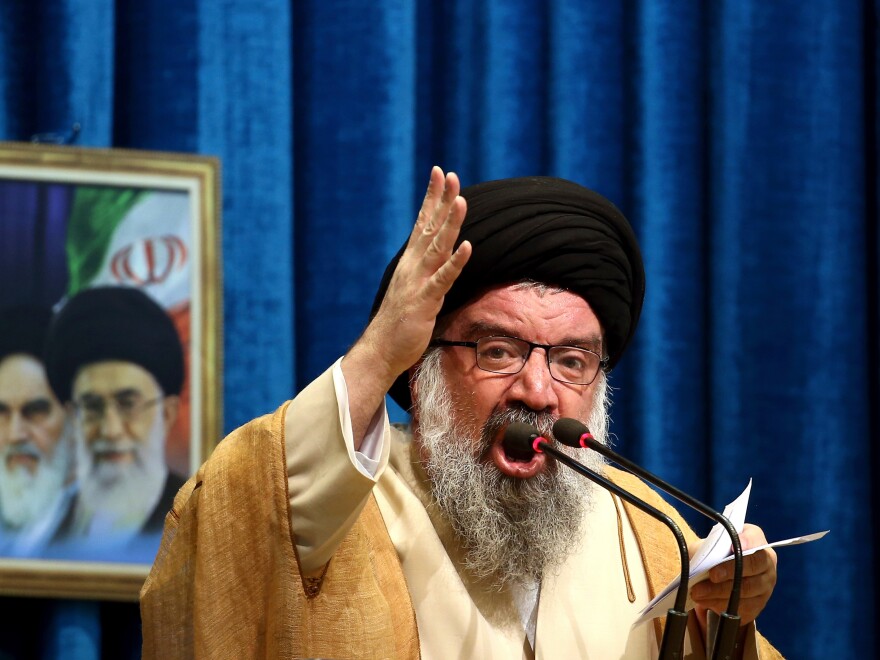
Iran has experienced a temporary lull in protests following a violent crackdown on demonstrators. Amid this uneasy calm, a senior hard-line cleric, Ayatollah Ahmad Khatami, called for the execution of detained protesters, reflecting the government’s ongoing frustrations. His remarks were delivered during Friday prayers and were broadcast on state radio, underscoring the regime’s hardline stance against dissent.
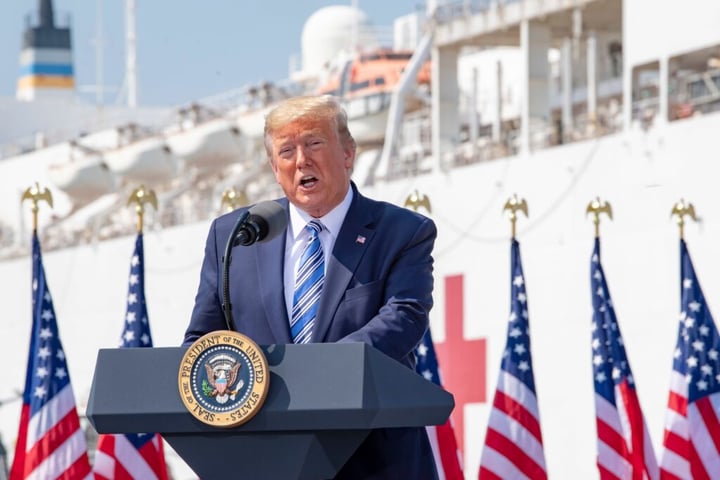
In a contrasting response, U.S. President Donald Trump expressed gratitude towards Iran’s leaders for not executing hundreds of detained protesters. He highlighted this decision as a positive step, suggesting a possible shift away from military intervention in response to Iran’s internal unrest. Trump’s administration has set clear conditions regarding military action, particularly in relation to executions and the killing of peaceful protesters.
The protests, which began on December 28, 2022, focused on Iran’s struggling economy before evolving into broader challenges against the Islamic Republic’s theocratic governance. Although the protests have diminished significantly, with reports indicating a death toll of 3,090 according to the Human Rights Activists News Agency, the Iranian government has not released official figures on fatalities. This death toll exceeds that of any previous unrest in Iran in decades and echoes the turmoil of the 1979 Islamic Revolution.
Clerical Calls for Violence and International Reactions
During his sermon, Khatami characterized the protesters as “butlers” of Israeli Prime Minister Benjamin Netanyahu and labeled them “Trump’s soldiers,” issuing threats of “hard revenge” against both leaders. The cleric’s remarks came as diplomatic efforts were underway to ease tensions, with Russian President Vladimir Putin engaging with both Iranian and Israeli officials.
While protests have largely subsided within Iran, thousands of exiled Iranians and supporters have taken to the streets in various European cities to voice their opposition to the Iranian government. Reports of a continued internet blackout have made communication challenging for those within Iran, prompting some individuals to cross borders, such as into Turkey, to connect with the outside world.
One traveler, who identified himself only as Mehdi for security reasons, expressed hope that he could return to Iran once internet access is restored. Meanwhile, Turkish citizens, including businessman Mehmet Önder, have also fled Iran amid the unrest, recounting experiences of heavy gunfire during the protests.
Exiled Voices and Ongoing Conflict
In the aftermath of the protests, Reza Pahlavi, the exiled Iranian Crown Prince, has urged the U.S. to fulfill its promise of support for the protesters. Pahlavi, who has positioned himself as a potential transitional leader should the current regime fall, called for renewed demonstrations from Saturday to Monday. Despite his efforts, his appeal has not significantly resonated within Iran, where many remain skeptical of his leadership.
Khatami also disclosed details of damage incurred during the protests, claiming that over 350 mosques, 126 prayer halls, and numerous other religious sites had been affected. Additionally, he noted that 400 hospitals and various emergency vehicles sustained significant damage, illustrating the widespread unrest and the anger directed toward symbols of the government.
As tensions remain high, the potential for conflict to extend beyond Iran’s borders is evident. A Kurdish separatist group in Iraq has claimed recent attacks on Iran’s paramilitary Revolutionary Guard, stating that they have provided both financial and military support to protect protesters. These developments indicate a complex and volatile situation that continues to evolve.
While the immediate threat of protests has subsided, the underlying discontent within Iran remains, and the international community watches closely as events unfold.