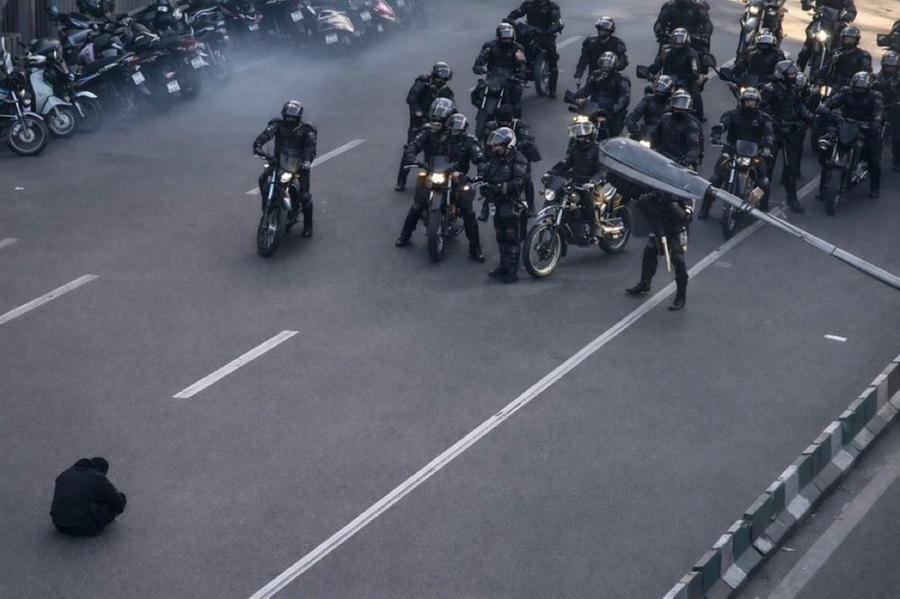
Protests have erupted across Iran, demonstrating a deep-seated desire for change that transcends economic grievances. Citizens are voicing their frustration not only over soaring inflation and a collapsing currency but also against a regime characterized by systemic oppression. This week, a poignant image emerged from Tehran: a man sitting cross-legged in the street, defiantly resisting security forces. This act of bravery encapsulates the spirit of a movement that has been building for decades.
While international headlines often simplify the narrative to economic turmoil, the protests reflect a broader struggle for dignity and freedom. The Iranian economy is indeed in crisis, with inflation surpassing 42 percent and the national currency, the rial, plummeting to record lows. Yet, the protests, which have spread from Tehran to cities like Mashhad, Isfahan, and Shiraz, are fueled by a multitude of grievances against a regime that has long failed its citizens.
Many shopkeepers in Tehran’s Grand Bazaar have closed their stores in protest, a significant act that signals both desperation and defiance. The ongoing demonstrations are not merely reactions to rising prices; they represent a culmination of 46 years of accumulated discontent. Iranians are protesting against a system that has consistently employed violence to quell dissent, with arbitrary detentions and lethal force becoming commonplace.
Minorities in Iran, including Kurds, Baluchis, and Baha’is, have particularly borne the brunt of this oppression. Women, too, are at the forefront of the protests, rallying against oppressive laws governing their bodies and choices. The regime’s corruption is readily apparent, as evidenced by the resignation of the central bank governor, which appeared to many as little more than a theatrical gesture rather than a genuine attempt at accountability.
The environmental crisis, marked by severe water shortages, further exacerbates public anger. Mismanagement has left major reservoirs in Tehran at roughly 12 percent capacity, highlighting the regime’s priorities that favor foreign military funding—like the estimated $1 billion sent to Hezbollah—over the welfare of its own people.
Protesters have made their demands clear. Viral videos show demonstrators chanting “azadi” (freedom) and “death to the dictator,” while car horns provide a chorus of solidarity. The current wave of protests continues a historical pattern of resistance in Iran, reminiscent of the student protests in 1999, the Green Revolution in 2009, and the nationwide protests following fuel price hikes in 2017 and 2019. The recent protests, sparked by the tragic death of Mahsa Jina Amini in 2022, represent the persistence of public discontent against a regime perceived as increasingly out of touch.
The recent conflict with Israel has further intensified the situation, exposing significant intelligence failures within the Iranian leadership and contributing to a dramatic depreciation of the rial. The currency has lost around 60 percent of its value, amplifying feelings of national humiliation alongside economic despair.
As Iranians continue to voice their demands for change, the regime faces a critical challenge: maintaining control over a population of 92 million that increasingly rejects rule through fear. The world now watches, and the question arises whether it will choose to acknowledge the deeper, moral implications of these protests or reduce them to mere economic statistics.
The stark images from Iran’s streets, from the lone protester to the defiant shopkeepers, tell a compelling narrative. The people of Iran are not merely seeking respite from economic hardship. They are demanding to be seen, to be heard, and to reclaim their dignity.