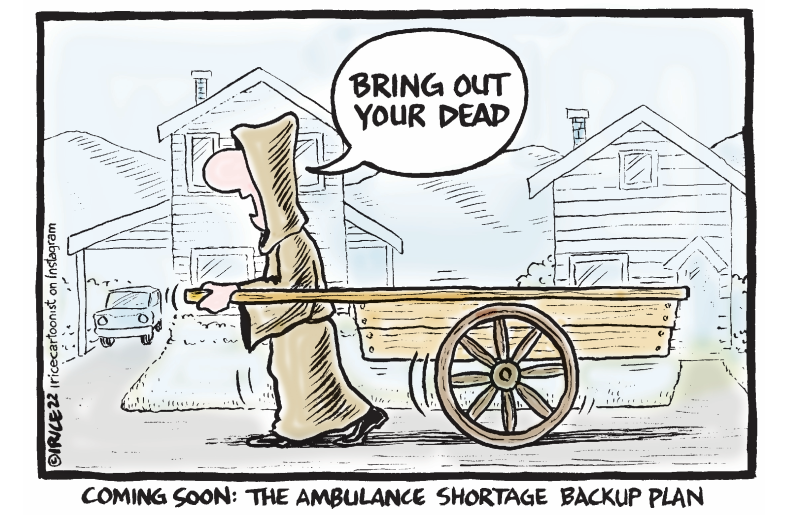
In Minnesota, the availability of timely ambulance services is crucial for saving lives, particularly in rural areas. As lawmakers prepare for the upcoming legislative session starting on February 17, 2024, addressing the challenges faced by rural emergency medical services (EMS) remains a top priority. State Senator Grant Hauschild has been vocal about the need for equitable healthcare access, stating, “Your health care shouldn’t be determined by your zip code.”
The situation for rural ambulances has been described as a “crisis” by Hauschild and others for over two years. While some progress has been made in securing funding, the demand for sustainable solutions is more pressing than ever. Rural communities often experience limited call volumes, yet they require fully operational ambulance services to respond effectively when emergencies arise.
A significant factor contributing to the challenges facing rural EMS is the low reimbursement rates from Medicare and Medicaid. According to Hauschild, many rural populations are aging and rely heavily on these programs, which further strains local resources. He noted that efforts to lobby for better federal reimbursement have not yielded the desired results.
Despite these setbacks, the Minnesota Legislature has taken steps to improve the situation. In 2024, lawmakers allocated $6 million for a pilot program in Fergus Falls and the eastern Iron Range to enhance regional coverage alongside existing EMS services. Additionally, $24 million has been designated to support rural ambulance services outside the seven-county Twin Cities area.
The establishment of a bipartisan rural EMS task force and the introduction of EMT training for high school students, funded with $200,000 from the state through the Lake County Ambulance and the Lake Superior School District, demonstrate a commitment to building a future workforce for these critical services. Last year, the legislature approved an additional $32.4 million to bolster training efforts and support the financial sustainability of rural ambulance services.
Despite these positive developments, industry leaders like Dr. David Herman, CEO of Essentia Health, emphasize that temporary measures alone will not resolve the underlying issues. In a recent interview, Herman remarked, “What they’ve done is they’ve provided patches… that’s not a sustainable solution for the challenge of rural EMS.” He called for ongoing legislative support to create a more permanent framework for funding.
The costs associated with maintaining 24/7 ambulance readiness are significant, especially in Minnesota’s remote and sparsely populated areas. Herman points out that even if a community experiences only one call a day or three calls a week, the need for a dedicated team and equipment remains vital.
Hauschild has reiterated that the EMS situation in rural Minnesota is not merely a challenge but a crisis. He noted, “In our most rural communities, we don’t have private hospitals taking on EMS and ambulance services. We have our local, small, rural communities taking on these services themselves.” This reality places immense financial pressure on small communities, many of which are struggling to provide essential services due to inadequate federal reimbursement rates.
Compounding the issue, volunteer first responders in these areas often resort to fundraising activities, such as bake sales, to maintain their operations. The responsibility for ensuring life-saving ambulance services increasingly falls on state and federal government shoulders.
As lawmakers convene for the upcoming session, the urgency to find sustainable solutions for rural EMS funding will remain at the forefront of discussions. The actions taken by legislators in St. Paul can significantly impact the lives of individuals in rural areas, ensuring that access to emergency medical care is not determined by geography. The commitment to address this pressing issue will be crucial as Minnesota continues to strive for equitable healthcare access for all its residents.