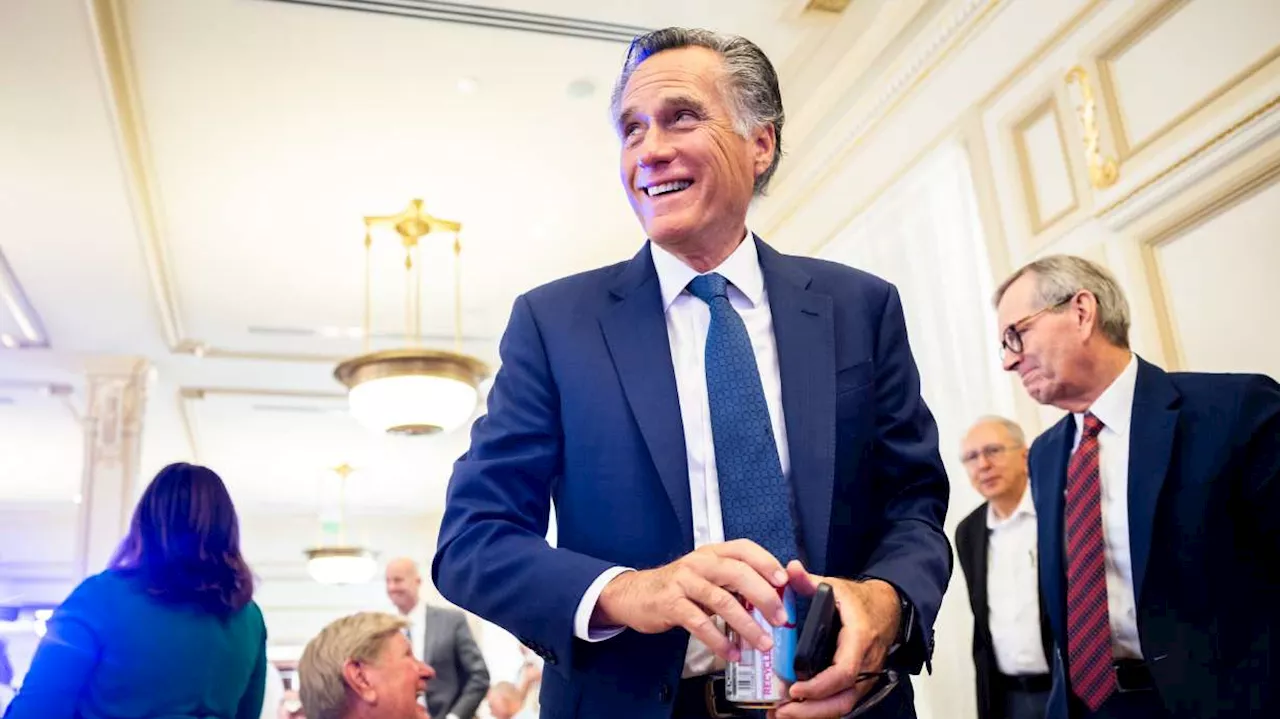
Former Senator Mitt Romney has called for a significant shift in tax policy, urging an increase in taxes on the wealthiest Americans to address looming financial challenges for Social Security. In an opinion piece published in the New York Times on March 15, 2024, Romney outlined the urgent need for reform as the Social Security trust fund is projected to be depleted by the fiscal year 2034.
Romney, a prominent figure in the Republican Party and one of its last remaining connections to pre-Trump ideals, emphasized that failing to act could result in a nearly 25% cut to benefits for retirees. This, he argues, would not only threaten the financial security of millions but could also lead to broader economic ramifications.
Rethinking Taxation and Spending
In his editorial, Romney challenged the traditional divide between Democrats and Republicans regarding fiscal policy. He stated, “Typically, Democrats insist on higher taxes, and Republicans insist on lower spending. But given the magnitude of our national debt, as well as the proximity of the cliff, both are necessary.” This acknowledgment marks a notable departure from his previous stances, particularly during his 2012 presidential campaign, when he faced criticism for advocating tax cuts that primarily benefited the wealthy.
Romney highlighted the inadequacies of past fiscal measures taken during Donald Trump‘s presidency, specifically pointing to the Department of Government Efficiency, which he described as employing a “slash-and-burn” approach to budget cuts without achieving meaningful results. He also criticized existing tax loopholes, characterizing them as “caverns” that allow the wealthy to avoid their fair share of taxes.
Capital Gains and Inheritance Tax Loopholes
One key area of concern for Romney is the taxation of capital gains. He provided a striking example involving entrepreneur Elon Musk. If Musk had purchased Tesla stock for $1 billion and held it until his death, when it was valued at $500 billion, his heirs would not pay taxes on the $499 billion capital gain due to a provision known as “step-up in basis.” As a result, this loophole allows significant wealth to be passed down without taxation, which Romney argues is fundamentally unjust.
“This unusual provision makes sense when you’re talking about helping families keep their family farms. But it’s used by billionaires to avoid capital gains taxes,” Romney wrote.
In calling for increased taxation on the wealthy, Romney is not only aiming to ensure the sustainability of Social Security but also seeking a more equitable tax system that addresses growing disparities in wealth across the United States. His proposal reflects a significant evolution in his political philosophy and presents a challenge to the prevailing norms of the Republican Party.
As discussions surrounding tax reform and social welfare continue, Romney’s editorial serves as a critical reminder of the potential consequences of inaction. With the future of Social Security hanging in the balance, the conversation around wealth distribution and fiscal responsibility is more relevant than ever.