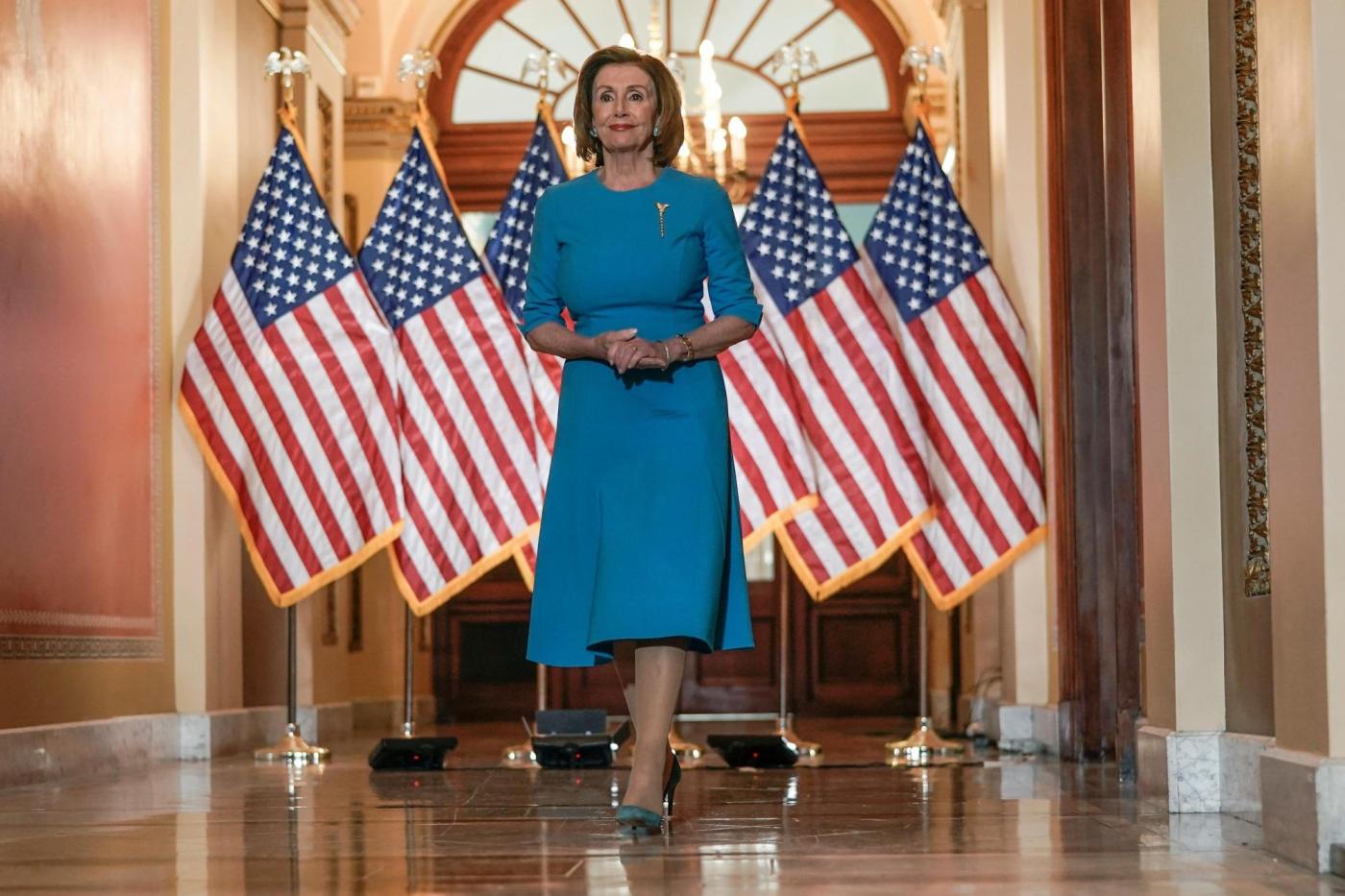
Former House Speaker Nancy Pelosi revealed her intention to retire from Congress in 2027, concluding a notable career spanning 20 terms. This announcement followed a significant surge for the Democratic Party in off-year elections held on November 7, 2023, across several states including New York City, New Jersey, Virginia, and California.
Pelosi, who stepped down from her leadership role in January 2023 after the Republicans gained a majority in the 2022 midterm elections, has long been a polarizing figure in American politics. Critics have described her leadership as divisive, citing her recent comments about former President Donald Trump. During an interview with Elex Michaelson on CNN, she referred to Trump as “a vile creature,” raising concerns about the implications of such rhetoric.
As a key figure in the Democratic Party, Pelosi’s tenure has been marked by significant legislative achievements and equally substantial controversies. Her support for various policies, including the Patriot Act and decisions made during the Obama administration, has drawn scrutiny from both sides of the political spectrum. Critics argue these actions highlight a level of hypocrisy, particularly in light of her recent criticisms of Trump’s adherence to constitutional principles.
Despite her departure, the Democratic Party’s recent electoral successes signal a potential shift in political dynamics. The victories in states that did not support Trump in the 2024 presidential election point to a broader strategy that may not solely rely on opposing the former president. Observers note that the federal government shutdown and a lack of legislative progress have left the Republican Party vulnerable.
The Republican Party faces a critical juncture as it seeks to regain its footing in the wake of these electoral results. The party’s performance, characterized by an inability to advance a cohesive agenda, may hinder its chances in the upcoming midterm elections in 2026. The recent elections serve as a reminder that a stagnant Congress is often not a winning strategy, as demonstrated by historical precedents.
Political analysts, including Armstrong Williams, emphasize the need for the Republican Party to embrace a new direction. Williams argues that the party has become overly reliant on Trump’s influence, cautioning against the absence of a clear succession plan for leadership after his political tenure. The lack of a distinct philosophical agenda may leave the party at a disadvantage as it navigates future elections.
As Pelosi prepares to step away from the political arena, her legacy will likely be debated for years to come. Her departure marks not just the end of an era but also raises questions about the future of the Democratic Party and its ongoing battle for relevance in a rapidly evolving political landscape.
The upcoming months will be crucial for both parties as they strategize for the challenges ahead, particularly as moderate voters increasingly seek leaders who foster unity and constructive dialogue rather than division.